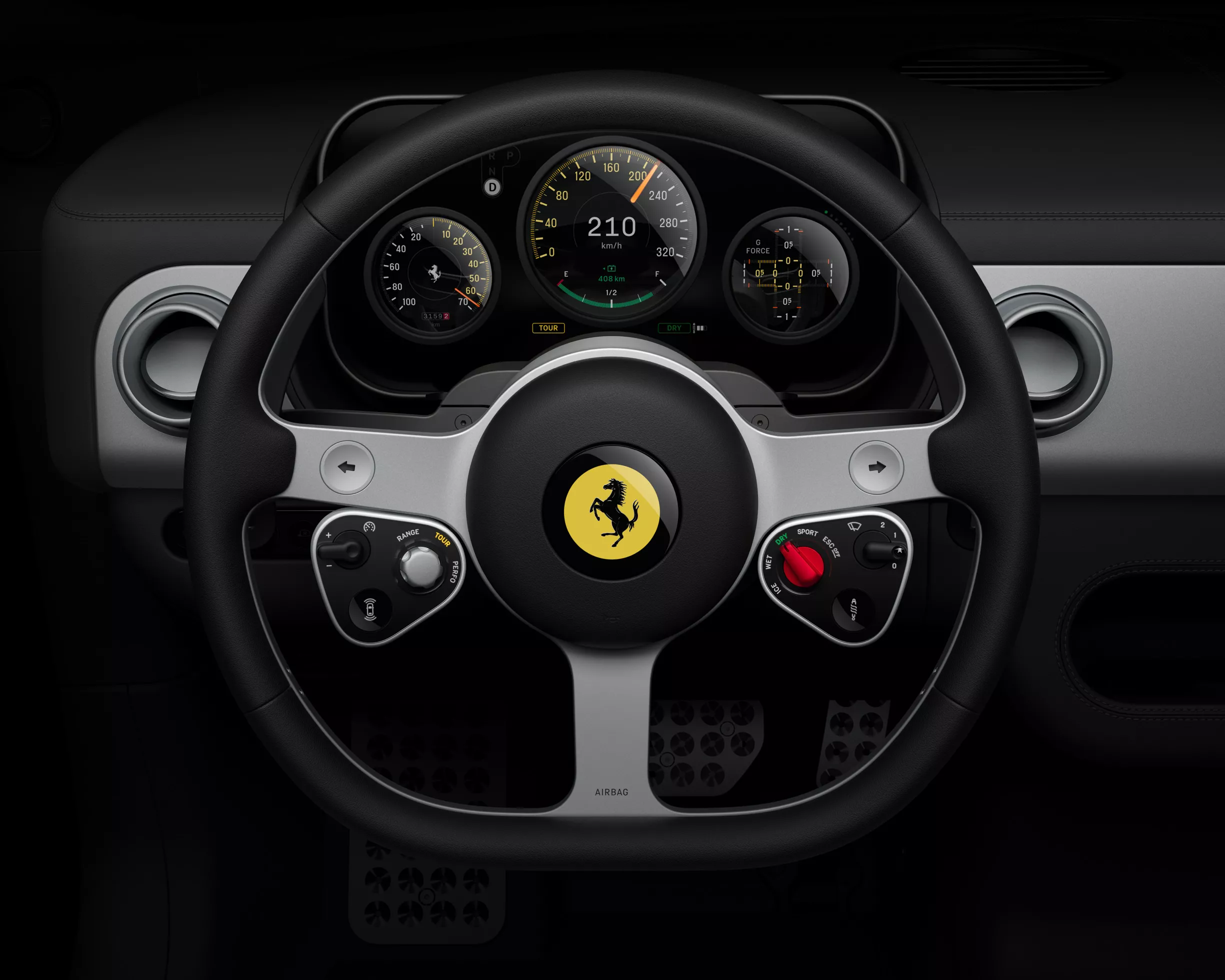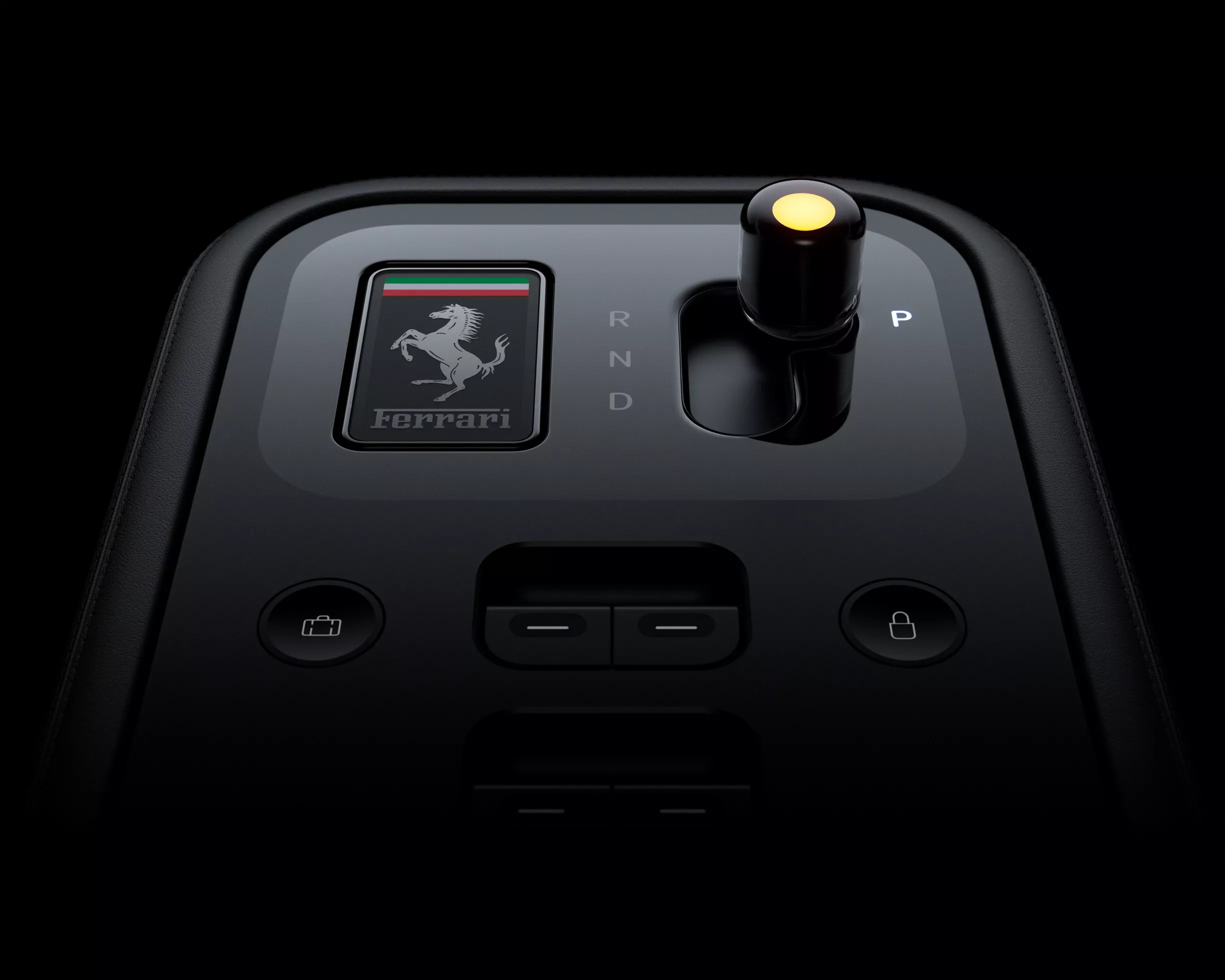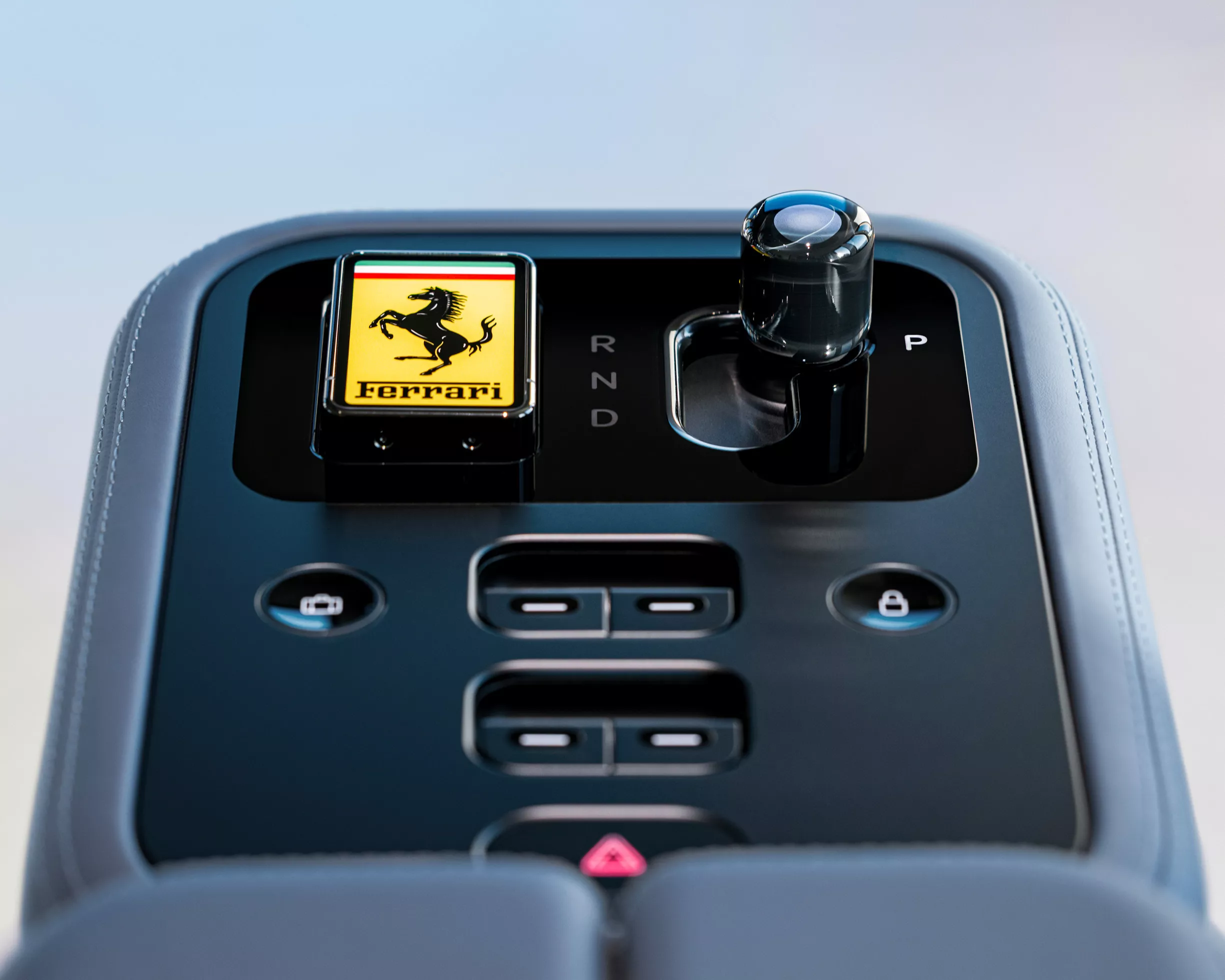









- The Luce’s interior is dominated by aluminum switches and toggles.
- Even the screens of Ferrari’s EV are analog-inspired with physical controls.
- Jony Ive says carmakers have made a mistake pursuing touchscreens.
Ferrari unveiled the interior of its first-ever EV this week, the Luce, created in collaboration with Jony Ive, former Apple design chief and the creative force behind the iPhone, iPad, and MacBook. It’s a retro-themed bonanza with plenty of physical buttons, switches, and toggles, representing a radical departure from the screen-focused and minimalist designs of most electric cars.
Read: Ferrari’s Luce EV Has A Glass Key And Buttons That Click Like A Rifle Bolt
The approach may seem counterintuitive at first, especially given Ive’s legacy at Apple, where he helped usher in the age of touchscreens. But the British-American designer’s reasoning is rooted in practicality rather than nostalgia. As it turns out, he never believed touch interfaces belonged in cars in the first place.
Touch Isn’t Always The Answer
“The reason we developed touch [for the iPhone] was that we were developing an idea to solve a problem,” he told Autocar. “The big idea was to develop a general-purpose interface that could be a calculator, could be a typewriter, could be a camera, rather than having physical buttons. I never would have used touch in a car [for the main controls].”
“It is something I would never have dreamed of doing because it requires you to look [away from the road],” Ive added. “So that’s just the wrong technology to be the primary interface.”
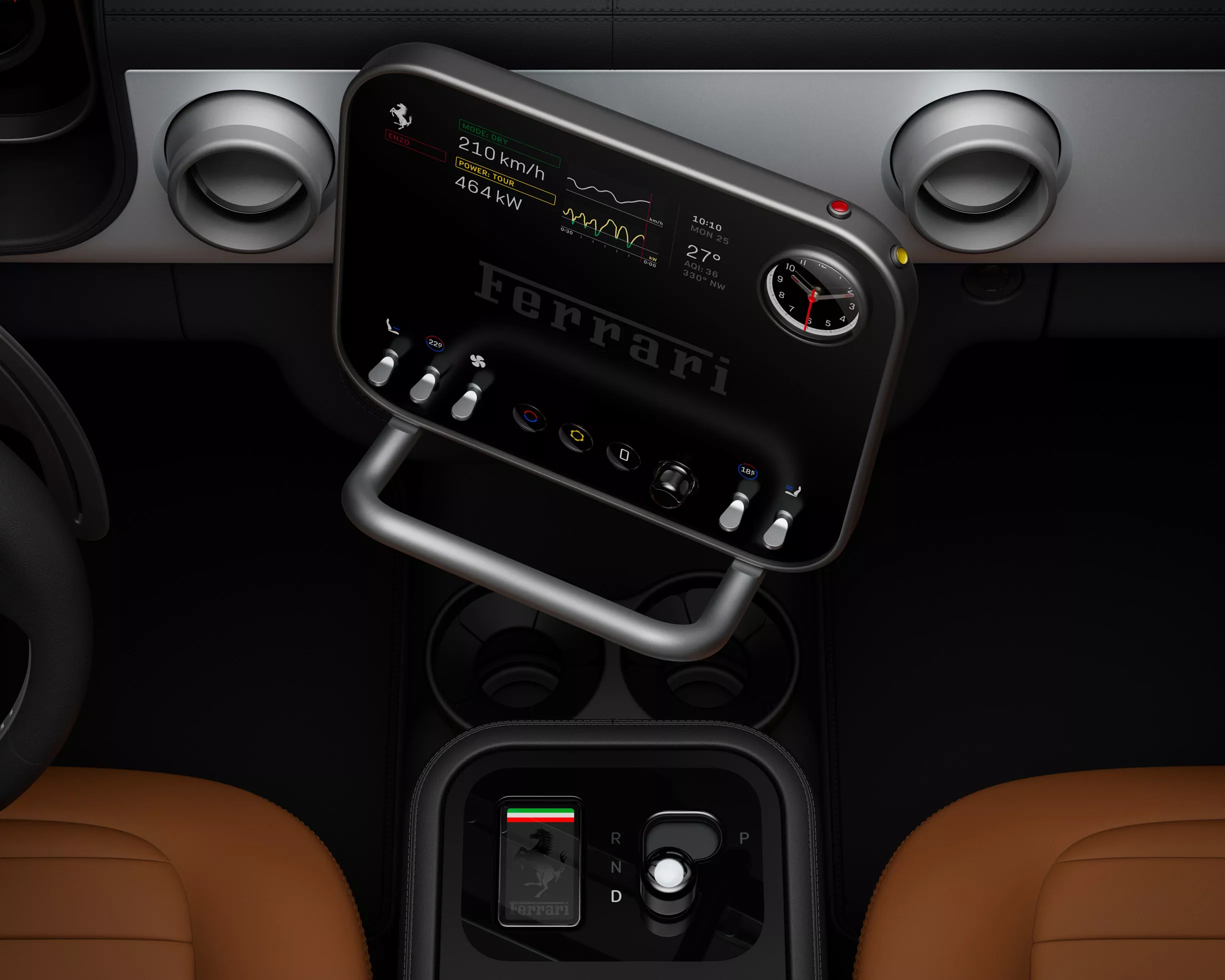



This isn’t to say the Ferrari Luce is completely devoid of screens. The gauge cluster features OLED panels from Samsung, designed to mimic the look of classic analog dials. The needle, though, is a physical piece made from anodised aluminium and backlit by 15 LEDs. In the center of the dash sits a touchscreen, angled slightly toward the driver.
Feel Your Way Around
Yet nearly every essential function, including climate controls, drive settings, even audio, can be adjusted through metal toggles or rotary knobs. Ive notes that “every single switch feels different, so you don’t need to look.”
When asked what sets the Luce’s screen apart from others, Ive said, “So much of what we did was so that you could use it intuitively, enjoy it and use it safely.”
In addition to real switches beneath the center touchscreen, the Luce features tactical dials and buttons on the steering wheel and center console, and even an airplane-inspired panel in the headliner. It looks like a welcome reprieve for the haptic controls of many recent Ferrari models, like the SF90.
“I think what happened was touch was seen almost like fashion,” Ivy explained. “It was the most current technology, so [companies thought] ‘we need a bit of touch’, then the next year ‘we’re going to have an even bigger one’, and it will get bigger and bigger.”
He added, “I think the way that we design [car interiors] isn’t that we’re trying to solve problems [like we did with the iPhone].” That, in his view, is where much of modern automotive UX design goes astray.