











- All 2026 Toyota RAV4 models in North America are now hybrids.
- Canadian plants in Woodstock and Cambridge are ramping output.
- USMCA uncertainty could threaten future production in Canada.
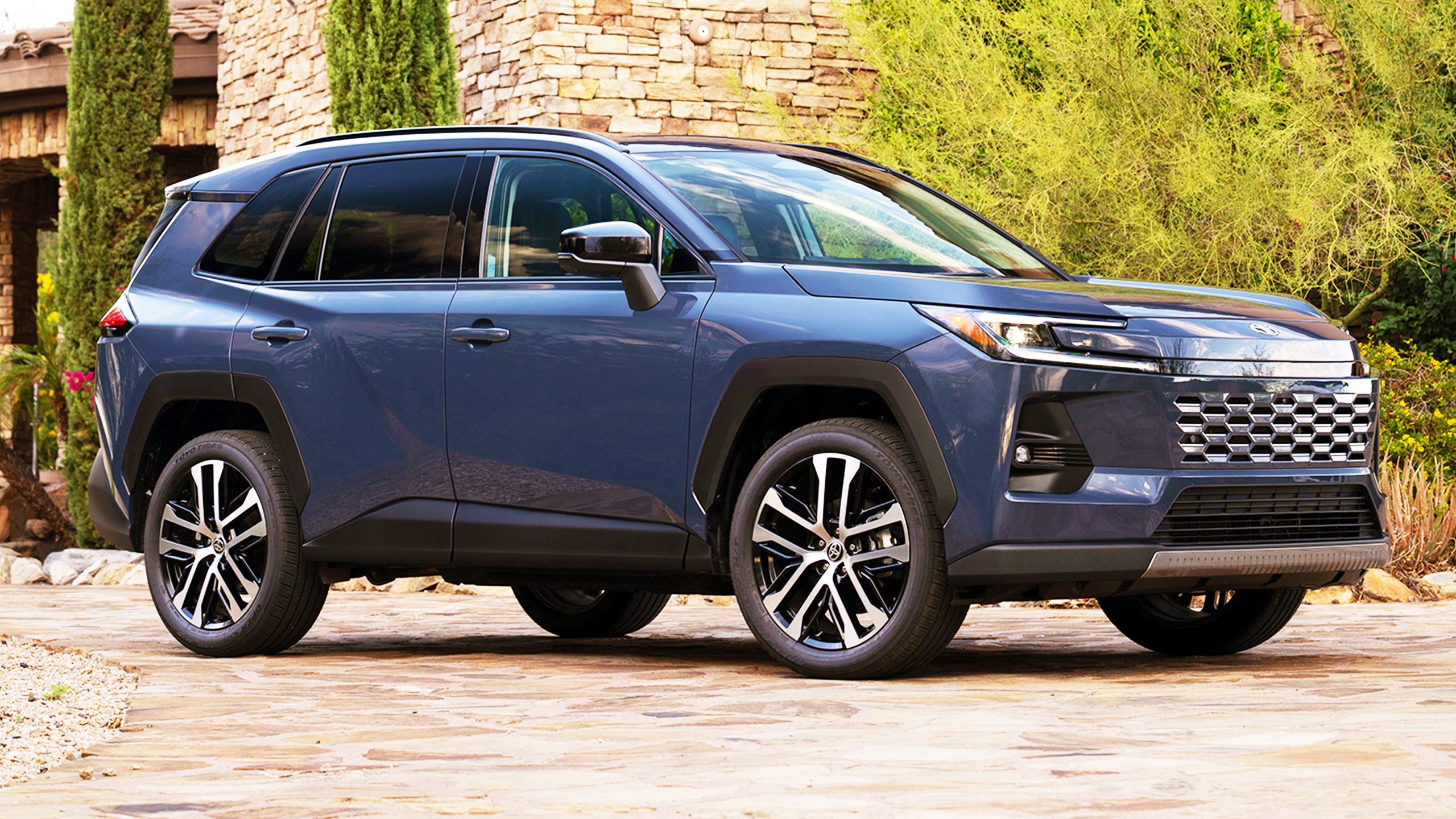
The new Toyota RAV4 is beginning to arrive in the hands of new owners as the company ramps up production at its plant in Woodstock, Ontario, Canada. From there, it will also be exported to the US, with Toyota largely brushing off concerns about tariff risks tied to trade policies that tend to shift with the political winds.
Apparently, the company is confident its cross-border supply chain will hold, or at the very least, that it’s prepared to manage the impact if it doesn’t.
Read: Greedy Toyota Dealers Adding Huge Markups To New RAV4
For the first time in the RAV4’s history, the new model will be offered exclusively as a hybrid in North America. Toyota has committed over CA$1.1 billion (roughly $810 million USD) to keep building the RAV4 in Canada. Production is scaling up not only in Woodstock but also at Toyota’s nearby plant in Cambridge.



Output will increase over the next five weeks and should reach full capacity in March. Significant upgrades were required for the two Canadian plants to prepare them to build the 2026 RAV4. The sites now include areas to build battery packs for the SUV.
US Production To Follow
Manufacturing of the 2026 RAV4 has not yet begun in the United States, but as with the previous model, it will also be built at the company’s Lexington, Kentucky, facility. This site will also become home to the upcoming Highlander EV.
First Look: New Toyota Highlander Drops Its Biggest Tradition, And I Got A Front-Row Look
In fact, production of the RAV4 will be increased at this site. Previously, Kentucky had handled pure-ICE versions of the old RAV4, whereas the Canadian sites built the hybrids. All plug-in hybrids of the latest-generation RAV4 will be assembled in Japan.
Toyota Motor Manufacturing Canada is the largest automaker in Canada and built more than 535,000 vehicles last year. However, there are rough seas ahead.
Threatened By USMCA Uncertainty
US President Donald Trump recently described the United States-Mexico-Canada Agreement (USMCA) as “irrelevant,” just as it is due to be negotiated this year. According to Scott MacKenzie, director of corporate and external affairs at Toyota Canada, the company is watching the situation closely. Whether Canadian production remains viable if the agreement is scrapped remains an open question.
“We believe that the most effective way for the North American industry to operate is integrated, with all three countries participating,” he said, according to CBC. “It’s turbulent right now. We don’t know what the landscape’s going to look like — two years from now, three years from now, five years from now. We make long-term investments. We ride out storms.”
MacKenzie also noted that while Toyota has absorbed some of the costs tied to ongoing tariffs, the longer-term outcome could include further increases in vehicle pricing.


