- Audi will launch the Q9 flagship SUV and A2 e-tron EV this year.
- The first Audi with a Rivian-sourced architecture will arrive in 2028.
- The brand sold 1,623,551 vehicles in 2025, including 223,032 EVs.
Audi is finally stepping into a part of the market it has long circled but never fully committed to. In 2026, that changes with the arrival of the Q9, a proper flagship SUV aimed squarely at the heavyweight class. At the other end of the lineup, the brand is also revisiting a familiar idea, confirming a new entry-level EV that brings back the A2 name.
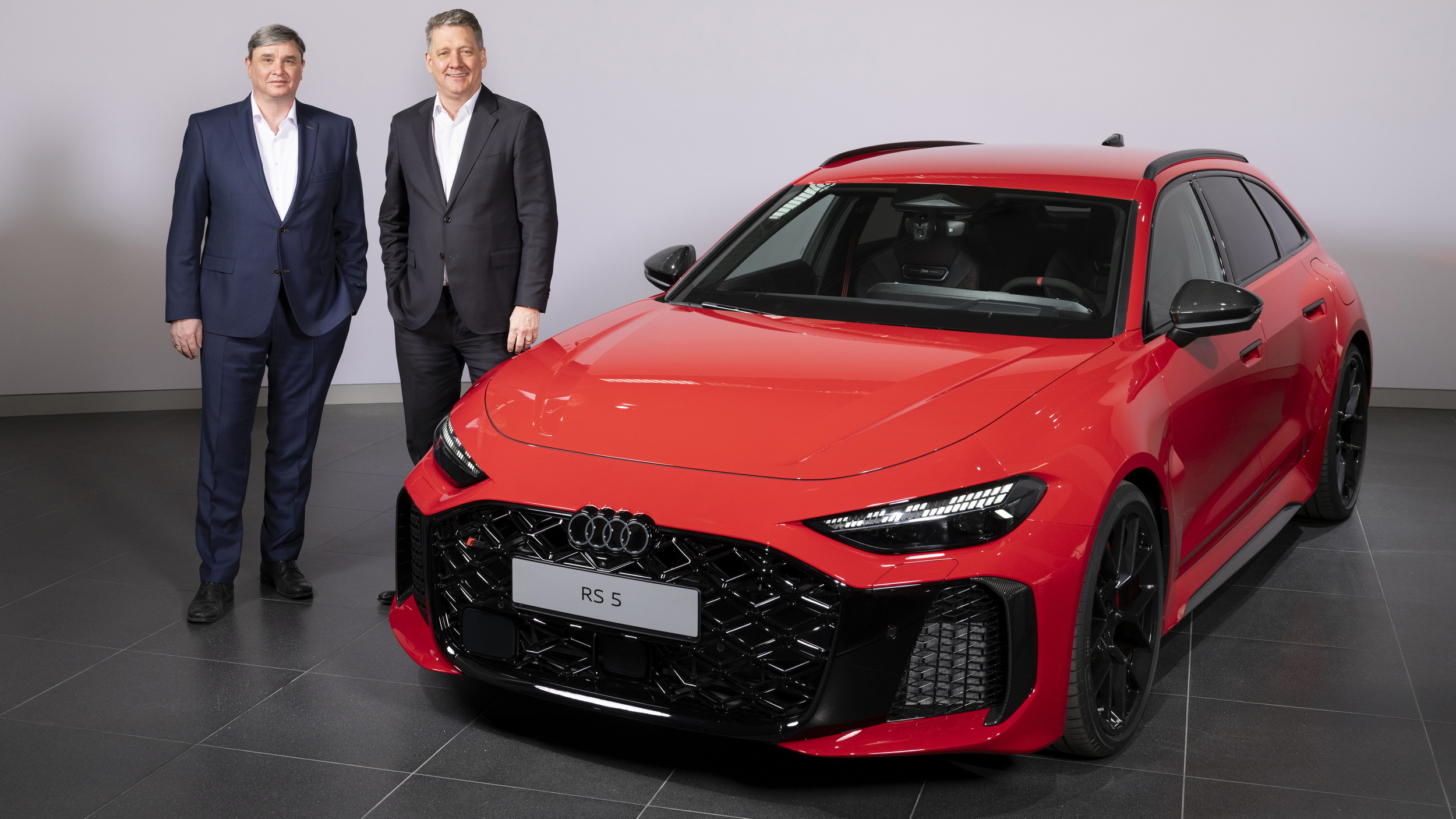
Speaking at the 2026 Annual Media Conference, CEO Gernot Dollner pointed to both arrivals as key pieces of Audi’s next move. “The new Audi Q9 strengthens our position in the US and defines the top of our portfolio. And with the A2 e-tron, we are bringing a highly efficient entry point into electric mobility to market in fall 2026, a clear statement on efficiency.”
More: This Is The SUV Audi Dealers Think America’s Soccer Moms Actually Want
For years, Audi’s North American dealers have been asking for something bigger and more imposing than the Q7. It sells well enough, but it does not quite deliver the size, presence, or third-row space that full-size SUV buyers in the US expect. The Q9 is intended to close that gap, arriving alongside a next-generation Q7, with both models confirmed for a 2026 debut.
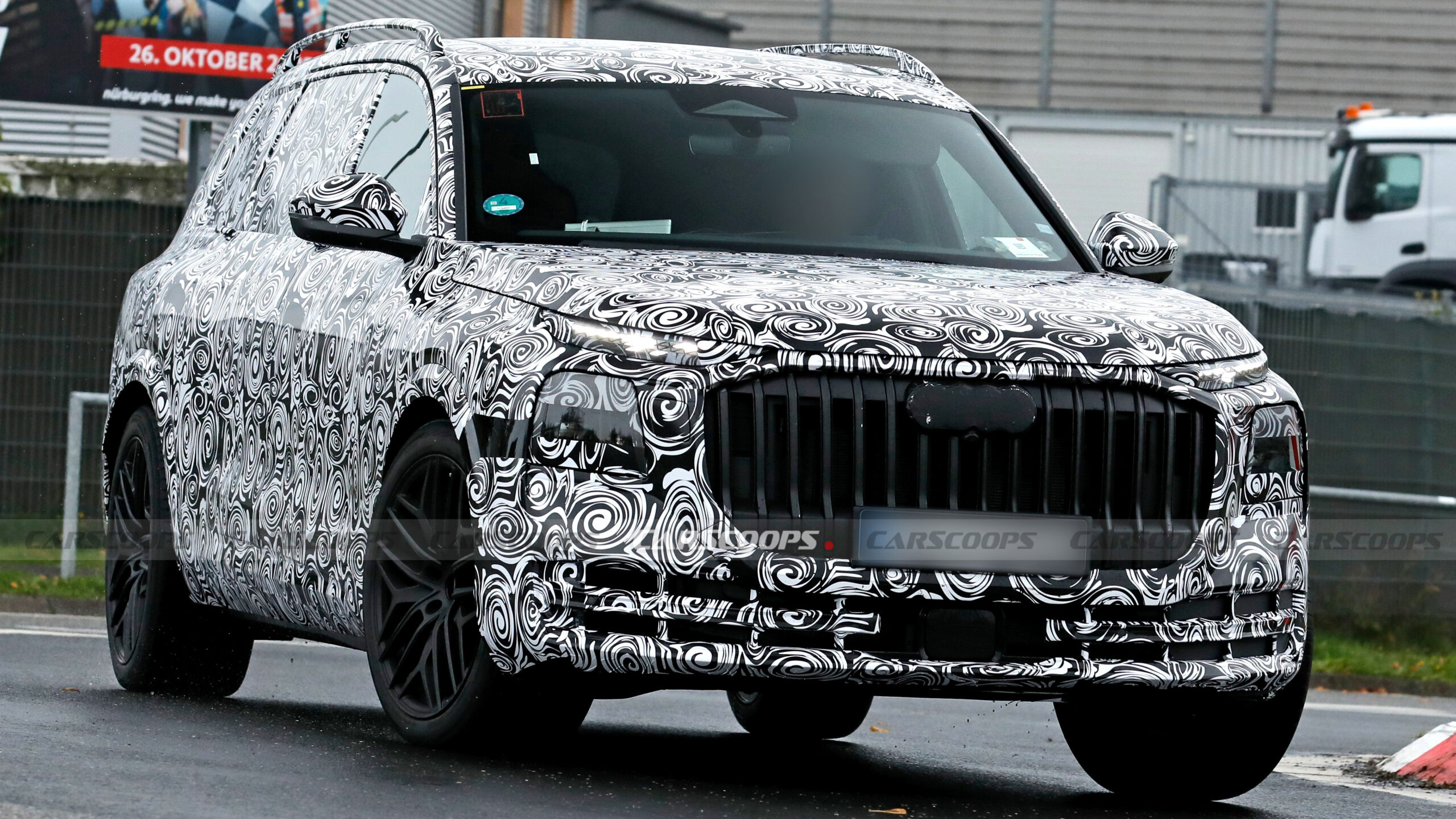
Audi Q9 | Photo: Baldauf
Audi has yet to show the Q9 in any official form, but spy shots have already done most of the talking. What they reveal is a big, upright SUV with split LED headlights, a wide grille, pronounced shoulders, and the expected three-row layout. It’s aimed directly at the BMW X7 and Mercedes GLS, and it looks ready for that fight.
The large SUV will ride on a stretched version of the Premium Platform Combustion (PPC) architecture, which supports both traditional engines and hybrid setups. The range is expected to go beyond the usual trims, with an SQ9 packing V8 power and a range-topping Horch version rivaling Maybach’s offering.
Entry-Level EV And Rivian Partnership
While the Q9 will grab most of the attention in the US, Audi has something very different lined up for Europe. The A2 e-tron, previewed in an official teaser, returns as a compact entry-level EV. It is scheduled to debut in fall 2026 and will ride on VW Group’s familiar MEB architecture.
More: Audi Confirms The A2 Is Back, Prays It’ll Sell This Time
Audi is also casting an eye further ahead with its Rivian partnership. The first model to use the new E/E architecture from the RV Tech joint venture is due in 2028, and it is widely expected to take the shape of a high-end off-roader, targeting the Mercedes-Benz G-Class and Land Rover Defender.
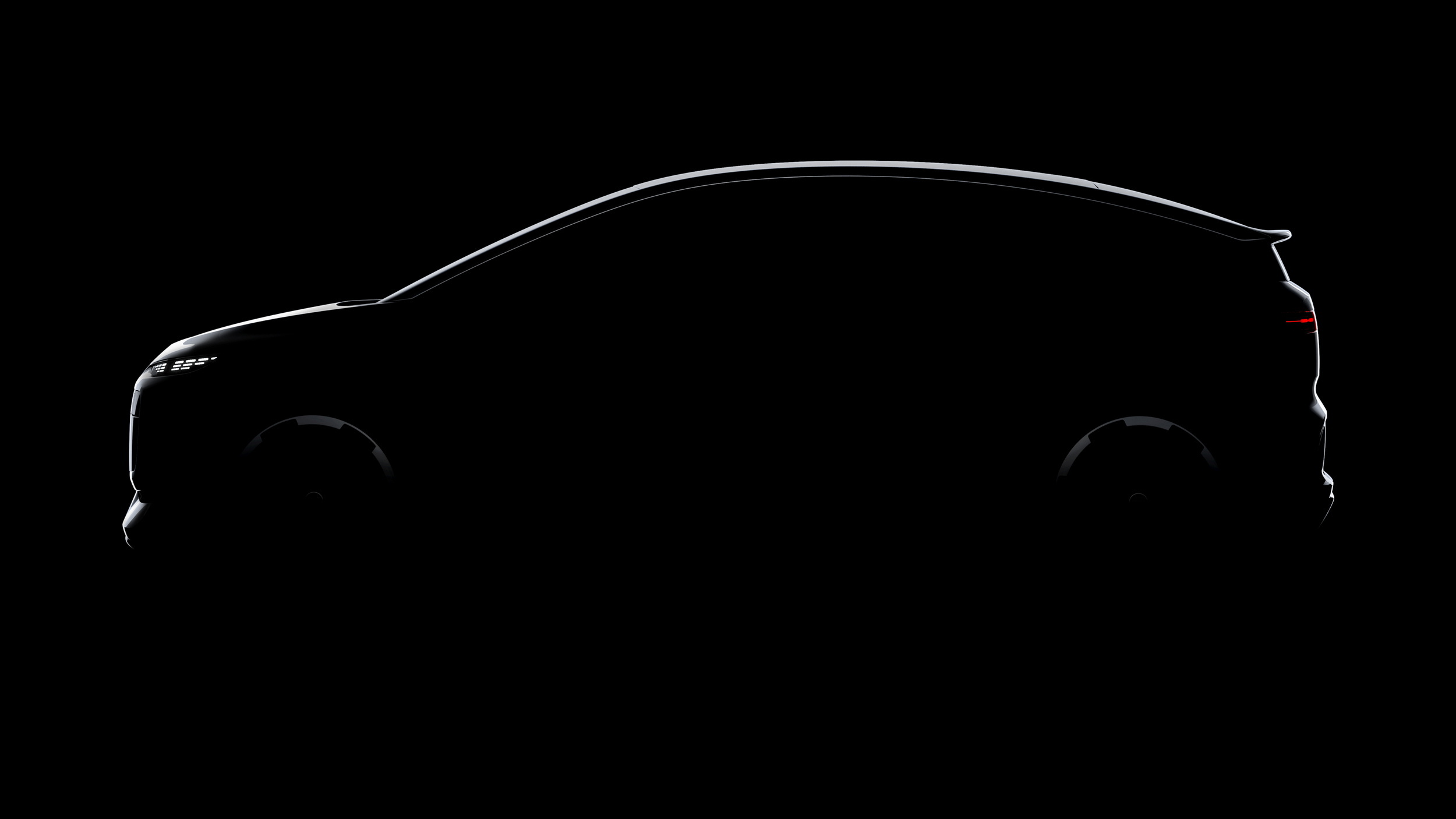
Audi A2 E-Tron
Zoom out to the bigger picture, and Audi knows where the pressure is coming from. China, in particular, is forcing a rethink, and not just for Audi but for Germany’s auto industry as a whole.
“The industry, and Germany as a whole, needs to reinvent itself,” said Dollner. “Today, the US and China are driving the major technology trends, while Germany and Europe have fallen behind. Innovation for customers must therefore become the top priority again.”
Still, the CEO believes that Audi’s ambitious targets for the future are achievable: “Our growth targets through 2030 are both realistic and ambitious – and we are squarely aligning our position in our core regions of Europe, the US, and China to achieve them.”
A Challenging Year
Audi delivered 1,623,551 vehicles in 2025, a modest 2.9 percent decline compared to 2024. Even so, its EV push is gaining traction, with battery-electric deliveries jumping 36% to 223,032 units. Much of that growth came from the Q6 e-tron (84,000 units) and the A6 e-tron (37,000 units).
More: Volkswagen To Slash 50,000 Jobs After Profits Fell Off A Cliff
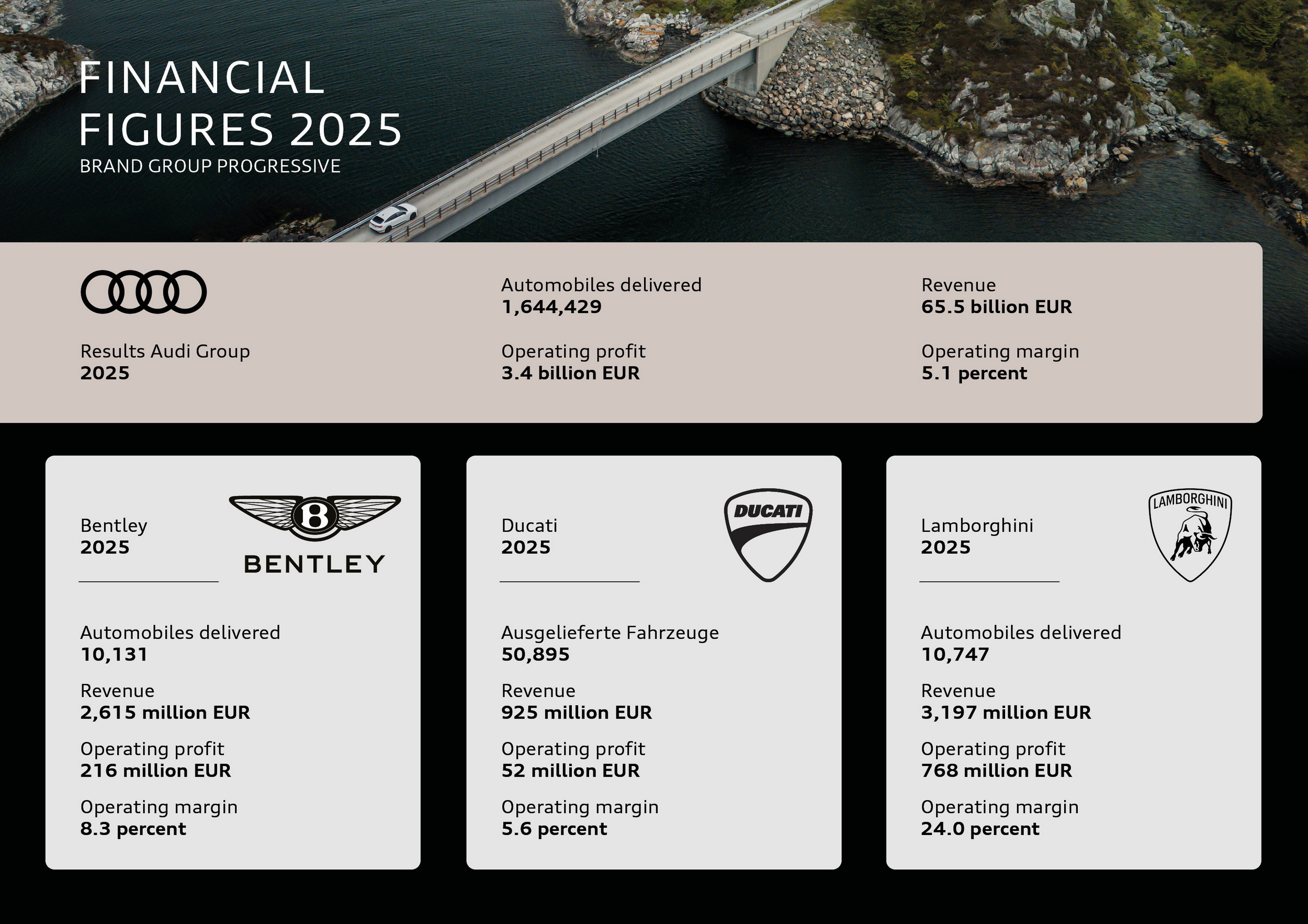
The Audi Group, which includes the Audi, Bentley, Ducati, and Lamborghini brands, brought in €65.5 billion ($75.5 billion) in revenue for 2025, up 1.5% year over year. Profit, however, moved in the opposite direction. Operating profit fell 13.6% to €3.37 billion ($3.88 billion), and margins slipped to 5.1% from 6%. So, more money coming in, but less of it sticking.
A large part of that pressure came from US tariffs, which carved €1.2 billion ($1.38 billion) out of the bottom line. Even so, net cash flow improved by 11.4% to €3.422 million ($3.95 million).
“We ended a challenging year with robust finances,” said Audi CFO Jürgen Rittersberger. ” The key now is to seize all operational and financial opportunities to make Audi more efficient, competitive, and profitable.”
For 2026, Audi predicts a revenue between €63-68 billion ($72.7-78.4 billion) and an improved operating margin of 6-8%.