- Dacia’s upcoming electric city car has been spied undergoing testing.
- The small hatchback is due later this year with pricing under €18,000.
- EV is based on the Renault Twingo E-Tech, but features unique styling.
Last month, Dacia unveiled their 2030 roadmap, which called for a “confident and decisive entry into electric mobility.” This will see them launch four new EVs by the end of the decade.
The first arrives later this year and will be an A‑segment electric hatchback based on Renault’s RGEV Small / AmpR Small platform. The model has been developed in less than 16 months and will cost less than €18,000 (about $21,200 / £15,700 at current exchange rates).
More: Dacia Confirms Four New EVs, Including Model That Costs Around $21k
That’s impressively cheap and spy photographers recently caught a prototype undergoing testing in Europe. Camouflage hides a number of details, but it’s pretty clear this is a reworked version of the Renault Twingo E-Tech.
Despite this, the Dacia has a unique front end with far more traditional headlights. We can also see a different front bumper that appears to have a wide lower intake as well as rugged body cladding.



Baldauf
The profile appears to carryover largely untouched, while the rear end features new taillights that are mounted higher up than on the Twingo E-Tech. We can also see a unique bumper as well as what appears to be a more conventional liftgate.
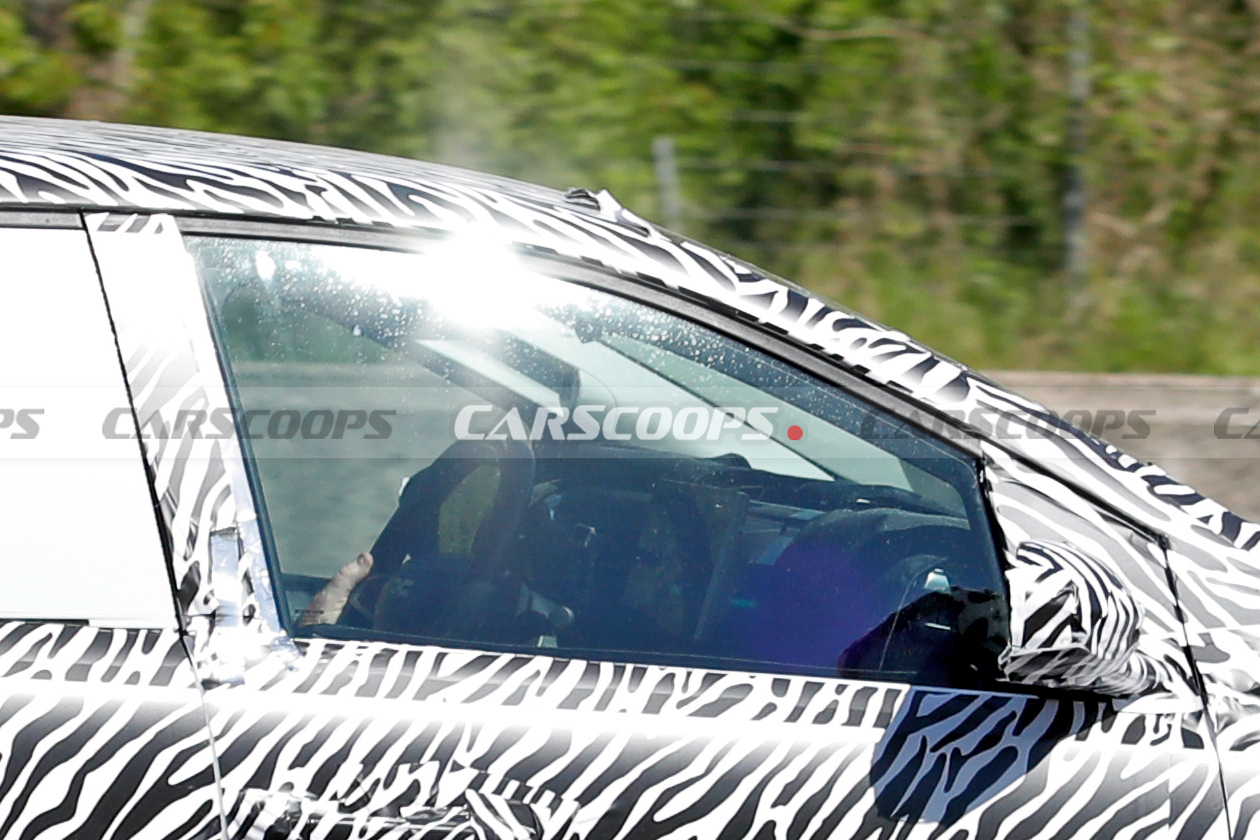
The single interior image doesn’t reveal much, but we can get a glimpse of a floating infotainment system as well as a Dacia-branded steering wheel. However, the model could echo the Twingo and adopt a 7-inch digital instrument cluster as well as a 10-inch central display.
Baldauf
We can also expect sliding rear seats that adjust up to 6.7 inches (170 mm). This enables owners to balance passenger space and cargo capacity. When luggage is what matters, there’s up to 12.7 cubic feet (360 liters) at your disposal. If that’s not enough room, the rear seats can be folded down to provide over 35.3 cubic feet (1,000 liters) of space.
The powertrain will likely carryover as well and this means we can expect an electric motor developing 80 hp (60 kW / 82 PS) and 129 lb-ft (175 Nm) of torque. This enables the Twingo to accelerate from 0-62 mph (0-100 km/h) in a leisurely 12.1 seconds, before topping out at a mere 81 mph (130 km/h).
To help keep costs down, the Twingo uses a small 27.5 kWh lithium iron phosphate battery pack. It provides a WLTP range of up to 163 miles (263 km), which isn’t much but likely fine for a city car.