- New robot is the latest in Toyota’s CUE line of humanoid creations.
- The new CUE7 robot set a world record, shooting 2020 assisted free throws.
- This tech showcase is part of Toyota’s way of developing AI from scratch.
Toyota, well-known for being the world’s most prolific automaker, isn’t just about cars. Toyota started off in the garment industry, as a maker of automatic looms way back in the early 1920s. They ventured into automobiles only in 1934, making them younger, in terms of car production, than many American automakers. But in 2026, they’re expanding into robots. And their latest one can shoot baskets!
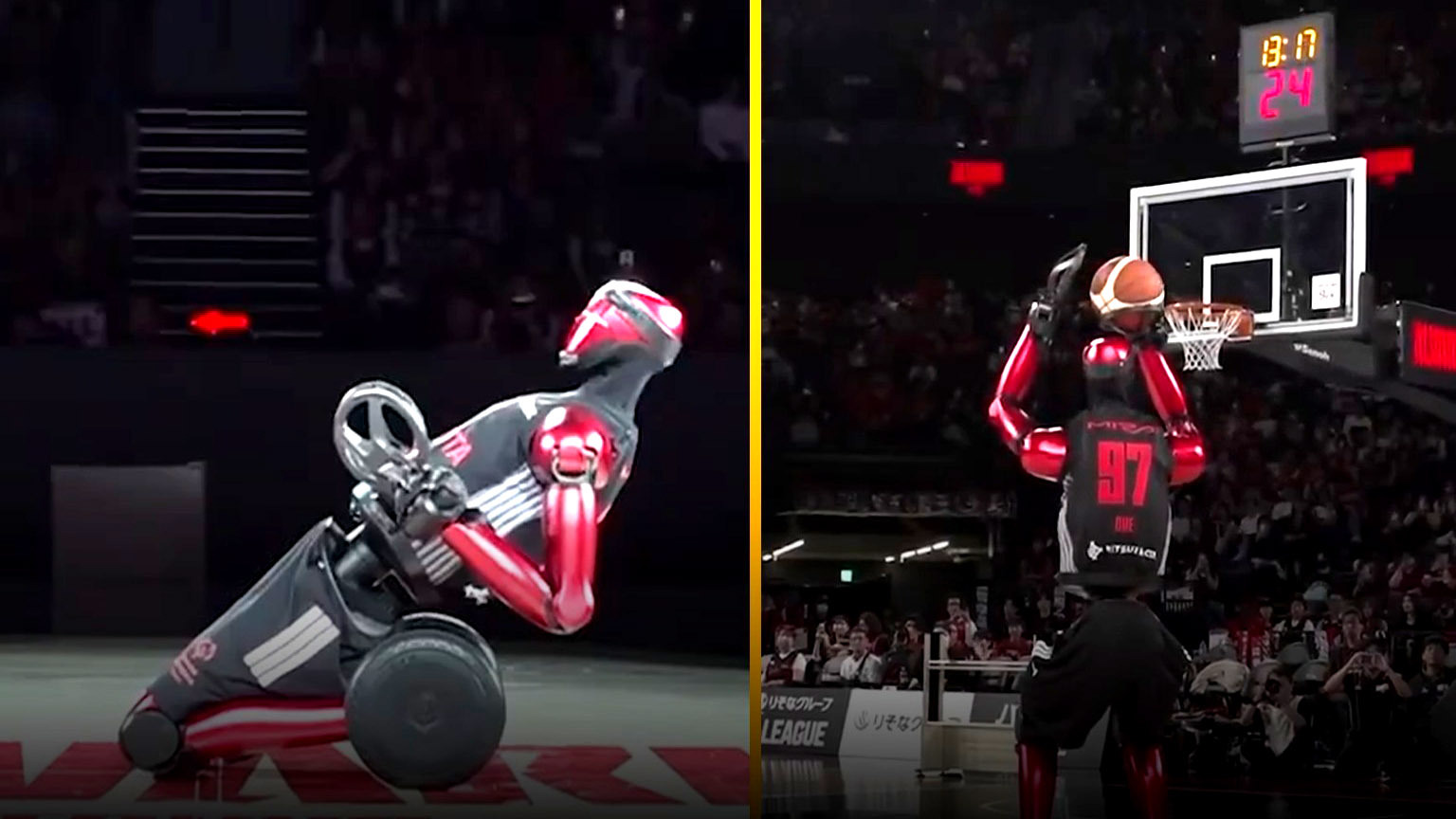
Yes, the latest variant of CUE, Toyota’s basketball-playing robot can do just that. Called the CUE7, it debuted at an Alvark Tokyo home game, at the Toyota Arena in Tokyo (because why not?) as the latest product from the automaker’s CUE project.
Read: Building A Dumber Headless Robot Was This Automaker’s Smarter Move
Started in 2017, the CUE Project is run by volunteers from Toyota’s Engineering Society, as a venture into developing AI from scratch. By 2019, their CUE robot had secured itself a Guinness World Record for the most successive free throws by a humanoid robot (assisted). How many did it do, then? Not ten. Not twenty. Not even a hundred. 2020 – yes Two Thousand and Twenty.
Then, in 2024, CUE secured another Guinness World Record, this time for distance. It secured the longest shot record by a humanoid robot, with a throw of 24.55 meters (80.5 feet) with CUE6.
CUE7 is considered a full model change. The robot can now shoot baskets, move freely around the court, and even dribble, with human-like movements. And it looks pretty cool as well, wearing a black Toyota-branded outfit and balancing on its two wheels.
The robot stands an imposing 7 feet 2 inches (2.18 meters) tall, weighs 163 pounds (74 kg), and is estimated to cost around $150,000, in case you’re interested in forming a team.
Packed with myriad cameras and sensors from head to wheel, the robot can accurately analyze its environment and determine just how to manipulate the ball with the right amount of force and trajectory. Of course, it’s not perfect, and that might just be what makes it a little more human. Or so we tell ourselves.