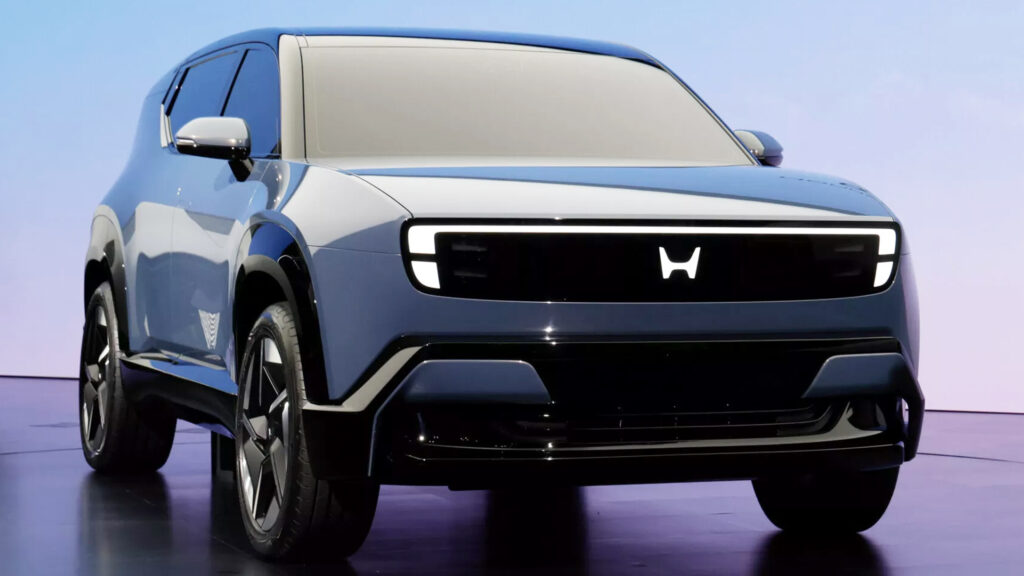



CONS ›› Little brand value, unusual design
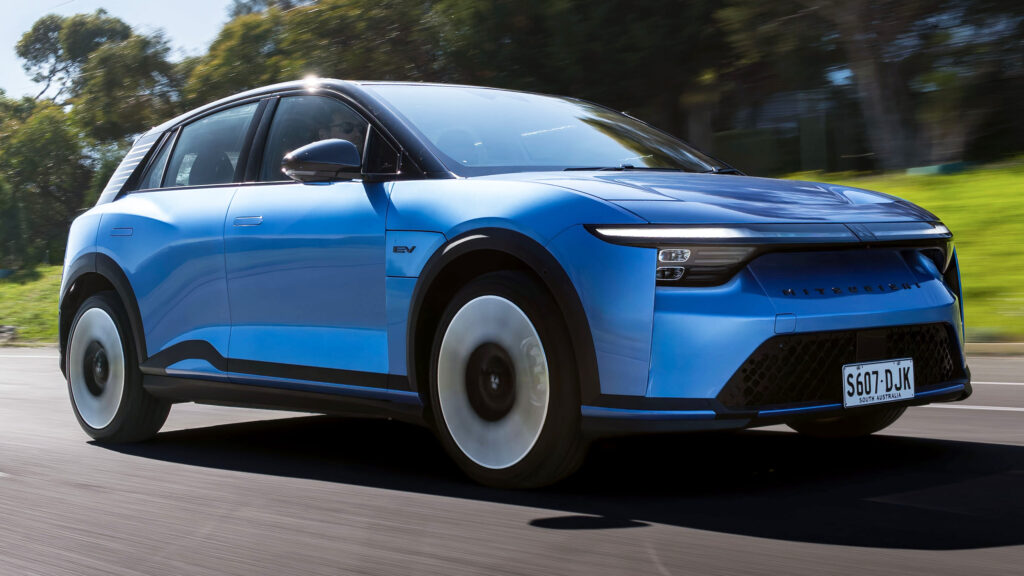
If you walked up to someone on the street and asked them what a GAC Aion V was, most would give you a blank stare. Those brave enough to answer might think it’s a fancy new washing machine, while others may guess it’s the name of an advanced hot-water system. It’s actually an electric SUV, and it’s launched in several markets, eager to shake up the EV establishment.
On paper, the Aion V seems almost too good to be true. This SUV promises space and comfort to match a Tesla Model Y, all while costing significantly less, having more impressive features, and being backed by one of China’s oldest and largest car manufacturers.
However, as we’ve seen with many other new cars from China, the specification sheet only tells part of the story. Building a compelling electric SUV isn’t easy. Has GAC managed to create one with the Aion V? The answer is a resounding yes.
QUICK FACTS



Photos Brad Anderson/Carscoops
Two versions of the Aion V are sold in Australia. The entry-level Aion V Premium kicks off the range, priced from AU$42,590 (US$29,700) before fees, while sitting at the top of the family is the Aion V Luxury, which we recently drove, priced at AU$44,590 (US$31,000) before fees.
The Aion V is actually in its second generation, with this model first introduced in China in mid-2024. It’s underpinned by GAC’s AEP 3.0 platform, also used by the China-exclusive Toyota bZ3X. Several different battery packs are available depending on the region. These include a 62 kWh lithium-ion pack from CATL, a slightly larger 64.5-kWh LFP battery, a 75-kWH LFP, and a 90-kWh NMC battery. All versions sold in Australia come standard with the 75 kWh pack, directing power through a single front-mounted electric motor with 150 kW (201 hp) and 210 Nm (155 lb-ft)of torque.
Although Chinese car brands have shown they can build cars at almost unthinkable price points, not all of them have figured out how to build a vehicle that’s nice to look at. As we experienced earlier this year with the Emzoom, M8 PHEV, and Aion UT, the Aion V isn’t exactly the most stylish SUV. It’s boxy, but not necessarily in a good way, and has a rather unusual stance on the road. Look past the odd design and peek inside the cabin, and you’ll understand where the Aion V starts to make a whole lot of sense.
Luxury On A Budget


Photos Brad Anderson/Carscoops
The interior of the Aion V doesn’t compute with an SUV that costs less than AU$45,000 (US$31,400), or roughly the same as a Toyota Corolla ZR, which is now almost a decade old. It feels so well put together, and so premium, that you could easily be fooled into thinking you were sitting in a vehicle costing upwards of AU$70,000 (US$48,900).
Obviously, the 14.6-inch infotainment display is what immediately catches the eye. It’s crisp and snappy, housing all important vehicle controls, including the climate functions. We hate screens used to adjust temperature and fan speed as much as anyone, but at least the Aion V has a shortcut menu locked at the bottom of the screen with these controls, making them a little easier to access while on the move.
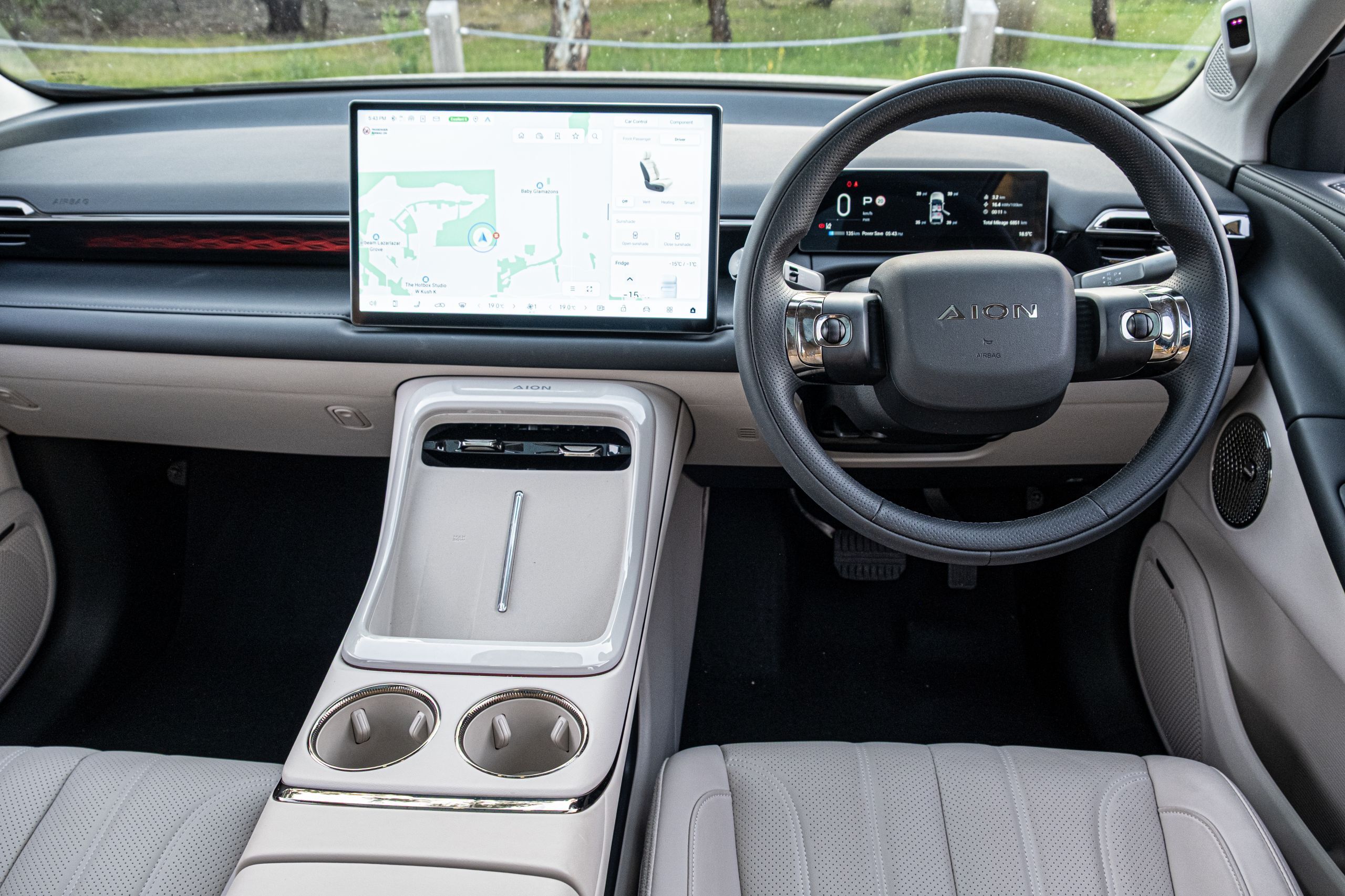
The Aion V also comes standard with an 8.8-inch digital instrument cluster and a two-spoke steering wheel. In Luxury guise, the EV also comes standard with genuine leather seats that feel exceptionally premium. Better yet, both front seats include superb massage functions that work absolutely brilliantly. Unlike so many massaging seats where you can only feel a tiny pulse in your back, the Aion V’s seats deliver a surprisingly realistic feel, as if tiny fists are being firmly pressed into your back. Usually, this is something you’ll only find in cars worth six figures.
Review: China’s 2026 GAC Aion UT Is A Budget EV That Doesn’t Feel Cheap
Perhaps the single biggest party piece of the Aion V’s cabin is the fridge. Housed between the front seats where you’d ordinarily find the center console, it’s 6.6 liters and proved hugely beneficial in hot weather, keeping my drink bottle cool. It’s not just a fridge either. The temperature can be adjusted to as low as 5 degrees Fahrenheit (-15 degrees Celsius), so it doubles as a freezer. What’s more, the temperature can be increased to up to 122 degrees Fahrenheit (50 degrees Celsius) should you want to keep drinks or food warm.


Photos Brad Anderson/Carscoops
All important interior surfaces feel very premium. These include the two-tone door panels with diamond stitching, the soft-touch dashboard, and the felt used for the wireless smartphone charger.
The positives continue in the rear. While the Aion V’s 2,775-mm (109.2-inch) wheelbase isn’t huge, it feels certifiably palatial in the second row. There’s plenty of headroom and legroom for adults to sit comfortably in the back. The Luxury model even includes a fold-out table on the back of the front passenger seat. Add in a panoramic glass roof with a sliding cover – unlike a Tesla – and you get a cabin that feels beautifully executed.
This Is No Sporty SUV, And That’s Okay
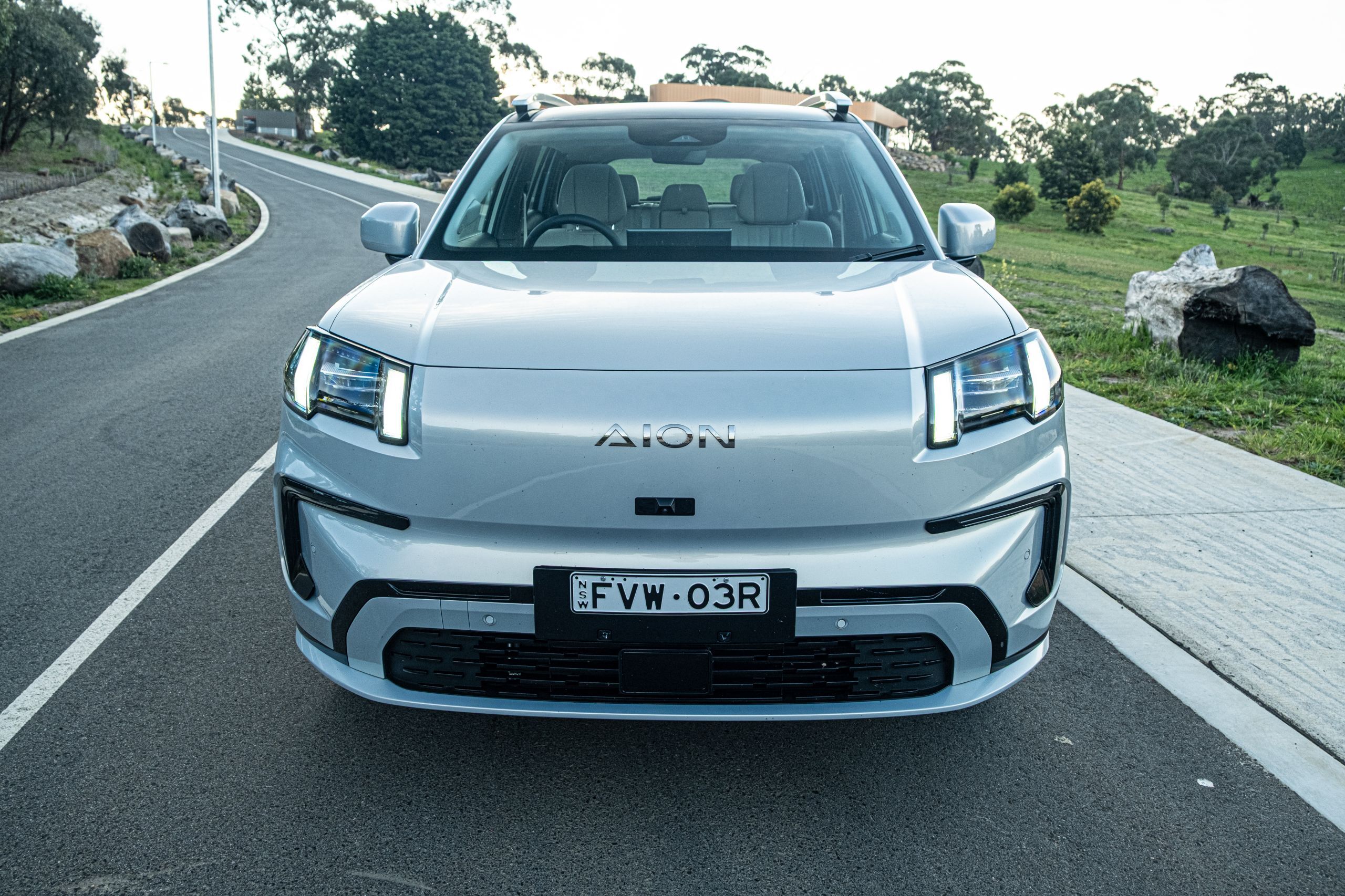
Unlike a Tesla Model Y, which even in its simplest form has a sporty edge to it, there’s nothing sporty about the Aion V. That’s not to say it isn’t a lovely place to spend time, as it is.
Figures of 150 kW (201 hp) and 210 Nm (155 lb-ft) are par for the course for front-wheel drive EVs like this, matching figures like the Hyundai Elexio and Kia EV5, but down slightly on the Geely EX5 with its 160 kW (215 hp) and 320 Nm (236 lb-ft).
Torque steer is kept to a minimum, although there is a hint of it if you pin the throttle in Sport mode. I spent most of the week with the Aion V driving around in Power Save mode as it’s the only mode that enabled one-pedal driving. This let me average just 14.8 kWh/100 km across more than 300 km (186 miles) of driving, meaning it is very possible to meet GAC’s WLTP-claimed driving range of 510 km (317 miles).


Photos Brad Anderson/Carscoops
The lack of one-pedal driving in Sport or Comfort modes is disappointing, as is the lack of paddle shifters to make on-the-fly adjustments to the regenerative braking. This isn’t a big deal, but it is something that prospective buyers should be aware of.
Steering feel is good. Unlike some EVs, the Aion V’s steering isn’t so light that a strong gust of wind through an open window could turn the wheel. Instead, it’s nicely weighted, although it doesn’t do a good job of transmitting feedback from the road, so it can be a little difficult to determine what the front tires are up to.
GAC has also done a good job of calibrating the suspension. The Aion UT I tested earlier this year rode more like a premium German sedan than a cheap, electric hatchback, and it’s much the same as the V. Owing to the SUV’s larger size, it is a little firmer than the UT, but it never crashes over potholes or speed bumps, and instead rides over them gracefully and quietly.
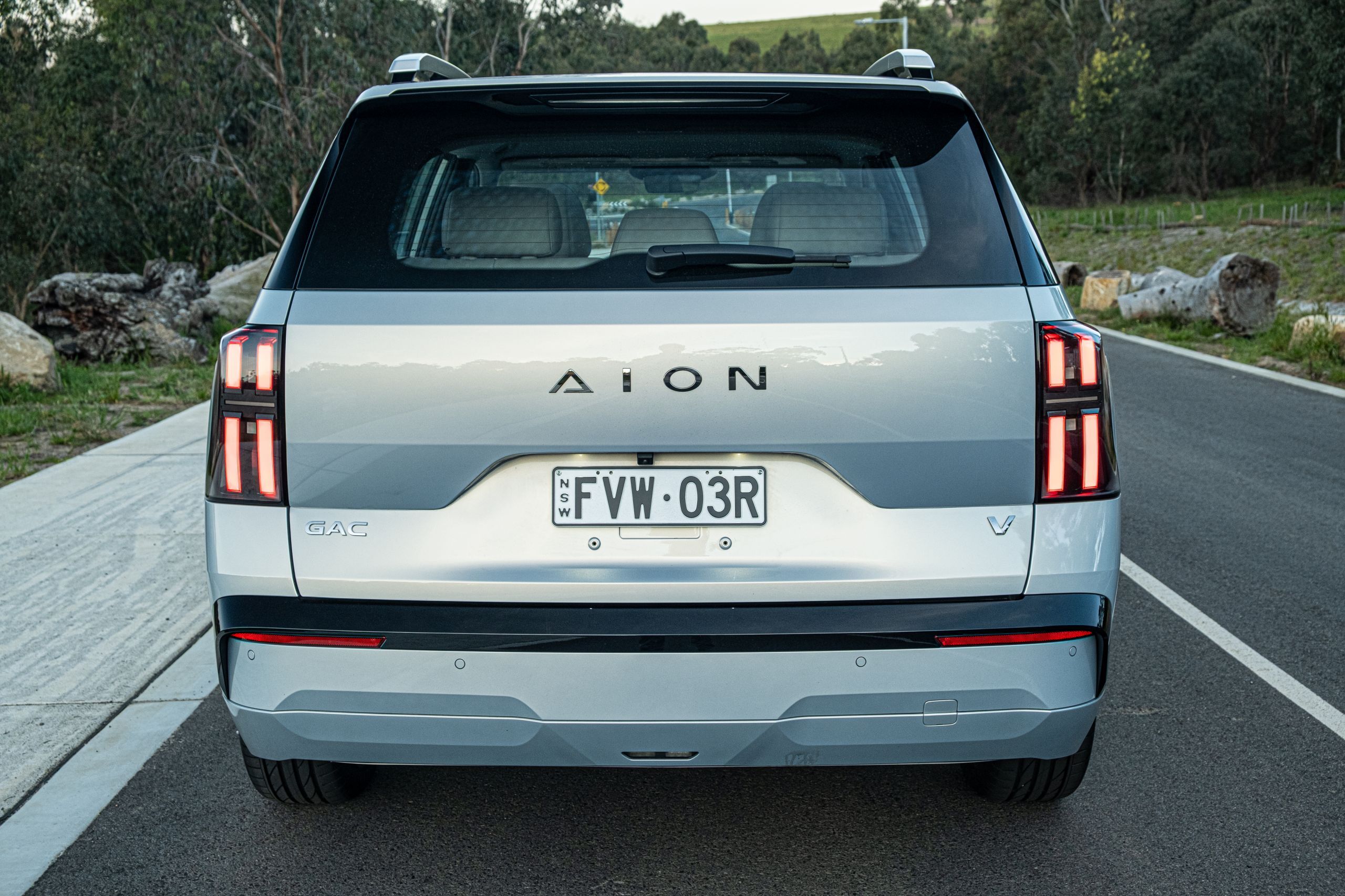
Charging speeds are solid. GAC says the Aion V supports charging speeds of up to 180 kW, meaning the battery can be charged from 10-80 percent in roughly 24 minutes. While a base Tesla Model Y can charge at up to 250 kW, it costs roughly AU$13,000 (US$9,000) more than the Aion V. More direct rivals like the Geely EX5 and Hyundai Elexio have DC charging speeds capped at just 100 kW and 150 kW, respectively.
It’s not all sunshine and rainbows, though. My biggest gripe with the Aion V is its safety systems, which are an all-too-common theme among Chinese EVs. First is the driver-monitoring system, which is as hyperactive as a kid that’s just eaten a whole bag of M&Ms. Glance away from the road for a split second and it’ll start complaining, triggering an annoying ring until you look back at the road.
Similarly, the speed monitoring immediately alerts you even if you’re just momentarily 1 km/h over the speed limit. While these features are becoming more common, not just on cars from China but elsewhere in Asia, Europe, and the US, some brands have made it simple to disengage these alerts with conveniently placed shortcuts on the touchscreen. That’s not the case with the Aion V, as you have to dive into several menus to disable them every time you go for a drive.


Photos Brad Anderson/Carscoops
Verdict
The GAC Aion V is very impressive, especially given the price and all of the equipment on offer. I have no doubt the exterior design will put off some in the market for an electric SUV, but if you can look past some of the odd styling, it’s a well-rounded proposition.
For a vehicle costing less than AU$50,000 (US$34,900), the interior is the obvious highlight. It’s stylish, well-made, plush, and loaded with features. Combine a calming driving experience with great efficiency, and you get a mid-size electric SUV that’ll leave some legacy brands scratching their heads.