










- Kia executives say that we’ve seen the last combustion-powered GT car from the brand.
- The only one available in the US is the K5, and when it leaves, Kia’s GT cars will be EV only.
- Hyundai Motor Group appears best positioned to succeed with an all-electric GT future.
Performance fans have had it pretty good in recent years, especially from some unlikely sources. The Stinger GT, especially with the 3.3-liter turbocharged V6, was one of those outliers, setting a high standard when it landed and proving Kia could do more than just practical commuters.
Since then, the Korean brand has turned out a handful of genuinely compelling performance cars. But that chapter is winding down. The GT badge isn’t going anywhere, but its connection to gasoline power is nearing the end.
Read: New Kia K4 Variant Fixes Its Most Controversial Angle, But You Probably Can’t Have It
Speaking to members of the press, Australian product chief Roland Rivero confirmed to CarSales that Hyundai Motor Group (HMG) as a whole is gradually moving away from combustion engines because of regulations. “The N tagline is being more and more applied to electrified product, and for a bunch of reasons,” he said.
“You’ve got to satisfy the global situation, and CO2 regulations are tightening all around the world,” Rivero continued. “Ours is going to catch up very, very quickly too, so I can understand why R&D centers are still trying to dial up driving enjoyment responsibly.”
The Last of the GT Gas Crowd

This is a serious blow to those who love performance cars. Since the Stinger GT came out, Kia has been quietly offering a great value in its sports cars. That sedan was genuinely excellent to drive and still lives on to a degree in the Genesis G70. Kia still sells the K5 GT, a front-wheel-drive sedan that packs more power than it probably needs, which, lets be honest, isn’t always a bad thing.
As we understand it, the K5 GT will be the last combustion-powered GT car from Kia. Meanwhile, Hyundai has already committed to another generation of the Elantra N, reportedly with a bigger engine. So the torch hasn’t gone out completely, but the flame is flickering.
Shifting Gears: From Gas to Kilowatts
Keep in mind that many brands, big and small, have backtracked from previous goals to go all-electric. Even Porsche, which has been talking about an electric 718 for ages, is changing its tune. Can Kia and Hyundai make a success of EV performance cars while other brands get cold feet?
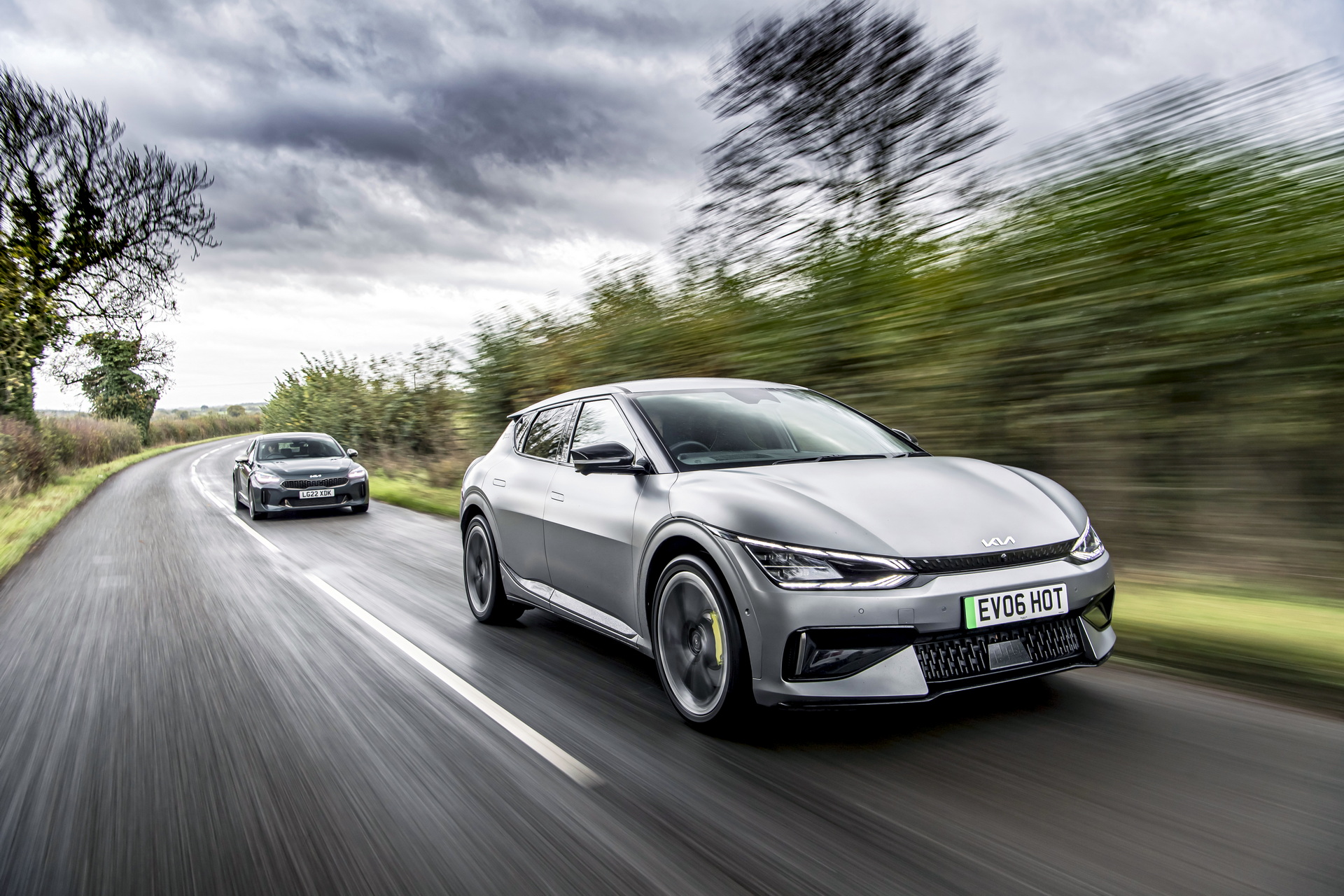
If any brand can make electric performance succeed, it seems like Kia and its corporate partner, Hyundai, are the ones to do it. The EV6 GT is a genuinely epic little hatchback to drive, and it’s supercar-quick. Then, if that’s not good enough, the Hyundai Ioniq 5 N is basically everybody’s favorite performance EV.
“There’s no reason why an electrified product can’t give you a similar experience [to internal combustion performance cars], albeit with some computer tech and what not,” Rivero said. “Hot hatches are harder to justify as a business case, ongoing, when you combine all the elements of CO2 regulations and the global movement [toward electrification].”
The Kia boss was also asked about the possibility of hybrids or range-extended EVs playing a role in Kia’s performance future. He didn’t confirm anything, but as CarSales noted, there are ongoing rumors that Hyundai is developing hybrid N models. If that’s true, it’s likely Kia could follow suit.
So sure, it’s sad to see combustion GT cars go away, and Hyundai Motor Group might come to regret this choice… but at least the performance we’ve come to appreciate from the brand isn’t dying altogether.