- Hyundai has announced pure-combustion, hybrid, and plug-in hybrid models.
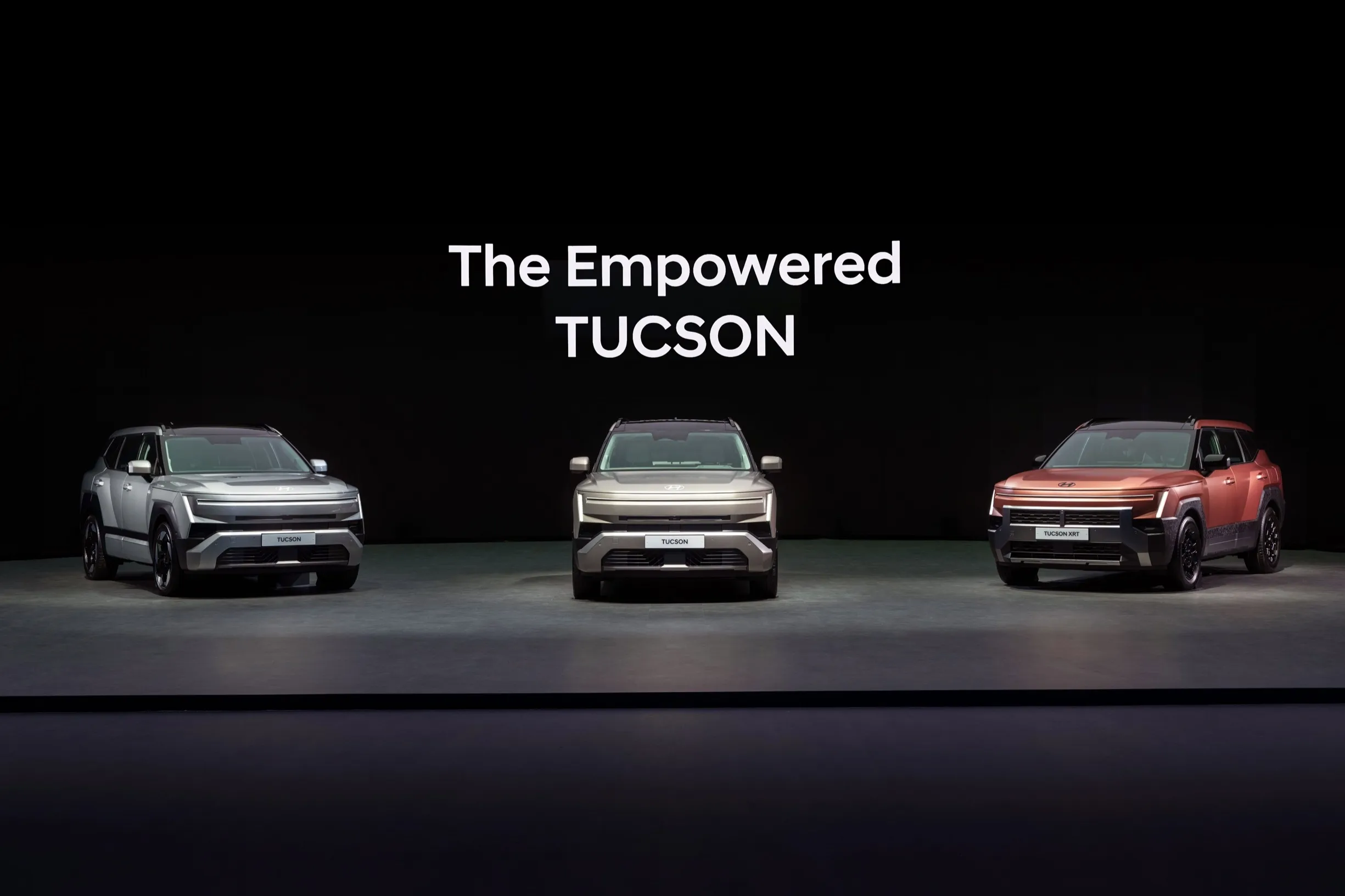
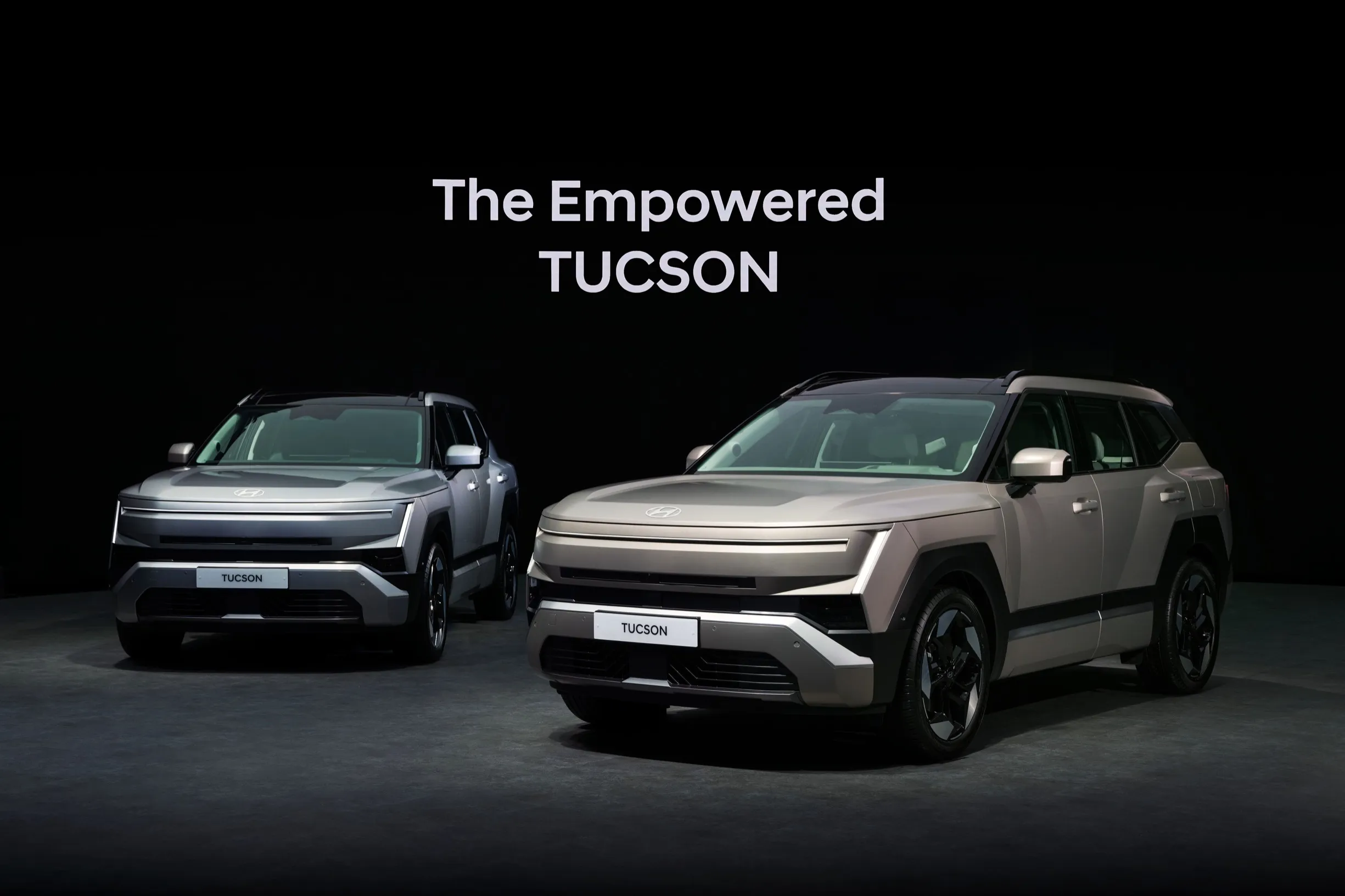
- The fifth-generation Tucson adopts Hyundai’s Art of Steel design philosophy.
- Like the exterior, the Tucson’s interior has been overhauled.
If we’ve learned anything about Hyundai over the past decade, it’s that the South Korean brand doesn’t like doing things in halves. Whether it’s with its N Performance models or its futuristic designs, Hyundai wants to make a statement. The all-new Tucson does just that.
Previewed in August, but now revealed in full in New York City, the latest-generation Tucson looks nothing like its predecessor and adopts the same Art of Steel design philosophy as the new Elantra. Matching the radical exterior design is a new interior and, depending on the market, three available powertrains.
Read: Hyundai’s New Tucson Remembers How You Got Into That Tight Parking Bay, And Reverses Itself Out
The simplest and cheapest versions of the fifth-gen Tucson will use the brand’s familiar 1.6-liter turbocharged four-cylinder and 2.0-liter naturally aspirated four-cylinder engines, depending on the market. Power will range between 148 hp and 190 hp, while torque sits between 141 lb-ft (191 Nm) and 195 lb-ft (264 Nm). Six-speed manual, seven-speed dual-clutch, eight-speed automatic, and six-speed automatic transmissions will be available, although it’s not yet clear which will be sold in the US.
More interesting than the standard gas-powered models are the new Tucson Hybrid and Tucson Plug-In Hybrid. Both use the 1.6-liter turbo four-cylinder with an electric motor. The Tucson Hybrid has a small 1.49 kWh battery pack, a six-speed auto, and has a quoted 0-60 mph (0-96 km/h) time of 8.5 seconds. Power varies between 233 hp and 242 hp, depending on the market, while torque sits at a solid 280 lb-ft (380 Nm).



Significant changes have been made to the PHEV version, with it now rated at 288 hp and 258 lb-ft (350 Nm). It will be sold exclusively with a six-speed and four-wheel drive, allowing for a 7.9-second run to 60 mph. The 17.1 kWh battery will also give it 50 miles (81 km) of all-electric driving range.
A Road-Going Concept
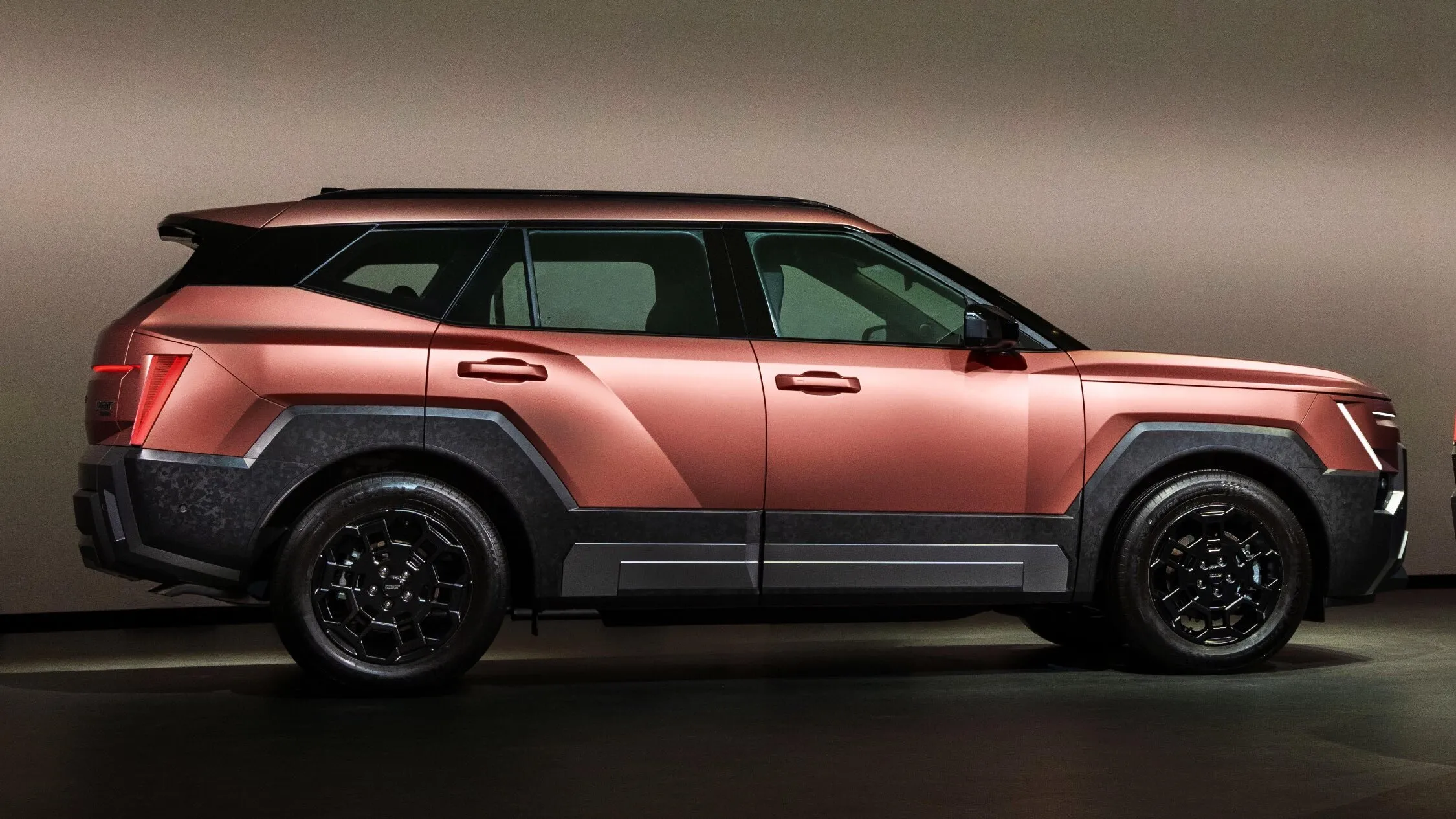
Hyundai describes the new Tucson as ‘The Boldest SUV,’ and it’s easy to see why. The outgoing Tucson is already pretty wild, but this new one takes things to a different level, looking more like a concept car or a moon rover than a production model. Long-wheelbase models, which will be sold in North America, Korea, and Australia, are 2.3 inches (60 mm) longer, 1.5 inches (40 mm) wider, and 0.8 inches (20 mm) taller than the old model. The wheelbase has also been increased by 1.1 inches (30 mm) to 109.6 inches (2,785 mm). A short-wheelbase version will be sold in Europe.
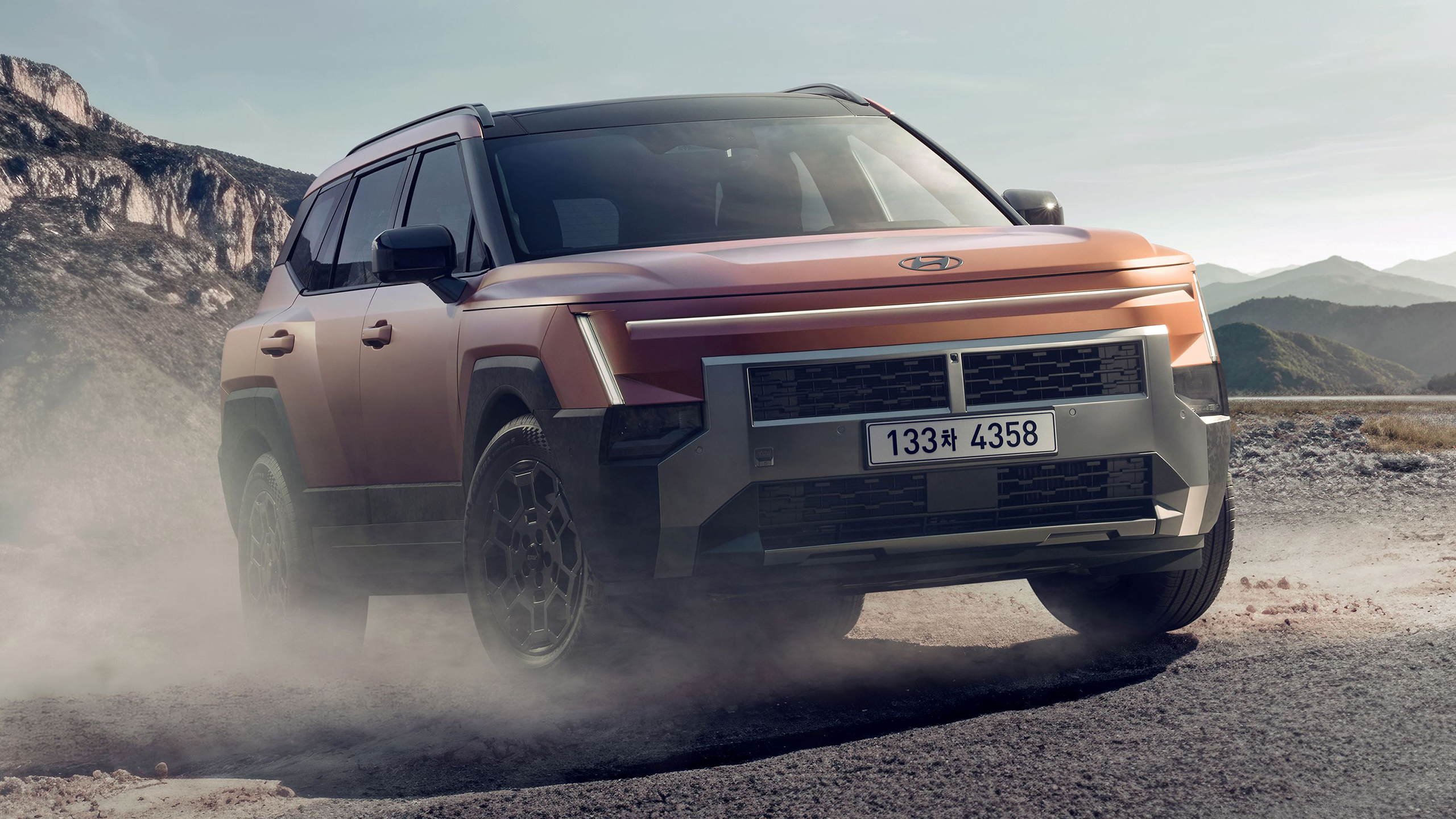
The front of the new Tucson includes a light bar, upright daytime running lights, and a brutish bumper with black lower grilles and darkened headlamp clusters. Hyundai’s designers have taken the angular approach of the fourth-generation model and pushed it further, adding square fender flares and quarter panels.
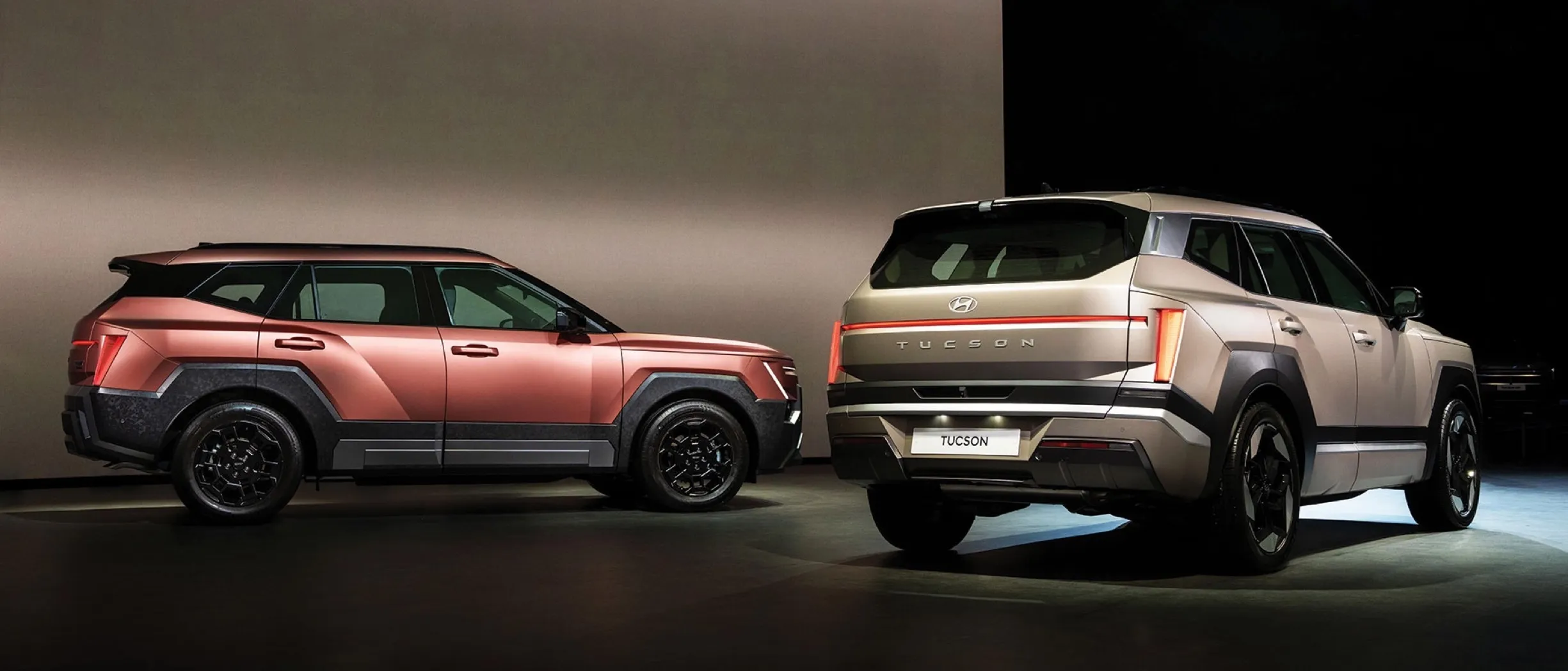
There’s little doubt the Tucson’s design will divide opinions, and that’s probably exactly what Hyundai wants. Much like the front, the rear is also wild, including a light bar, vertical taillights, blacked-out trim, and a bumper as dramatic as the front.
The cabin is just as radical. Hyundai’s new Android Automotive-powered Pleos Connect infotainment system is the centerpiece, working on either a 12.9-inch infotainment display or the larger 17-inch screen shown in these photos. There’s also a small 9.9-inch gauge cluster display, although in Korea, at least, this display is an option in the base model.


Matching the innovative new technology stack is a new dashboard and an intriguing transmission tunnel with a tiered design, including a raised section with a wireless charger for the driver, and then a recessed section with two cupholders and a charger for the passenger. It also includes ambient lighting, plush seats, and a column-mounted shifter.
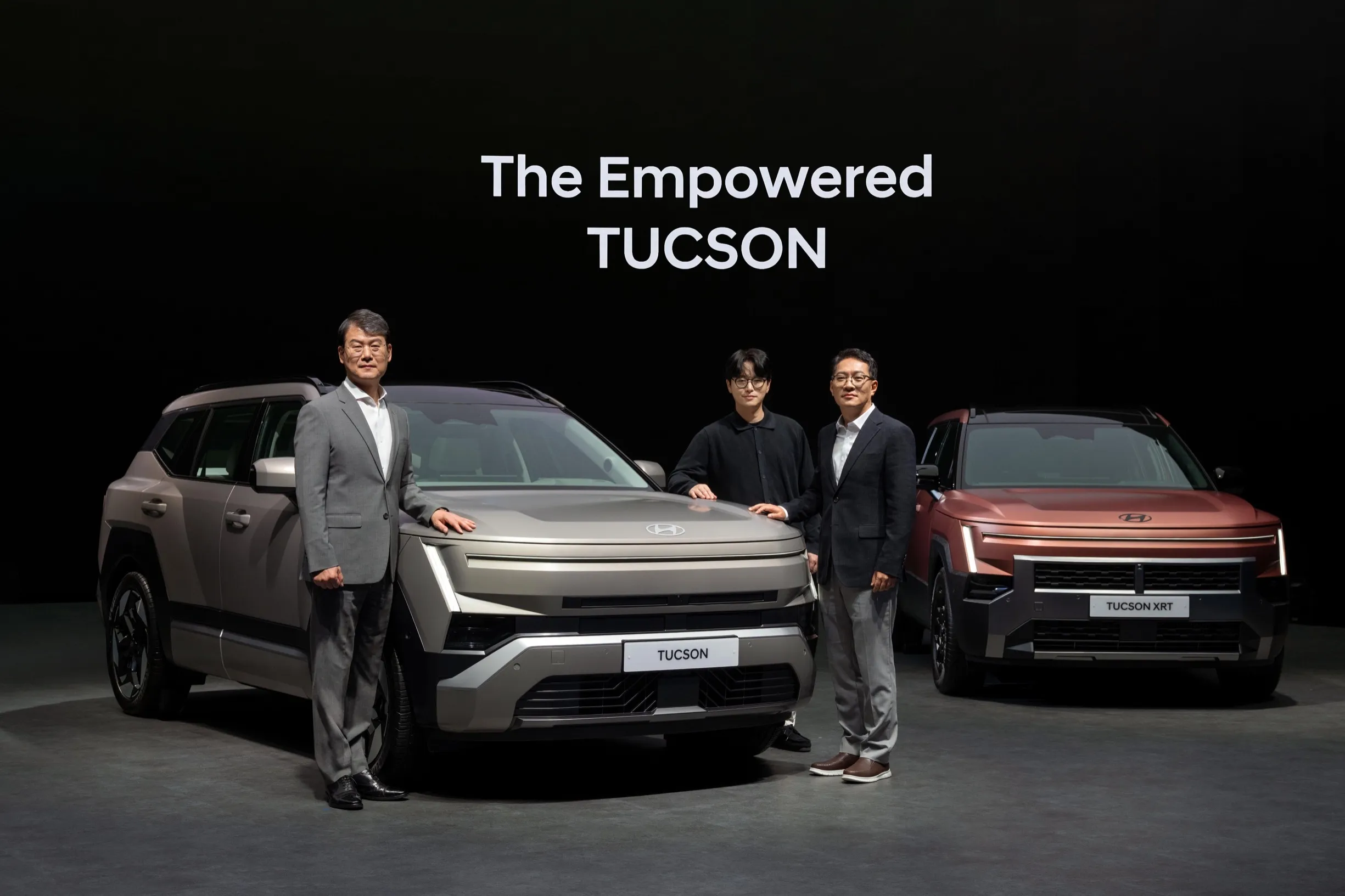
Two slightly rugged versions have also been announced, badged the Tucson XRT and XRT Pro, the latter of which will be sold only in North America. Both have an even more dramatic design, with the XRT Pro also benefiting from all-terrain tires, front recovery hooks, and improved approach and departure angles. Hyundai says a “sport-inspired” version of the Tucson will premiere at the Paris Motor Show next week, but it’s keeping details about it under wraps. In all likelihood, it’ll be a new N-Line model.
South Korea will be the first market to receive the new Tucson, arriving later this year. It will then be launched in North America, Europe, and other markets in 2027.