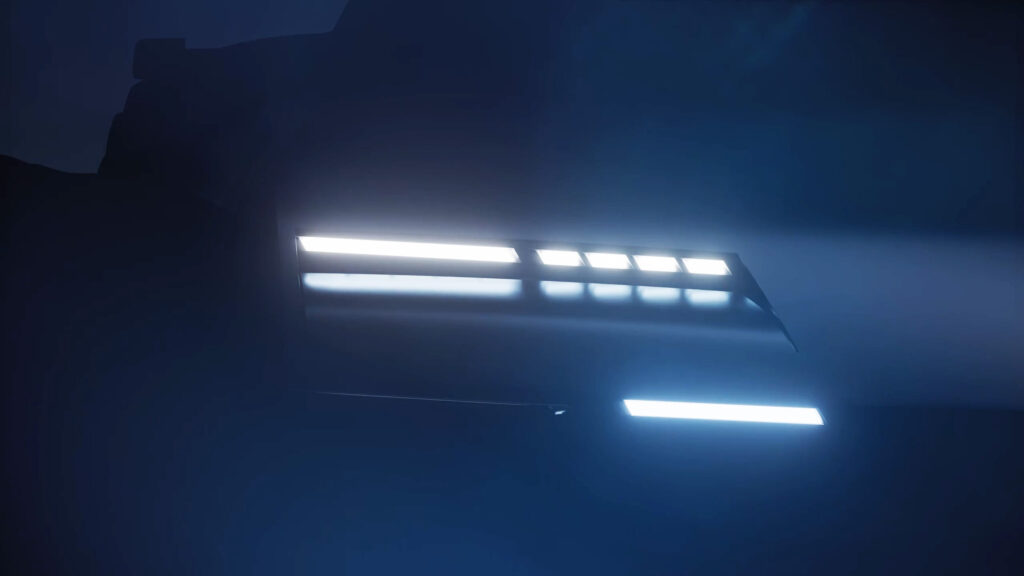











- Peugeot says its RCZ Vision concept shows where the brand’s tech and design is heading.
- “Feline Future” design language and Hypersquare steering wheel are coming to road cars.
- 493 hp EV powertrain is paired with a slim solid-state battery and 1,000 volt architecture.
Only four of the 14 brands in the Stellantis portfolio will get 70 percent of the investment going forward. Peugeot is one of them, along with Jeep, Ram and Fiat, and its RCZ Vision concept revealed at this year’s Paris Motor Show gives us a big hint about how it plans to spend that cash.
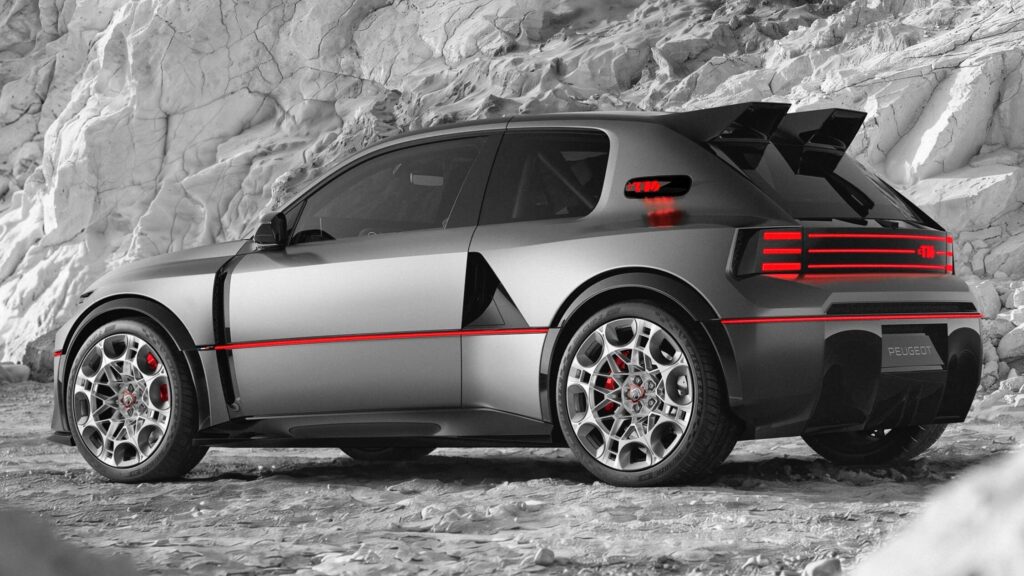
The RCZ borrows the name of Peugeot’s stylish Audi TT rival that ran from 2009-15. It’s a low, voluptuous coupe with a distinctive glass bubble roof, and it showcases the design and tech we’ll see on all future Peugeot models in the next few years.
Related: 2027 Peugeot 208 Spied With Sharp Looks, Square Wheel, And New Platform
“Feline Future” is Peugeot’s name for its new design language, which the brand says combines its five principles of freedom, courage, elegance, inner force and instinct. That sounds like a load of flowery fluff to a non-designer like me, but what it seems to boil down to is a plan for cars that look powerful without trying too hard, and which aren’t afraid to break design conventions. Like using smaller screens instead of cramming in as much touchscreen tech as possible.
The RCZ Vision showcases Peugeot’s new take on its three-claw lighting signature at both ends, this time arranged horizontally. And there’s a micro-perforated “RCZ” graphic on the front bumper. Heavily sculpted flanks make the pronounced shoulders look even wider, and the roofline is kept low by the battery back’s slim 4.3 inches (110 mm height). More on that in a moment.
Digital With A Difference



Inside the RCZ’s cabin – whose rear seats are allegedly usable by adults, unlike the original’s – is Peugeot’s Hypersquare steering wheel. We’ve seen it on previous concepts, and it’s heading for the E-208 production hatch next year. Steer-by-wire tech means the driver turns the wheel through less than one full rotation at parking speeds to go from full left to full right. The ratio then slows as road speeds increase to promote stability.
Peugeot’s designers have also reworked the brand’s i-Cockpit dashboard. You still look over the wheel to the gauge cluster to monitor the most important driving info, like speed and remaining charge. But the driver can customize what data he sees elsewhere on micro LED displays, or deactivate the central screen completely.
Much of the RCZ’s important tech is hidden from view. The concept rides on parent company Stellantis’s new STLA One architecture that was revealed earlier this year, and hits the road in 2027 under the next Peugeot E-208. STLA One can handle hybrid engines, but the RCZ shows it in its EV guise.
1,000 Volt Electrics
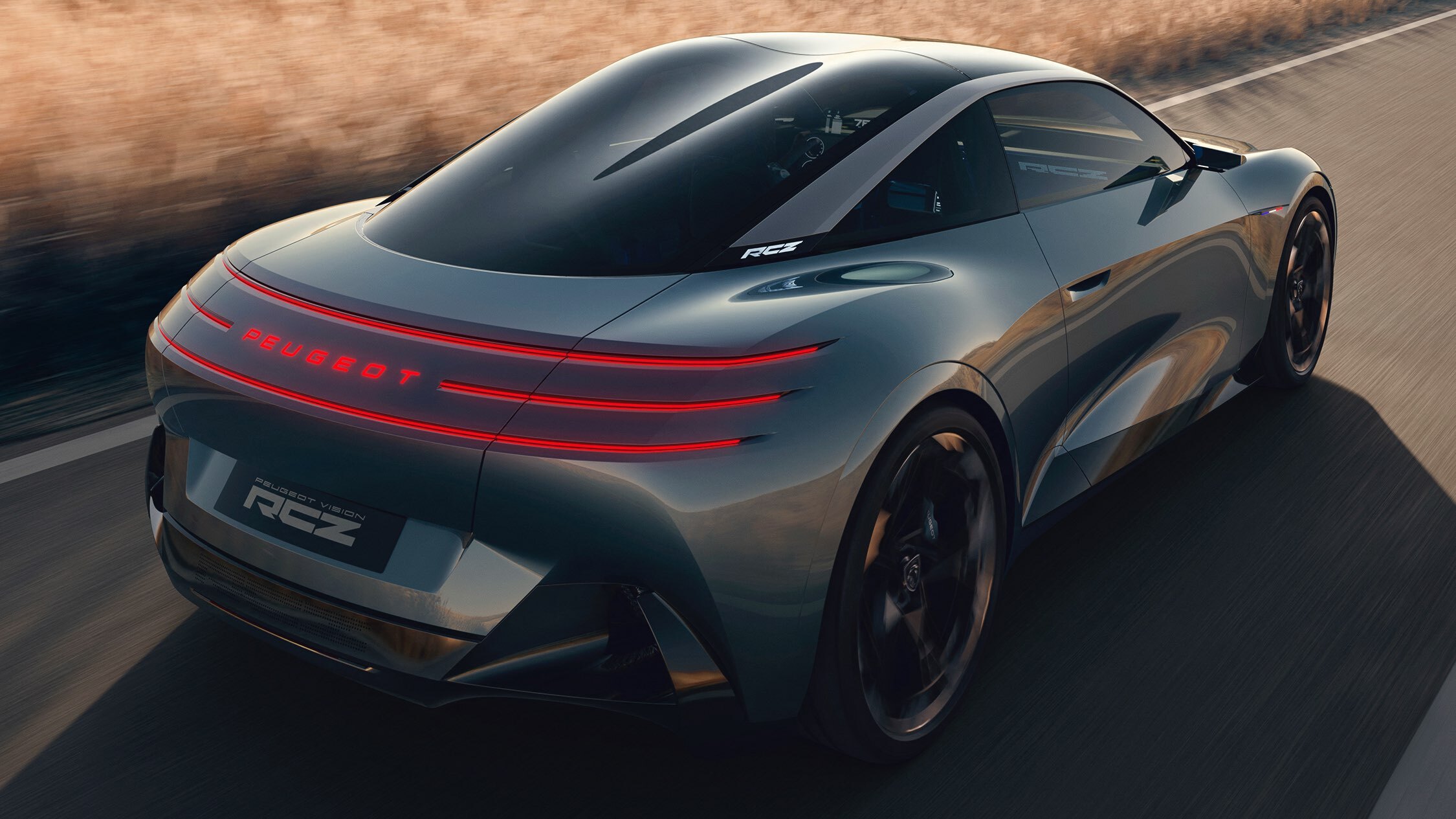
Stellantis previously told us the platform would have 800-volt electrics and LFP batteries, but the RCZ imagines a more advanced future incarnation with 1,000 volt capability and a solid-state battery of unspecified size that can fill from 10-80 percent in 10 minutes. The 493 hp (500 PS) coupe has a range of 373 miles, and consumes 5.39 miles per kWh (11.5 kWh/100 km), so the battery must have a usable capacity of around 69 kWh, if our math is correct.
But how does the math look for building a new coupe? Probably not great. The sports segment is a niche market these days, and Peugeot hasn’t committed to put the RCZ into production, though with the RCZ’s original nemesis, the Audi TT, poised for an electric comeback, we wouldn’t rule the possibility out entirely.
The design cues seen here will all find their way into Peugeot dealerships on anyway, even if a carbon copy of this coupe doesn’t. And the platform, EV hardware, steer-by-wire tech and L2++ hands-free driving system, will be shared out across the entire Stellantis portfolio.