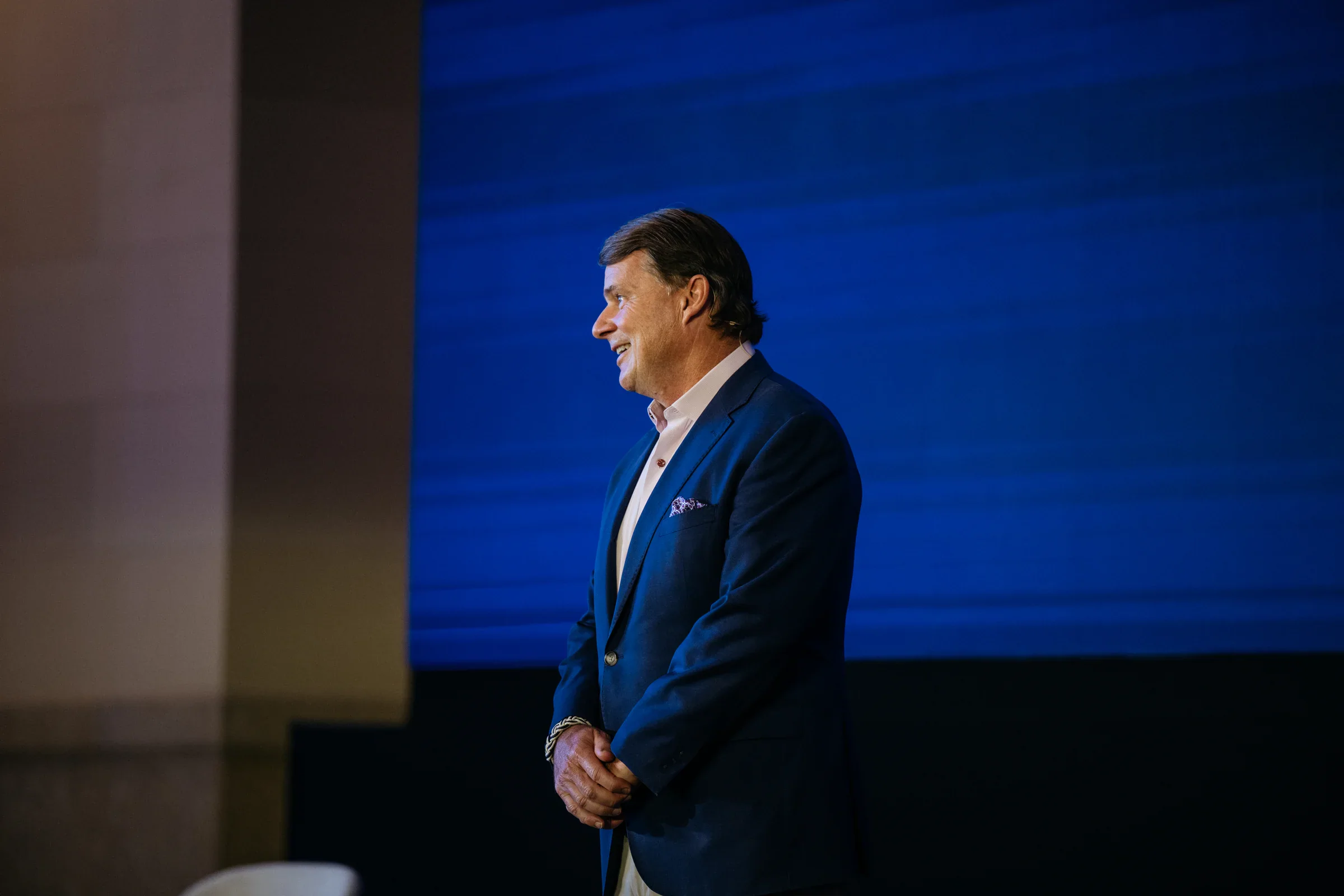










- Ford CEO Jim Farley warns a shortage of skilled trades stalls U.S. manufacturing.
- Company invests millions in training, scholarships, and partnerships to rebuild.
- A U.S. raid on Hyundai’s Georgia plant shows risks of importing foreign labor.
Automakers who want a manufacturing footprint in America are facing a huge challenge. Only this time, it ain’t tariffs, but people. At Ford’s “Essential Economy” summit in Detroit this week, CEO Jim Farley warned that a shortage of skilled tradespeople is undermining attempts at reshoring production. Factories, infrastructure, and even AI data centers will likely suffer as a result.
“How can we reshore all this stuff if we don’t have people to work there?” Farley asked, pointing to a national shortfall of more than a million workers in critical trades.
A Divided Workforce
Ford brought together 300 leaders from government and industry to address what it calls a productivity divide between high-flying white-collar jobs and struggling blue-collar industry positions. While tech and cloud firms are boosting output, productivity in construction, energy, transport, and manufacturing is slipping.
More: John Deere’s Answer To The Labor Crisis Is A Robot Mower That’ll Quietly Take Your Job
During the keynote, Farley sat down with Labor Secretary Lori Chavez-DeRemer and Mike Rowe of the Mike Rowe Works Foundation to chew over just how wide the skills gap has grown.
To illustrate the point, he reached for a personal anecdote, recounting a recent household standoff between his son, who had just finished a summer turning wrenches, and his wife, Leah, who wasn’t exactly thrilled at the idea of ditching college for the garage.
“My son worked as a mechanic this summer and he said, ‘Dad, I really like this work. I don’t know why I need to go to college.'” Farley recalled. “And Leah looked at me and said, ‘Is he serious?’ Like, should we even be debating this?’ It’s in a lot of American households. It should be a debate”.
College or the Workshop?
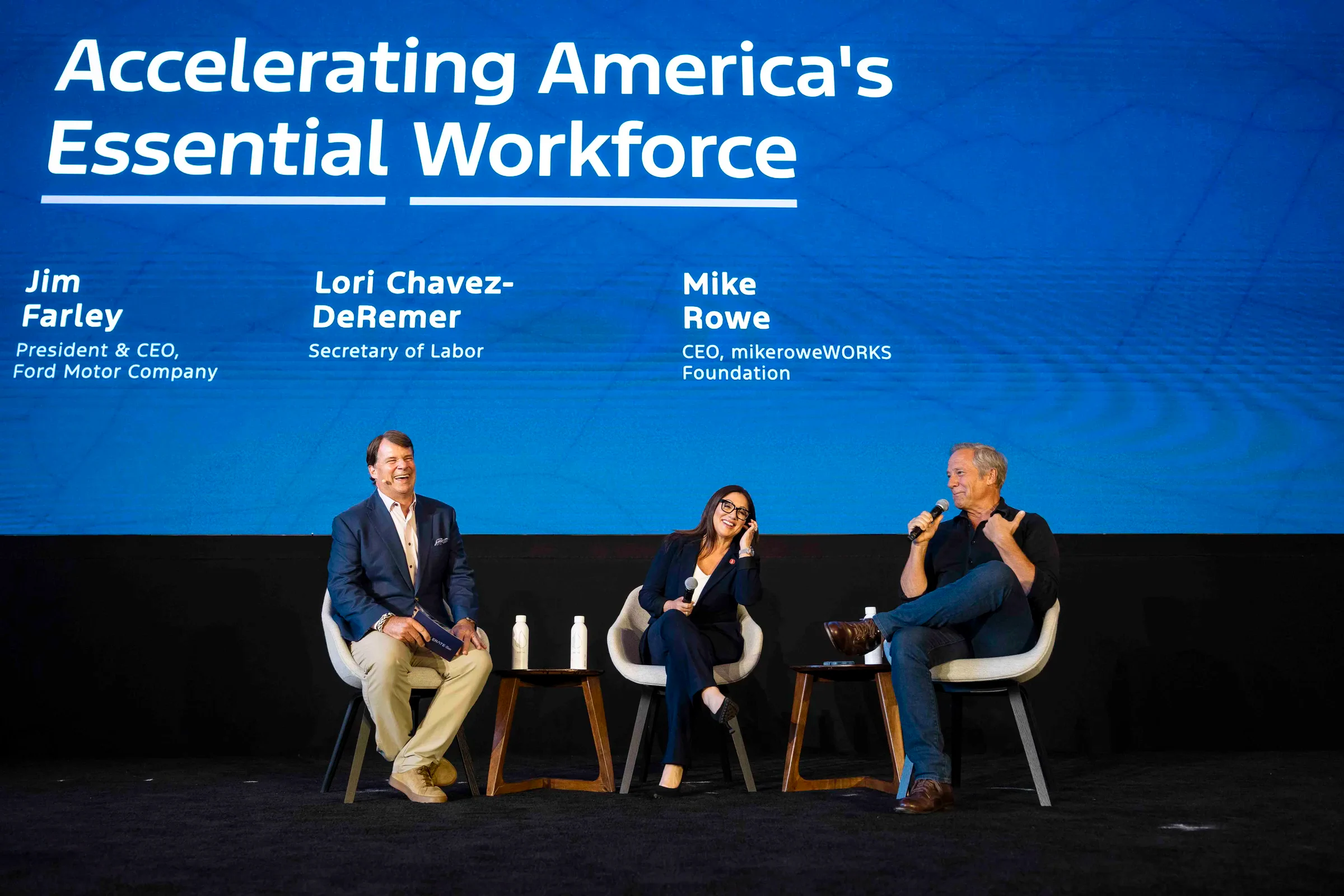
Farley pointed out that soaring tuition often outweighs the financial benefit of a degree, especially when trade jobs are in such high demand. Skilled roles in fields like auto service, construction, and energy tend to offer both stability and solid pay, yet employers like Ford still struggle to hire enough technicians to handle dealership repairs.
To address the shortfall, Farley said that the Blue Oval is committing over $5 million in new trade training programs, scholarships, and technical high-school initiatives. By Ford’s count, the effort could reach over 100,000 students and educators in the coming years. Keep in mind that even if it achieves that goal, the blue-collar sector still needs far more workers.
A Practical Shortage
“If we are successful… when we are successful… We’ll take on bigger, higher-class problems,” Farley told Axios. “Right now, the problems we’re trying to solve are pretty practical. I need 6,000 technicians in my dealerships on Monday morning.” Even as Farley and others call for more homegrown talent, the recent Hyundai raid underscores the problem.
That shortage has already pushed automakers toward unconventional solutions. As Andrew Sorkin of CNBC pointed out, the automaker was essentially bringing its own workers into the country to fill the gap. Then, in September, immigration officials arrested over 300 workers from Korea who entered the country under short-term visas to install and oversee equipment.
The crackdown sparked outrage in Seoul, whose officials warned that unless the Trump administration streamlines visa policies for specialized labor, Korean firms may rethink future U.S. investment.
Global Tensions
Clearly, the situation for both foreign and domestic automakers isn’t easy to handle. Without the laborers available, the work simply can’t be done. For Ford, this summit is all about positioning the workforce so that the gap closes:
“This is a call to action for business, technology, and government to break down the barriers of bureaucracy and underinvestment”, Farley noted. “The work we begin today is about ensuring America’s Essential Economy is strong and fit for the future.”