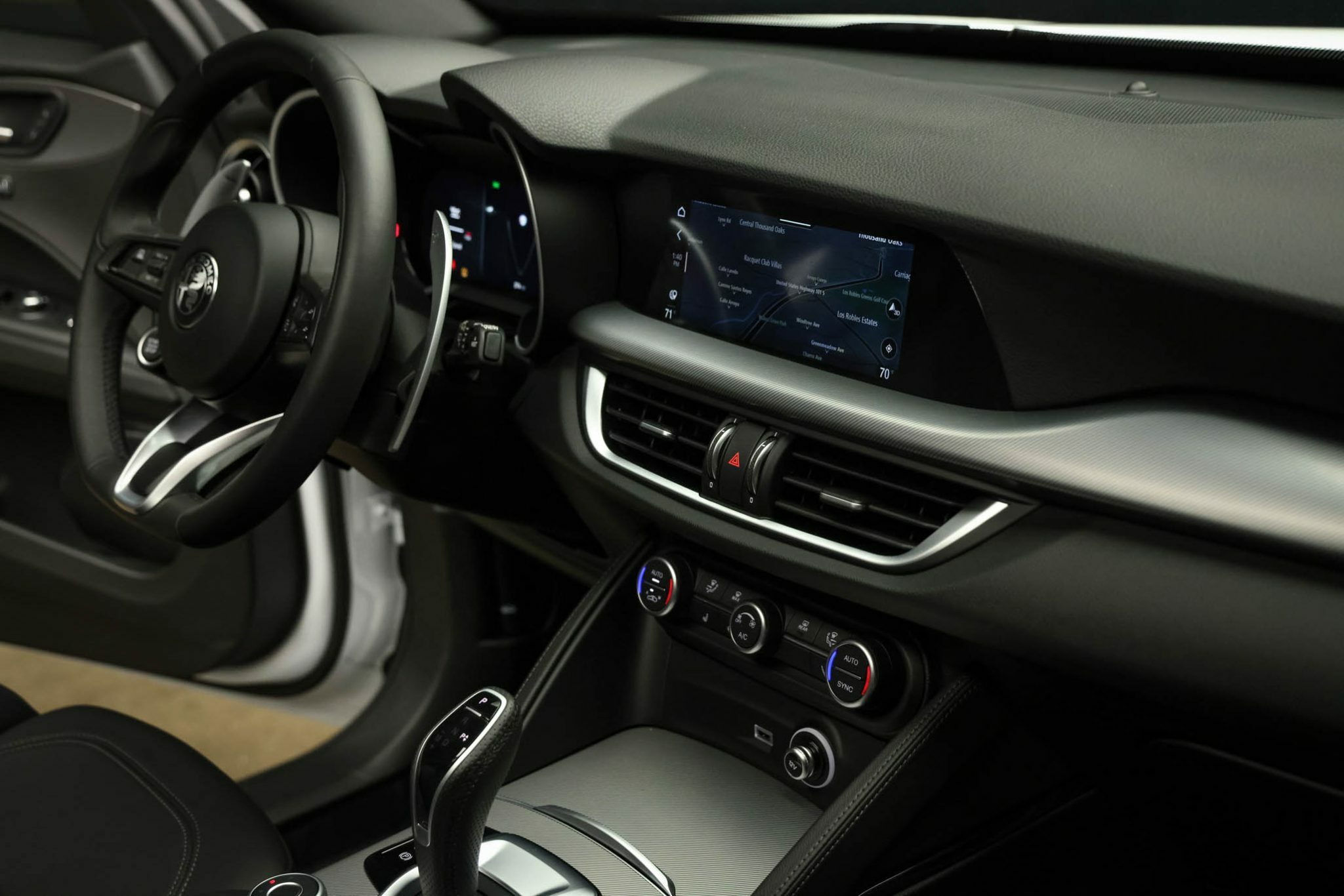









- Production of the Alfa Romeo Giulia and Stelvio has been extended.
- Their offset license plate design may conflict with new EU safety rules.
- Successor models are delayed and will feature electric and hybrid power.
We live in interesting times for Stellantis and its Italian arm. What was once a roadmap lined with fresh Alfa Romeo sedans and SUVs has changed direction. Again. The company has rethought its rollout, choosing to extend the lifespan of its current models rather than introduce new ones just yet.
Review: Alfa Romeo Stelvio Quadrifoglio Feels More Sports Car Than SUV
It will keep the current Giulia and Stelvio in production until the end of 2027 at the Cassino plant in Italy, after being forced to delay the debuts of their successors. This extension was confirmed by Alfa Romeo CEO Santo Ficili during the recent launch of the updated Tonale, where he acknowledged that the next-generation cars need more time to mature.
Furthermore, Jules Tilstone, Managing Director of Alfa Romeo in the UK told Autocar that the performance-focused Quadrifoglio variants will return in production from April 2026. While the twin-turbo 2.9-liter V6 might need a few changes to meet the Euro 7 regulations, Tilstone said that the powertrain “will be effectively the same”. Overall, the Giulia and Stelvio will continue to be offered with the same non-electrified gasoline and diesel engines.
Extended Lifelines
The next-generation Giulia and Stelvio were initially conceived as BEVs, but Stellantis later opted to add a hybrid powertrain option to the program, stretching the development timeline.
Earlier this year, Ficili said that the new Stelvio could debut in 2025, with sales starting in 2026 and the new Giulia following soon after. Apparently, that target may have been optimistic.
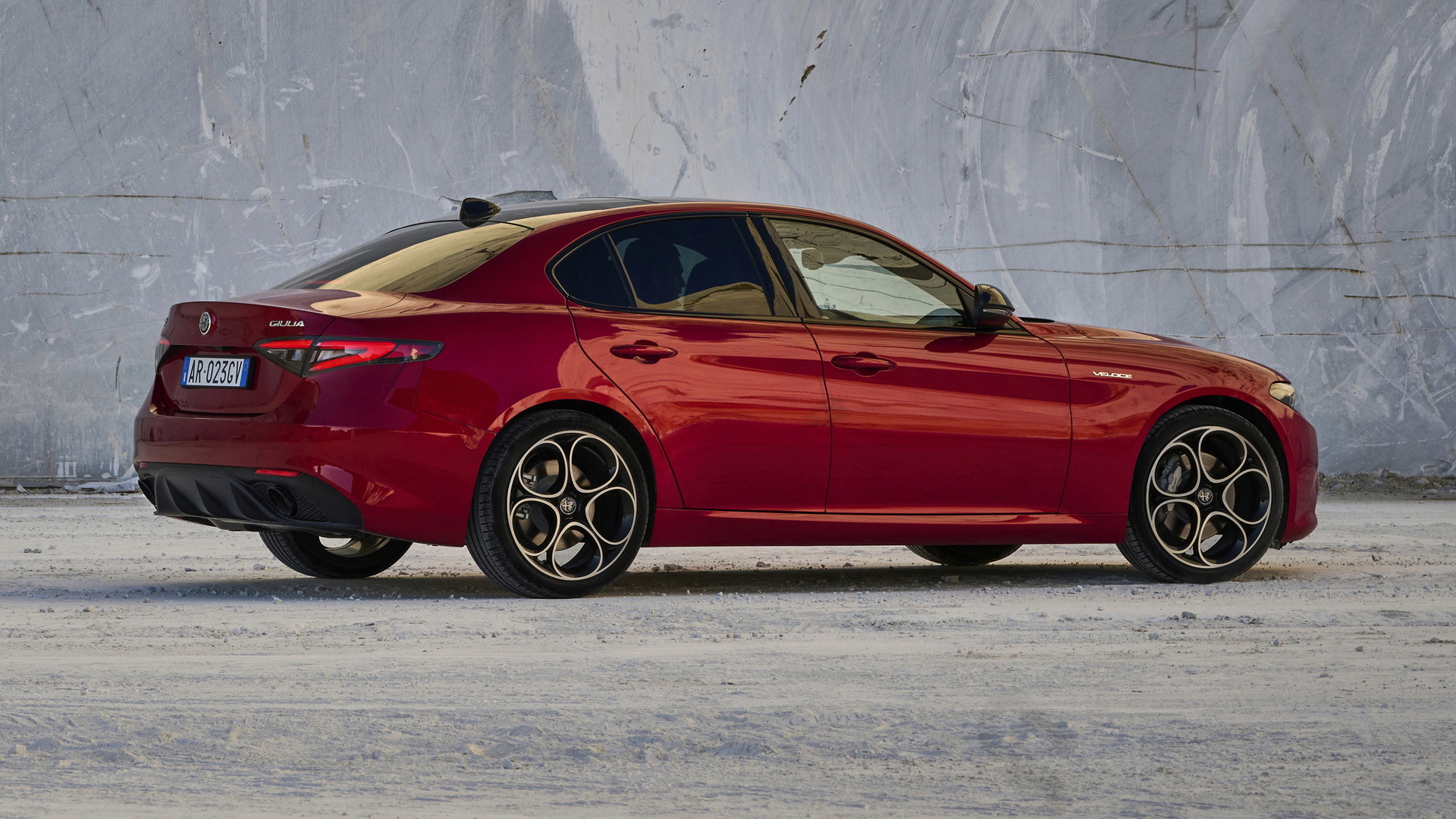
The Giulia was introduced in 2015 and the Stelvio in 2016, both riding on the Giorgio architecture. The two models received a mid-lifecycle update in 2023 with updated styling and technology, but by the time the final examples roll off the line in late 2027, the pair will be well into their second decade.
To put that in perspective, they’ll have lived through three generations of BMW’s 3-Series and X3.
In any case, the Giulia and Stelvio remain by far the slowest sellers in Alfa Romeo’s stable, contributing only a sliver to the brand’s overall numbers. The entry-level Junior now carries the sales crown, with the slightly larger Tonale picking up what’s left.
What About Another Facelift?
Following the debut of the Junior and the facelifted Tonale, the Giulia and Stelvio are the only remaining models in the Alfa Romeo lineup with an offset placement of their license plate. That detail now raises the question of whether they can really stay on sale for two more years without a single tweak. And there’s a reason for that.
Review: The Junior Is Everything Alfa Romeo Needed And Nothing Alfisti Wanted

Last year, Alejandro Mesonero-Romanos, Alfa Romeo’s design chief, said: “We cannot put the number plate on the side any more because of the homologation regulations for pedestrian safety”.
Some took that to mean the European Union’s General Safety Regulation II (GSR 2), which comes into force for all new models from July 2026, had killed off the trademark offset plate.
After digging into the fine print, though, there’s no rule explicitly demanding that license plates be mounted dead center. However, it does state that type-approval authorities may refuse certification for new vehicles that fail to meet technical specifications for “space for mounting and fixing of the front registration plates.”

Interestingly, there’s also a clause allowing regulators to allow a greater tolerance in regards to the perpendicular position of the license plate “for the purpose of positioning the front registration plate off the centreline at the front of the vehicle for technical, aerodynamic or other reasons”.
Still, this will only be done when requested by the manufacturer.
More: Alfa’s Next Quadrifoglio Models Might Burn Gas After All
Whether Alfa Romeo manages to preserve the current looks or is forced into a costly bumper redesign for its lowest-selling models remains uncertain, particularly as the latest facelift barely touched the bodywork beyond trim and lighting tweaks.