













Crossovers rarely inspire strong feelings, and that’s sort of the point. They’re the oatmeal of the automotive world: not bad, not brilliant, just the default choice. Other vehicles carry more, ride better, or drive with more personality.
But none of that seems to matter when shoppers are crowding dealership lots in search of something practical, inoffensive, and familiar. This is the segment of compromise, and it’s thriving.
Kia isn’t blind to that, and the Sportage proves it. This is Kia’s best-selling vehicle globally, and after spending a week with it, that statistic feels less like a marketing brag and more like an inevitability.
QUICK FACTS
The Sportage has been around long enough that it sometimes fades into the background, overshadowed by flashier newcomers, more enthusiast-focused options, or bigger, pricier SUVs that dominate headlines. But step back for a moment, look at what Kia is actually offering here, and it becomes painfully obvious why the Sportage continues to move in massive numbers.
Exterior Styling



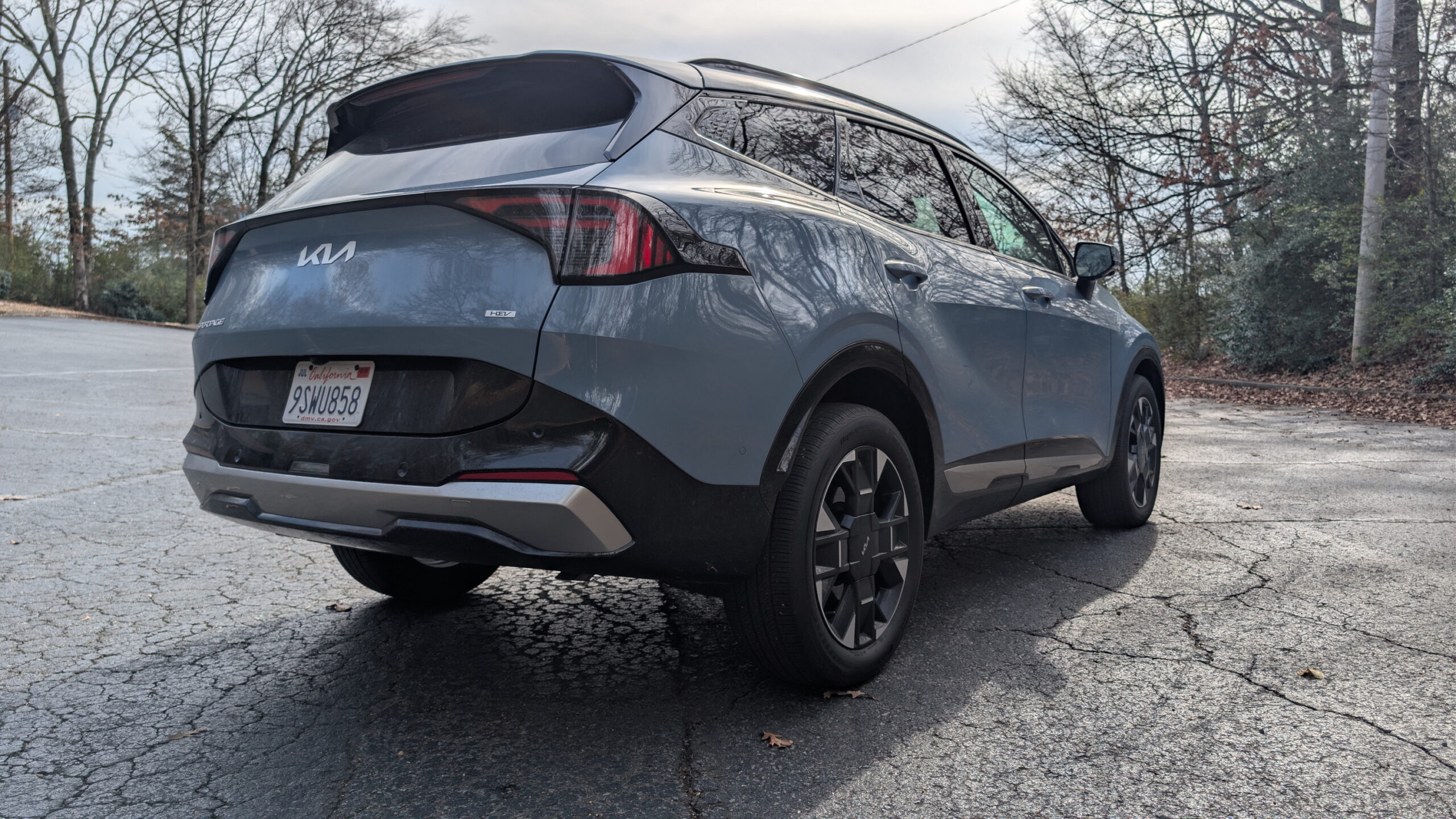
Compact crossovers can be a visual minefield. Go too hard, and designers risk turning buyers off. Go too soft and the same is true. The Kia Sportage manages to thread that needle surprisingly well to our eyes. No, it’s not a stunningly beautiful machine, but it’s also not what anyone would call boring.
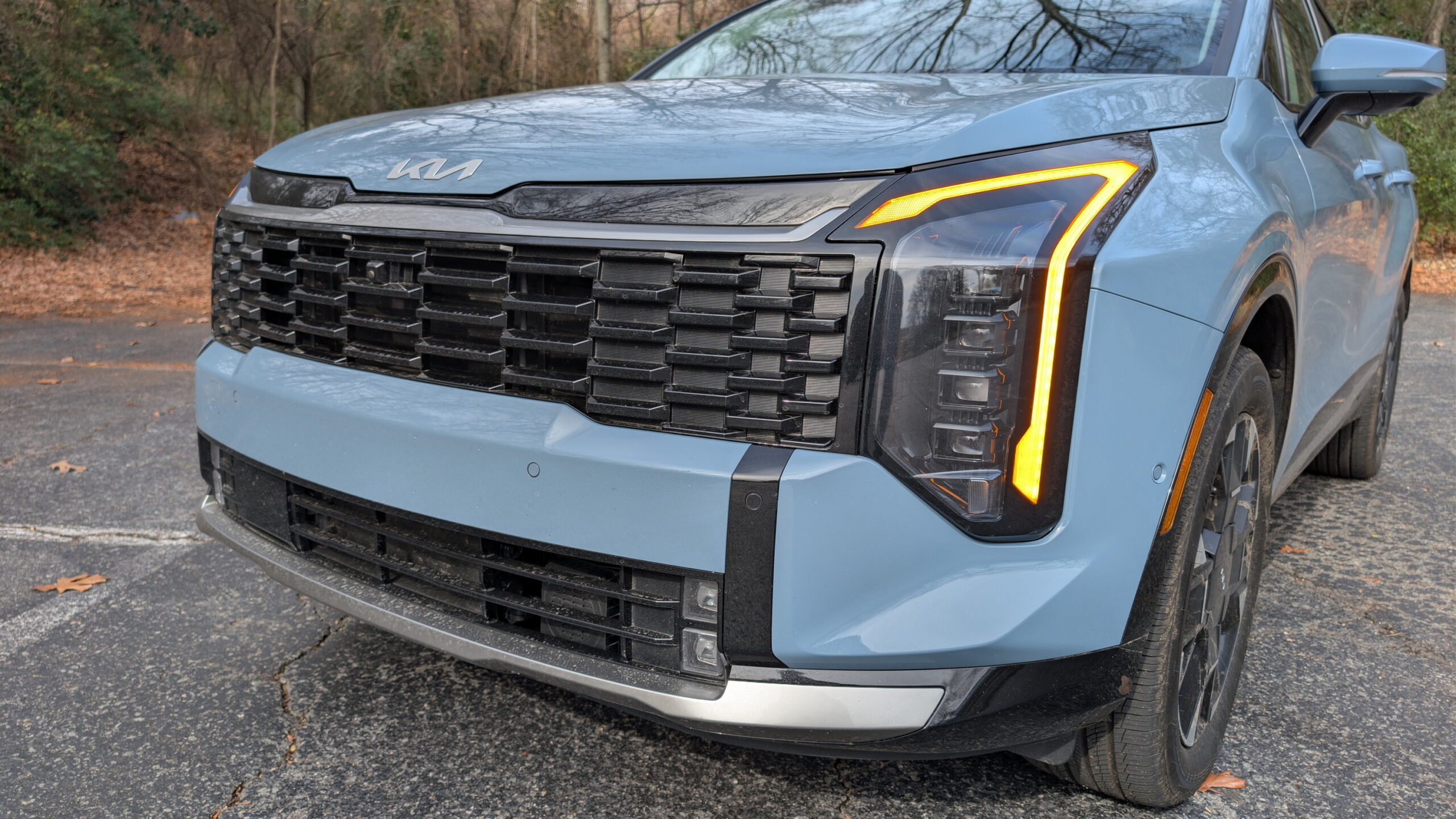
The front features Kia’s ‘tiger nose’ motif with hard, angular lighting that fits the rest of the family. The body sides are sculpted and detailed, the rear lighting has presence, and the overall shape feels more considered than many of its rivals, which often blur together in parking lots. The rear upper quarter panel gets sharp, little textured details that help it stand out.
Read: Americans Are Choosing Compact SUVs More Than Any Other Segment This Year
This is not a boring-looking crossover, and that matters more than people like to admit. When nearly everything in this segment is a rolling compromise, at least the Sportage doesn’t ask you to suffer through anonymity while you’re at it. It stands out in a crowd of RAV4s, CR-Vs, and Rogues without screaming for attention. That’s a harder trick to pull than it sounds, and Kia deserves credit for it.
Interior Design and Features
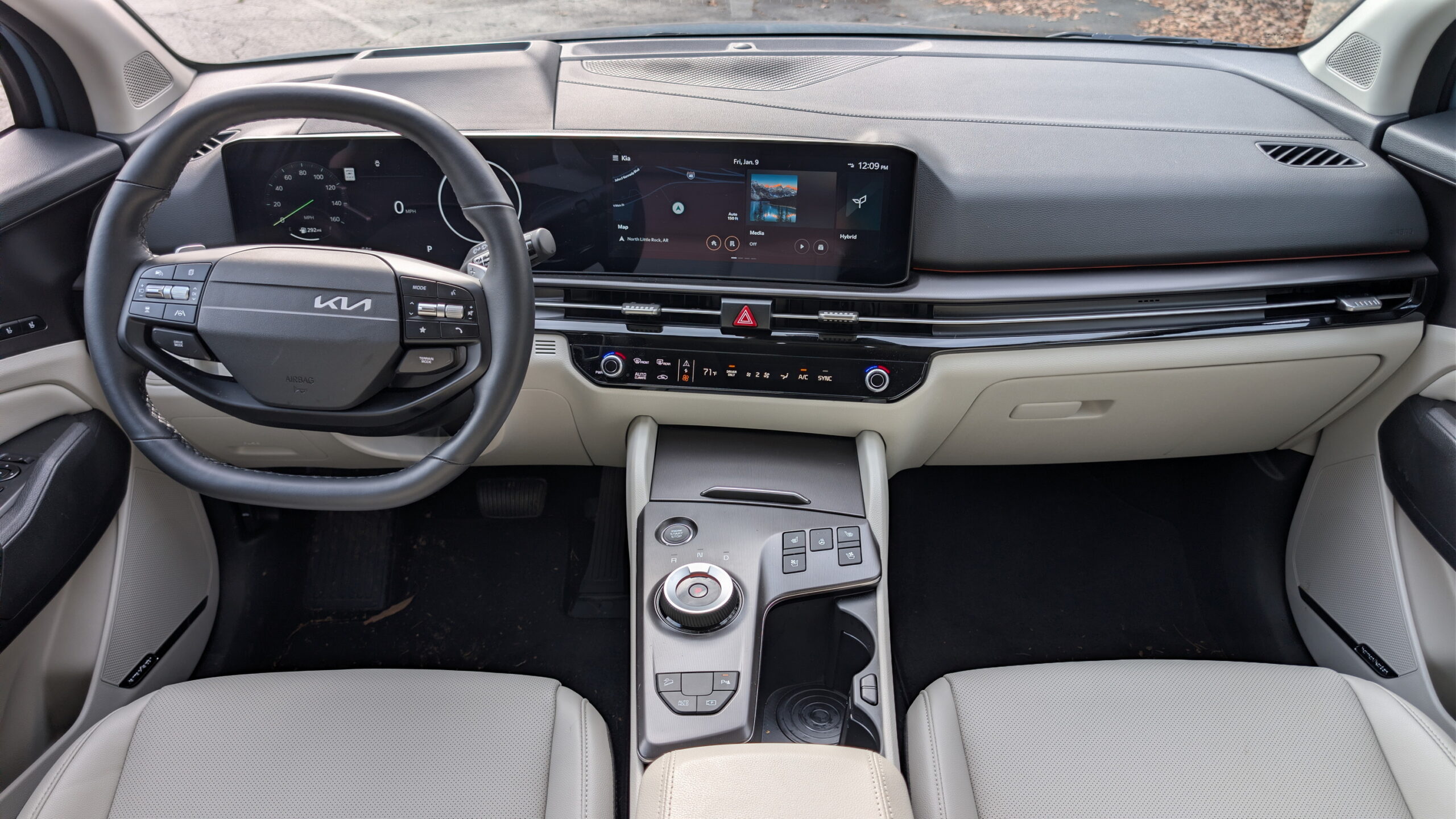
As nice as the exterior looks when compared to most rivals, the cabin is where the Sportage Hybrid truly punches above its weight. The seats are excellent. They’re highly adjustable, genuinely comfortable over long drives, and trimmed in an attractive mix of faux leather, faux suede, and microfiber that looks and feels far more premium than the price tag suggests.
This isn’t the cheap, shiny imitation leather you still find in some competitors. It’s thoughtfully executed and seems to hold up well under daily use. Our test car had over 8,000 miles on the odometer and looked brand new. That quality continued into the back seat.
The available 360-degree camera system is sharp, responsive, and genuinely useful in tight parking situations, while the blind-spot cameras that activate in the instrument cluster when you signal are one of those features that quickly become hard to live without once you’ve experienced them.


Photos Stephen Rivers/Carscoops
The switchgear is another highlight. Buttons and knobs feel solid, well-damped, and intuitive. Nothing rattles, nothing feels flimsy, and there’s a satisfying consistency to the way everything operates.
Heated and ventilated seat controls are handled via straightforward buttons on the center console, rather than buried in touchscreen menus. That alone deserves applause in 2026, and while these are the kinds of details you stop noticing after a few days, that’s kind of the point.
Front and rear seat passengers get identical headroom (37.8 in) and nearly identical (41.4 in vs. 41.3 in) legroom. Second-row passengers get knick-knack holders built into the back of the front-seat headrests, a genuinely useful feature if you have kids or frequently carry rear-seat occupants on longer trips. Those same seatbacks house power ports, eliminating the usual fight over charging cables.


Photos Stephen Rivers/Carscoops
In the cargo area, there are manual releases that allow you to drop the second-row seats without walking around the vehicle. It’s simple, mechanical, and effective. With the rear seats up, the Sportage offers 39.5 cubic feet of space. Drop those seats down, and that expands to over 73 cubic feet. Not too shabby.
None of these features is revolutionary on its own. But taken together, they create an ownership experience that feels carefully considered rather than cost-engineered.
Some Cabin Drawbacks
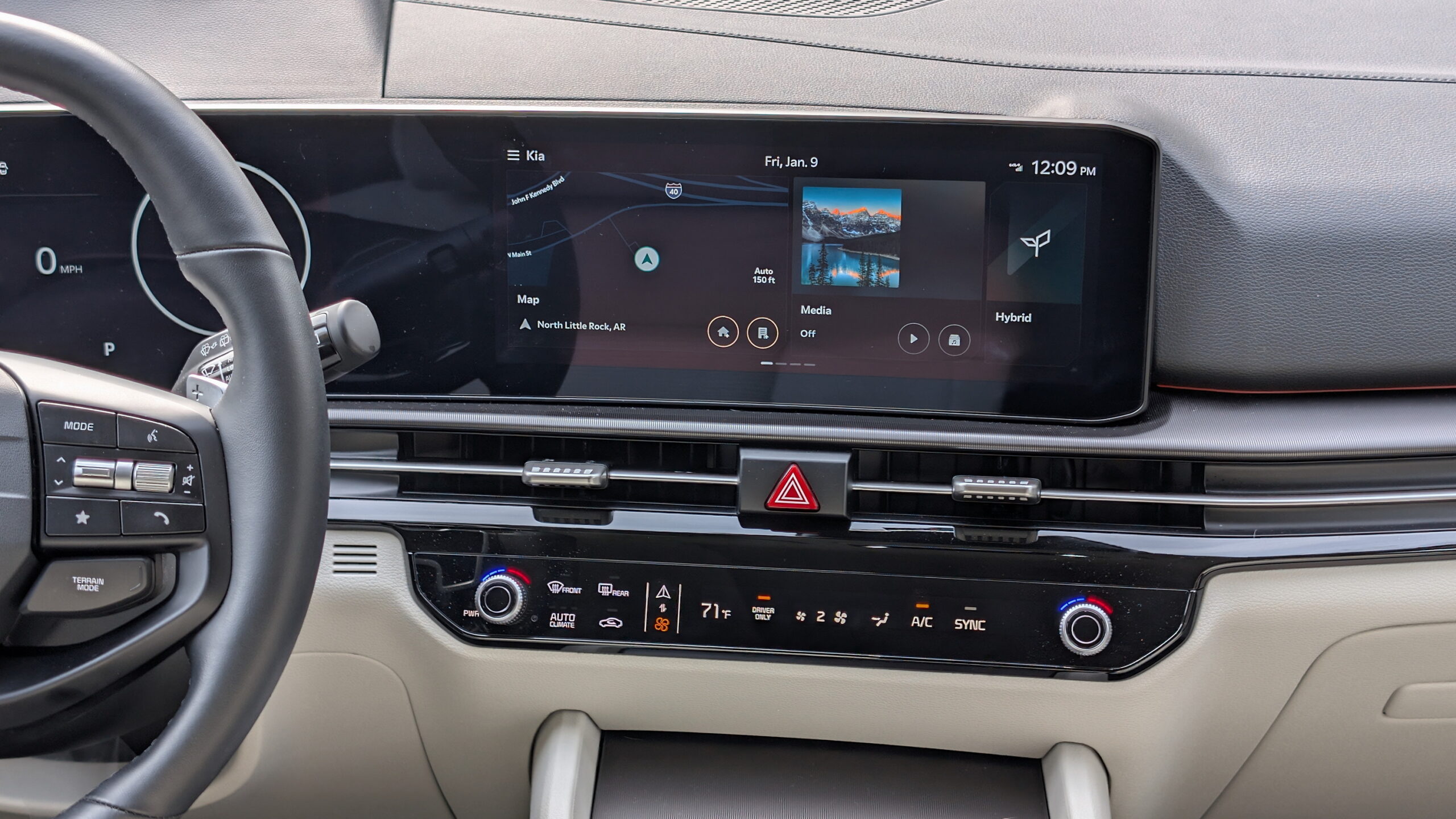
That all said, it’s still not a perfect experience. We’ve complained about Kia’s switchable climate/media control panel before, and we’re here to do it again. Users can change climate or media controls, but not both at the same time. They’ll have to switch between the two at any given time. There doesn’t seem to be a reason to do things this way, and we’ll be happy when Kia changes it.
In addition, and this could simply be an issue with our test car, our phone pairing and mirroring experience was subpar. The car struggled to pair reliably and would, at times, seemingly fail only to suddenly work several minutes into a journey. Other times, it would suddenly fail after several miles. That said, the experience is an outlier in our testing of various Kia products, and when it worked, it worked well.
Drive Impressions
As good as the cabin is and as attractive as the exterior might be, the Sportage regresses to the mean when it comes to driving dynamics. It’s not a bad car to drive. Body roll is limited, and visibility is above-average.
That said, it’s not exactly engaging or fun, but that’s never really been the point in this segment anyway. It’s also why this is the first time that you’ve seen us mention the meager 232 horsepower (173 kW) and 271 lb-ft (367 Nm) of torque.
On the plus side, the controls all feel tight and responsive. The steering is predictable, and the pedals provide linear feedback that is easy to modulate at high or low speeds. If there’s anything to complain about, it’s probably the tires more than anything.
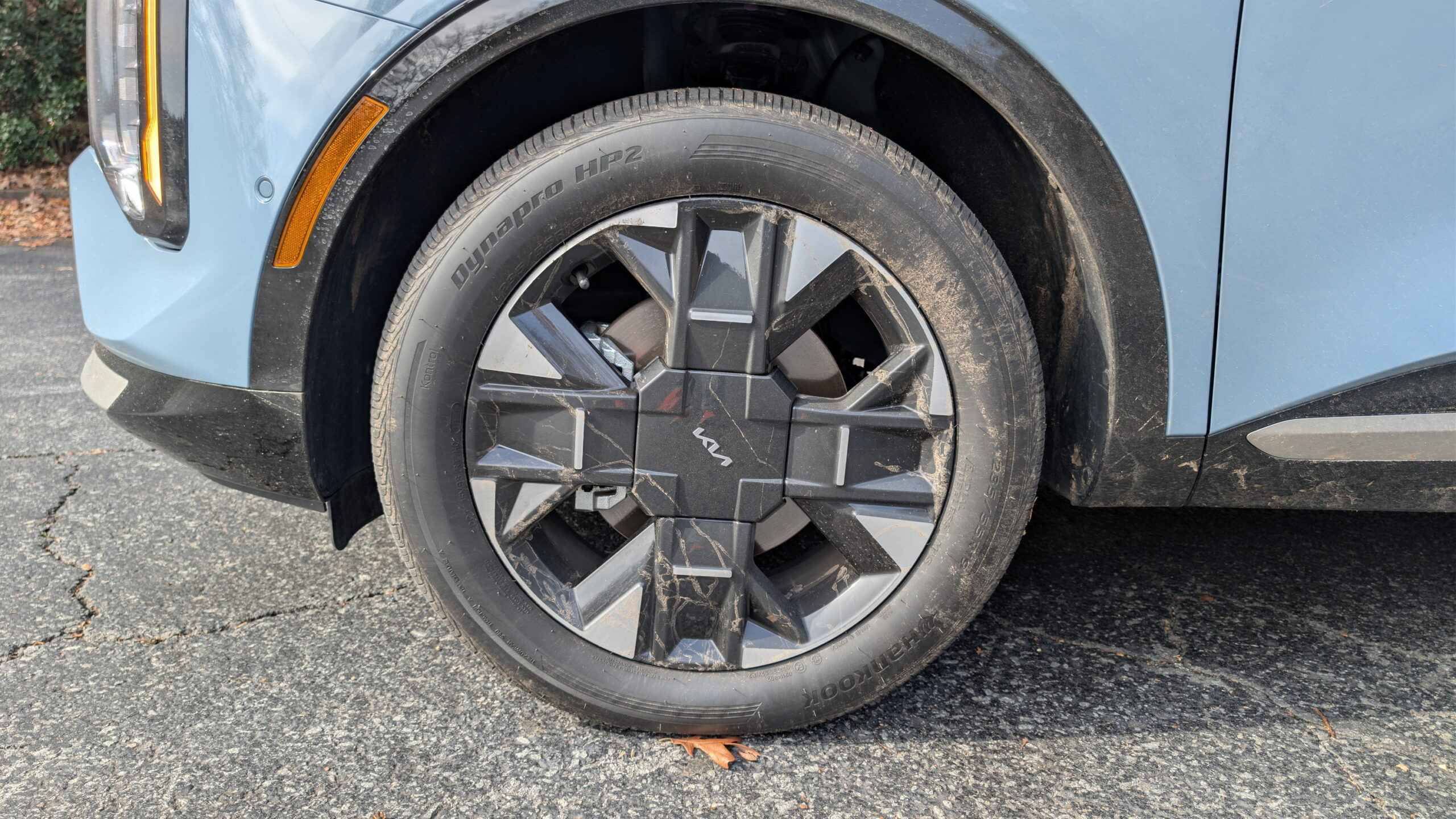
During our testing, the weather was atrocious. Our photos within this piece come from the roughly 20 minutes when it wasn’t raining, and the Hankook tires on the car struggled when pushed toward the limit. They quickly gave up traction, and the car would plow through turns when pushed hard. Very few people will push the Sportage hard, and those that do can add stickier rubber, so this likely isn’t a big deal, but it’s worth noting.
More: This Kia Crossover Is Getting Another Facelift To Stay Alive
There are other driving highlights to appreciate. For example, Kia’s Highway Drive Assist is exceptional. We’ve tested everything from GM’s SuperCruise to old-school cruise control. The Sportage doesn’t offer the absolute best in the business these days, but it’s well above average, especially for the price.
We tested the Infiniti QX80 Sport just before the Sportage, and despite a price gap big enough to squeeze a Tesla Model Y Performance into, the Kia was better when it comes to driver aids.
Where the Infiniti felt clunky and long in the tooth, the Sportage was deft, smooth, and could even make lane changes with nothing more than a fingertip simply contacting the wheel. No, this car won’t excite you from the driver’s seat, but it’ll provide reliable backup and support wherever you go.
On top of that, it managed 36.7 mpg in our time with the car, which beats its EPA-estimated 35 mpg in the city while also allowing for some lead-footed testing cycles. What’s not to like?
Competition
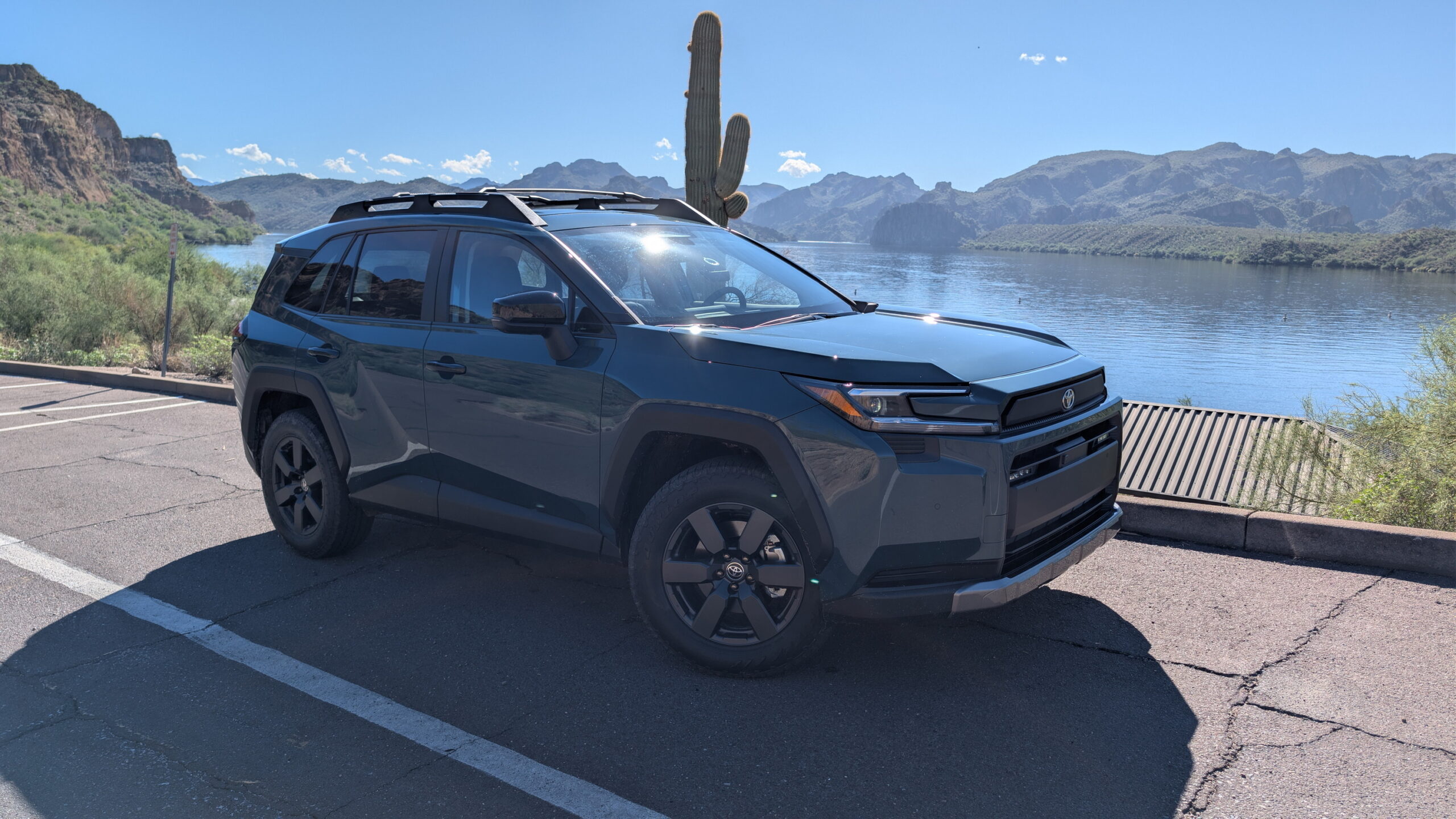
The Sportage Hybrid lives in a brutally competitive segment. Rivals like the Toyota RAV4 Hybrid, Honda CR-V Hybrid, Hyundai Tucson Hybrid, and the soon-to-be-discontinued Ford Escape Hybrid, all make compelling cases. They all have their own reputation and commensurate brand loyalty.
But taken as a whole, the Sportage stands out by being consistently good across the board rather than excellent in one area and compromised in others. It may not have the RAV4’s reputation for bulletproof reliability or the CR-V’s resale value, but it counters with wild warranty coverage, great technology, and, on average, more features for its price.
Speaking of that, let’s highlight it for a moment. At $41,985 as tested, this well-appointed Sportage SX Hybrid is thousands below the average transaction price ($50,326 in December 2025) for a new car today. The base Sportage Hybrid starts at just over $30,000 and offers up to 44 mpg on the highway. No, it won’t have all the bells and whistles this one does, but that’s still a genuinely good value.
Despite that attractive price, there’s a reason that the RAV4 and CR-V had more than double the sales in 2025. A bunch of that comes down to reputation, not actual value. But it’s a hint at where Kia has to keep going if it wants that kind of success. It has to prove that its excellent warranty coverage on paper is just as good in reality. If it can pull that off, Toyota and Honda will have to adapt on their own.
The Verdict
The 2026 Kia Sportage Hybrid won’t stir your soul. It won’t make you take the long way home. And it won’t convince enthusiasts that crossovers deserve more respect. But if value for money is your priority, and let’s be honest, if you’re shopping in this segment, it should be, the Sportage Hybrid is an absolute knockout.
It’s comfortable, well-built, packed with genuinely useful technology, impressively efficient, and backed by a strong warranty. It looks good, works well, and asks for very little in return. In a world full of rolling compromises, the Sportage Hybrid feels like one of the smartest ones you can make. Just be sure to hold Kia’s feet to the fire when it comes to warranty coverage.


