











- Lane assist and FSD can help when drivers are distracted.
- Many life-saving moments go unreported or unnoticed.
- Real-world examples show how this tech prevents crashes.
Self-driving tech in all its forms understandably get a bad rap on the regular. Tesla’s Autopilot and Full Self-Driving (Supervised) are frequent legal targets, while even everyday driver aids attract criticism. But the reality is more nuanced.
More: Tesla’s FSD Runs Over Child Mannequin, But It’s Not To Blame
Humans are often bad at paying passive attention regardless of the car that they’re driving in. But when autonomous and driver-assist systems do what they’re designed to, they’re lifesaving, and here are just two examples of that.
When the System Stays Awake and You Don’t
Consider a viral highway incident in Oklahoma, where a man who had worked nearly 20 hours fell asleep at the wheel of his Kia. Traveling at nearly 40 mph, the incident would’ve almost certainly proven tragic without driving aids like active lane tracing. Since the car had that feature and since it was engaged, the car maintained its lane.
He did end up in an accident, but that was due to the police officer using a PIT maneuver to stop the vehicle rather than simply driving ahead of it and then slowing down.
“After speaking with the driver, troopers learned he had worked nearly 20 hours within a 24-hour period,” said the Oklahoma Highway Patrol. “After leaving work, the driver stopped to eat and then began driving home with the vehicle’s lane assist activated. The vehicle maintained a steady speed of about 40 miles per hour. Troopers do not believe cruise control was set and are unsure how the driver maintained a constant speed, but they are confident the lane assist system kept the vehicle within its lane while the driver slept.”
We’ve seen other situations just like this where officers slow the car by driving ahead of it, slowing down, and allowing the adaptive cruise control to bring the car to a stop. Consider that a sneaky bonus example of how driver aids save lives.
Regardless, the point is that the driver didn’t end up hurt or worse, hurt themselves and someone else in the process. In fact, the worst part of this situation for the driver in question, aside from the damage caused by the cop hitting them, was a ticket, an awkward conversation, and an escort home.
What Happens When FSD Reacts First?
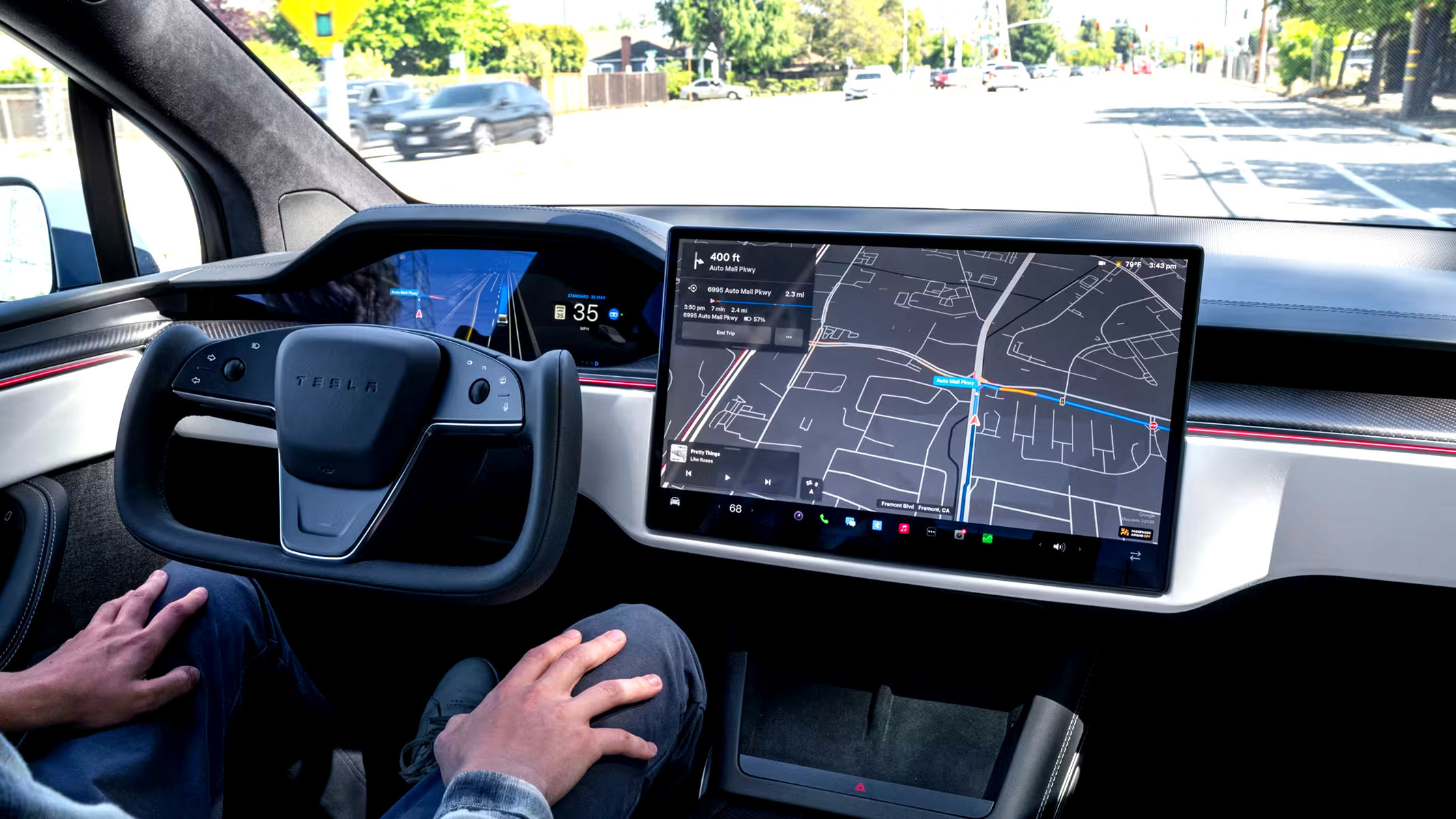
In another, more harrowing example, Tesla’s misleadingly named Full Self-Driving evidently saved the life of Clifford Lee. He was on a rural stretch of highway in New Mexico when a truck in the oncoming lane decided to try to pass a semi truck. The passing driver wasn’t fast enough, and a head-on collision appeared certain. That’s when FSD stepped in and made a move faster than Lee realized what was going on.
The system’s cameras and real-time calculations executed a maneuver without input from its driver. The result was minor vehicle damage, no injuries, and an owner convinced that automation had given him a second chance. These stories share a common theme that good outcomes rarely go viral.
Can You Trust a Computer to Keep You Alive?
People talk about near misses when things go wrong, but quiet instances of tech preventing accidents, like a lane-keeping system correcting a dozing driver or FSD steering around an imminent collision, are almost certainly under-reported. Make no bones about it. Autonomous driving tech, despite their imperfections, are already saving lives in subtle ways.
As automation becomes more common, understanding both its limits and its life-saving potential matters. Lane assist won’t replace human alertness, and FSD isn’t a license to check your phone, put on makeup, or take a nap. But when the unexpected happens, these systems can, and sometimes do, step in at exactly the right moment.