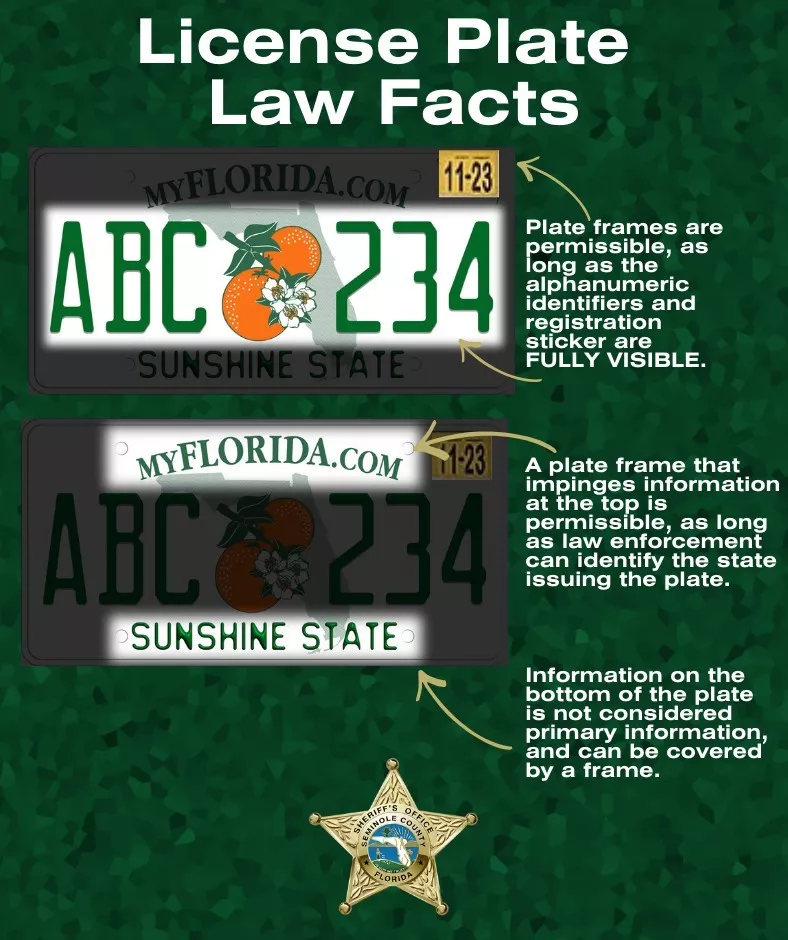


- Florida drivers are facing criminal charges under a new obscured license plate law.
- Attorneys say the statute is vague and enforced differently depending on the county.
- A new federal lawsuit now seeks to block the law and clear citations issued already.
Last year, Florida passed a law banning license plate frames that obscure “any feature or detail” on the plate itself, a move that quickly created more questions than answers. That legislation almost immediately became an issue, as it seemed to make nearly every plate frame illegal. It also appeared to make selling such a frame an even more serious offense. Now, after several citations and plenty of confusion, there’s a federal lawsuit over the entire fiasco.
The law went into effect in October of last year with relatively minor penalties for offenders. That said, in rare cases, the violation can end up as a criminal offense carrying up to 60 days in jail and a $500 fine. According to reporting from News4JAX, the law is being challenged after several drivers were charged even though their plates were only partially covered by frames or decorative surrounds.
Vague Legal Definitions
Attorneys at Ticket Toro Law Firm say the problem isn’t just the penalty; it’s the wording. “The law is so vaguely written because it lacks definition,” attorney Anna Quesada told the station. “It doesn’t define what counts as obscuring a license plate or to what degree interference becomes criminal behavior.” Her firm reviewed public records across Florida and found enforcement varies widely depending on where you are.
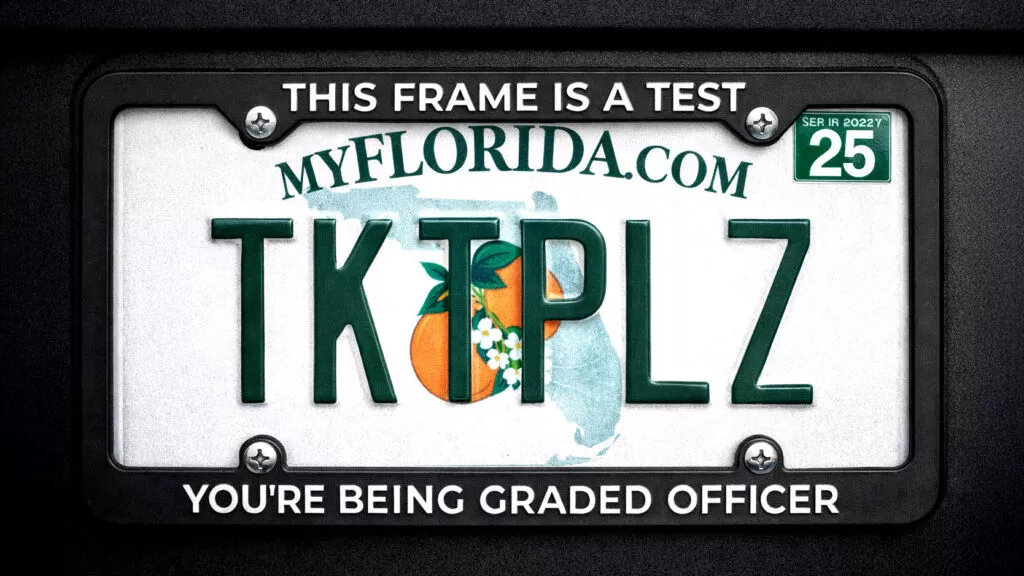
In some counties, officers reportedly ignore frames entirely, while in others, drivers have been cited or even arrested for blocking small details like the “Sunshine State” slogan. We pointed out last year that one sheriff’s association was selling its own plate frame and claiming that it expressly didn’t violate the law.
More: Florida Just Said Your License Plate Frame Is Legal And Illegal
Adding to the confusion, the Florida Department of Highway Safety and Motor Vehicles issued guidance to law enforcement agencies about three months after the law took effect. According to the memo, license-plate frames are allowed as long as they don’t cover the plate number or the registration sticker. That guidance appears to conflict with how the law has been enforced in some parts of the state.
Ticket Toro has now filed a federal lawsuit seeking to stop enforcement of the statute, have it declared unconstitutional, and clear citations or arrests tied to the rule. Until a judge rules on the case, the safest move for Florida drivers may be the simplest one.
Make sure every part of the plate is fully visible, and think twice before leaving that dealership frame on the car. The state still has not responded to our questions about whether it is targeting dealers who sell cars with plate frames already installed.