









- Hyundai reveals the 2027 Grandeur facelift in South Korea.
- The flagship sedan gains a cleaner face and new colors.
- It also features an overhauled cabin and improved comfort.
Update: Hyundai has fully detailed the facelifted Grandeur in South Korea. Pricing, powertrains, equipment, and fresh photos are below, and the loaded version gets uncomfortably close to Genesis G80 money, at least in its home market
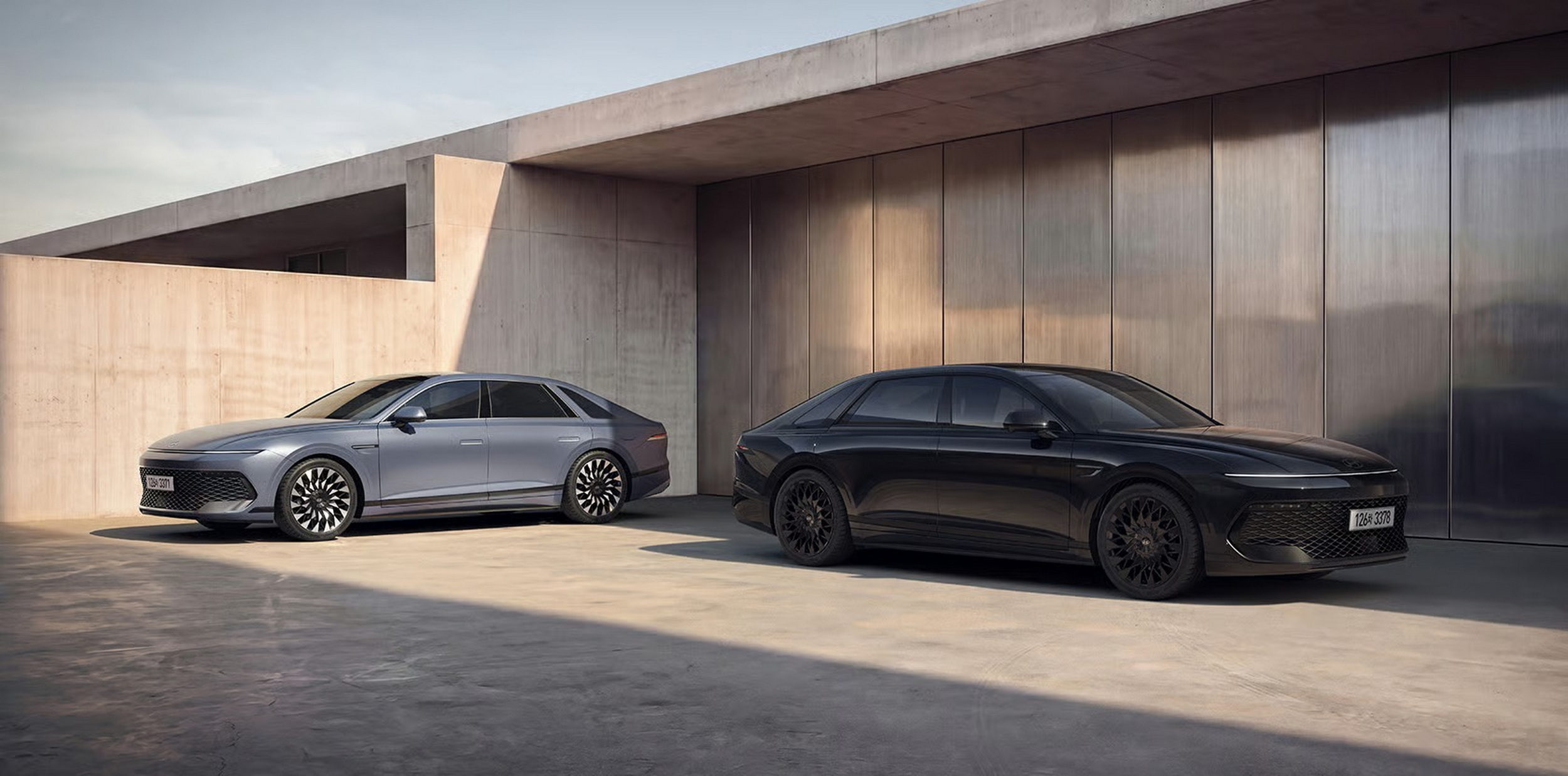
The seventh-generation Hyundai Grandeur has landed its mid-lifecycle update in South Korea, timed to coincide with the nameplate’s 40th anniversary. The facelifted sedan brings modest exterior revisions and a thoroughly reworked cabin bringing it closer to Genesis territory.
Americans last saw this car as the Azera, before Hyundai pulled the plug on full-size sedans in this market. Back home, it remains an institution. The current Grandeur arrived in November 2022 and has been Korea’s best-selling sedan and second-best-selling vehicle of any kind ever since, beaten only by the Sorento. None of which makes it immune to a refresh.
More: Hyundai’s Ioniq V Might Look Like A Lambo, But It Makes Less Power Than An Elantra
Visually, the biggest change is the so-called “Shark Nose” face that looks cleaner than before. The full-width LED light bar has been slimmed down, the main headlights are considerably smaller, and the grille and air intakes have been pulled together into a single unit with generous chrome detailing.



The profile is largely carried over but Hyundai added new options for the alloy wheels and a fresh Artistic Burgundy shade with a glossy or matte finish. The tail also looks familiar but a closer look reveals a few updates. The turn signals, previously located on the rear bumper, are now integrated into the full-width LED bar. There is also slimmer black trim on the bumper and new chrome accents around the diffuser.
In terms of footprint, the Grandeur now stretches 5,050 mm (198.8 inches) end to end, 15 mm (0.6 inches) longer than its predecessor.
The Cabin Overhaul


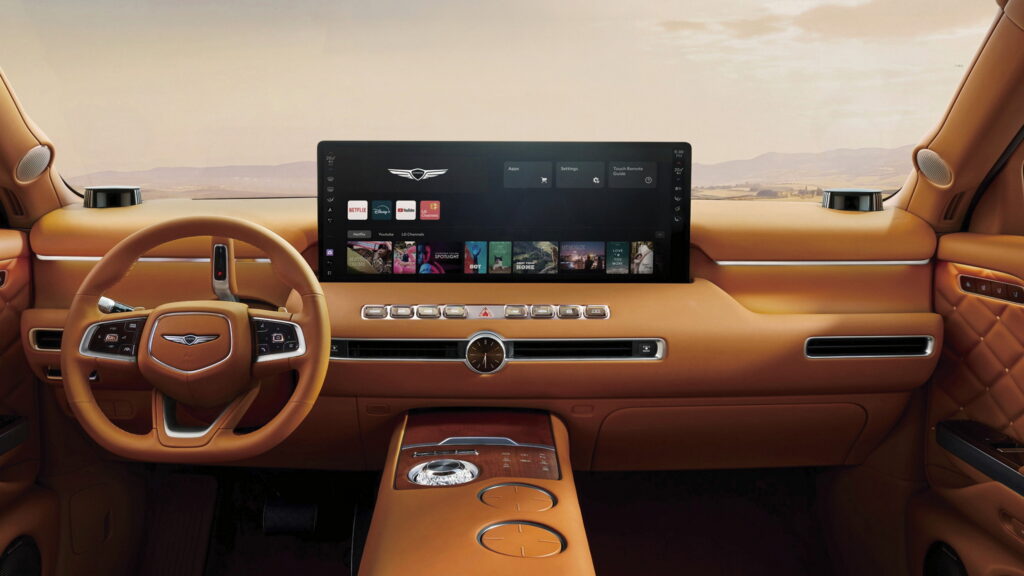
Inside, the centerpiece is a 17-inch touchscreen that replaces the previous 12.3-inch infotainment display and the separate 10.25-inch climate panel. It runs Hyundai’s new Pleos Connect software, built on Android that supports third-party apps and the Gleo AI personal assistant capable of handling complex requests. A slimmer digital instrument cluster sits further back on the dash combined with a head-up display.
More: Hyundai Is Charging Koreans A Fee To Put Pikachu On Their 2027 Kona’s Dashboard
While the center console houses physical buttons for the main functions, Hyundai has introduced electric climate vents with the air volume and direction being controlled from the touchscreen. This solution was primarily chosen for style, as the vents are now hidden from view on the redesigned dashboard.


The 2027 Grandeur also features a “Smart Vision Roof” that can switch between opaque and transparent, and an Active Load Noise Control system for a more quiet ride. Depending on the trim, equipment can include an “Ergo Motion” seat for the driver, reclining and ventilated second-row seats with neck pillows, three-zone climate control, a Bose audio system, and a built-in air purifier on the seatback.
More: Hyundai’s $75K Ioniq 9 Calligraphy Just Got A Sibling That Makes It Look Like The Cheap One
Finally, the quilted upholstery, the “couch pattern” on the door panels, the wood inserts, the Nappa leather, the metal accents, and the indirect lighting create a premium and homely atmosphere.
Upgrades Under The Skin


While this is just a mid-lifecycle update, Hyundai engineers claim that the Grandeur brings significant enhancements to the hybrid efficiency, driving dynamics, and rear-seat comfort.
The platform benefits from increased rigidity thanks to a thicker cowl crossbar, reinforced front strut rings and hydraulically controlled rebound stoppers to the suspension.
More: Hyundai’s Ioniq 3 Looks Like Someone Crossed A Veloster With A Pontiac Aztek
The Preview Electronic Control Suspension that changes damping force with input from the camera is now available to variants with 19- and 20-inch wheels. This is joined by a new Highway Body Motion Control system that suppresses vertical movement during acceleration and deceleration. Finally, the redesigned exterior is more aerodynamic than before, contributing to reduced wind noise.
Powertrain Options


Under the hood, the self-charging hybrid powertrain has been upgraded for better performance and efficiency. It comprises the turbo 1.6-liter gasoline engine, a starter motor, and a drive motor with a combined output of 237 hp (177 kW / 240 PS).
More: Hyundai’s Gas Hot Hatches Are Getting A Special Send-Off Before They Take The Manual With Them
The traditional 2.5-liter GDI gasoline engine remains the entry point of the Grandeur lineup with 195 hp (146 kW / 198 PS). Finally, the 3.5-liter V6 flagship continues to offer 296 hp (221 kW / 300 PS) and is optionally available with the HTRAC AWD system.
How Much Does It Cost?
The updated Hyundai Grandeur is already available to order in South Korea. Pricing starts at ₩41,850,000 ($28,100), a sharp ₩3,870,000 ($2,600) jump over its predecessor. Loaded up in Black Ink trim with the AWD V6 and every option box ticked, the Grandeur tops out at ₩64 million ($42,900), which lands it above the entry-level Genesis G80 in its home market.
American buyers would consider that a steal regardless. The base Grandeur in Korea costs roughly the same as a base Sonata ($27,450 before delivery) in the States, and that’s for a car a full size class above it.