

Pennsylvania Drivers Can Now Be Fined For Holding A Phone, Even A Dead One
Pennsylvania's hands-free driving law now carries fines, but questions remain about enforcement and loopholes
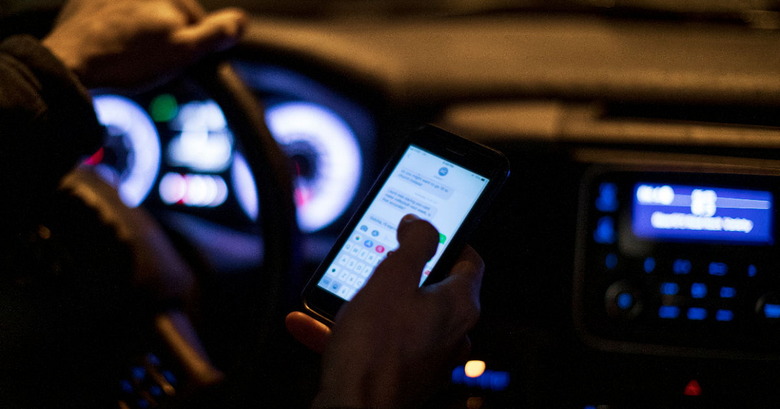
- Pennsylvania's hands-free law now carries fines starting June 5, 2026.
- Drivers can be stopped simply for holding a phone while behind the wheel.
- The law still leaves several gray areas and practical loopholes.
All of us want roads to be safer. Now, Pennsylvania promises that it's going to move in that direction thanks to a new law that allows for more traffic stops. Beginning June 5, motorists caught violating the state's hands-free driving law can now face a $50 citation, plus court costs and fees. This is now a primary offense, meaning that an officer can pull over a person for simply holding a phone, even one that's off, in their hand while driving. Burgers, lipstick, shaving kits, fidget toys, and all manner of other distractions remain totally legal.
Known as "Paul Miller's Law," the legislation took effect in June 2025 and made it illegal for drivers to hold or otherwise support a phone or similar electronic device while operating a vehicle. For the first year, violators received written warnings. Starting today, however, those warnings become actual tickets.
What The Law Actually Covers
The law takes a stricter approach than Pennsylvania's previous texting ban. Rather than targeting only texting, it prohibits drivers from holding an "interactive mobile device" while driving. That definition covers smartphones, tablets, portable computers, and other devices capable of sending or receiving electronic data.
Importantly, Pennsylvania defines "driving" very broadly. You're considered to be driving not only when moving down the road, but also when stopped at a red light, sitting in traffic, or temporarily stationary due to other roadway conditions. That's right... If you're sitting at a railroad crossing waiting for a freight train to crawl past, don't you dare pick up your phone. The officer behind you, typing away at his laptop, might just be entering your plate number moments later.
The Penalties Get Serious Fast
Under the law, police can stop a driver solely for holding a phone. The law's penalties become significantly more serious when distracted driving contributes to a fatal crash. A driver convicted of homicide by vehicle while driving distracted can face up to five additional years in prison. Pennsylvania's earlier texting-while-driving ban remains on the books as well. That law specifically prohibits reading, writing, or sending text-based communications while a vehicle is in motion and carries a similar $50 fine.
Here's where things get interesting. Drivers may still use a device if they've safely pulled off the roadway and come to a complete stop. There is also an exception for emergency communications with law enforcement or emergency services. In theory, that could be a defense for anyone pulled over for this violation had they thought they'd just seen something worth calling in.
While lawmakers are clearly trying to reduce distracted driving, the law focuses heavily on physically holding a device rather than the distraction itself. A driver can legally mount a smartphone (and by extension, a tablet or possibly a laptop) to the dashboard or windshield and interact with it through voice controls. In many cases, a massive infotainment screen built into a vehicle can display navigation, messages, music controls, and other information that are statistically just as distracting as a handheld phone.
Why Enforcement Is Messy
There's also the practical question of enforcement. Looking down at a phone resting in a cupholder may be illegal if it requires reaching for the device, but glancing at a large tablet-style display integrated into the dashboard is perfectly acceptable. Likewise, a driver using a smartwatch, voice assistant, or hands-free system could still be cognitively distracted even though they're complying with the letter of the law.
Of course, that's not necessarily a flaw unique to Pennsylvania. Nearly every hands-free law in America draws a line between holding a device and using technology more generally because that's the easiest behavior for police officers to observe and enforce. In other words, Pennsylvania and other similar laws aren't really outlawing distraction. They're outlawing one specific form of distraction that's easy for police to see from outside the vehicle.