


- 100 sheep have replaced gasoline lawnmowers at Volkswagen’s Poznań plant in Poland.
- Flock maintains vegetation while scientists study biodiversity, soils, and animal welfare.
- Giant solar installation supplies roughly one-quarter of the factory’s yearly electricity.
While Hyundai’s Boston Dynamics division supplied robot security dogs to the World Cup, Volkswagen is heading in the opposite direction. Instead of updating its lawnmowers to fancy AI robotic ones, it’s using 100 sheep to keep the grass at one of its plants neat and tidy.
The unusual workforce has taken over vegetation management at VW’s manufacturing plant in Poznań, Poland, where an 18.3 MW photovoltaic installation stretches beneath more than 31,000 solar panels. On bright sunny days, the solar farm can supply the factory’s entire electricity demand, while covering around a quarter of its annual power consumption.
Related: Thieves Keep Stealing A $2,600 VW Part That’s Useless The Moment It’s Removed
Instead of sending mechanical mowers between the rows of panels, Volkswagen has brought in a flock of sheep to spend the grazing season naturally trimming the grass until autumn. The arrangement cuts down on machinery while giving the animals plenty of shade and space to roam.
According to the flock’s owner, the sheep settled into their new surroundings remarkably quickly. They’re now splitting into smaller groups and grazing calmly around the site, which is apparently a good sign that they feel completely at home among all that renewable energy equipment.
There’s a serious scientific angle, too. Working alongside researchers from Poznań University of Life Sciences, the project is examining how sheep grazing affects biodiversity, soil quality, vegetation, animal welfare, and even the local microclimate. Researchers are also investigating whether the shade created by the solar panels helps reduce heat stress for the animals.
Win For Everyone
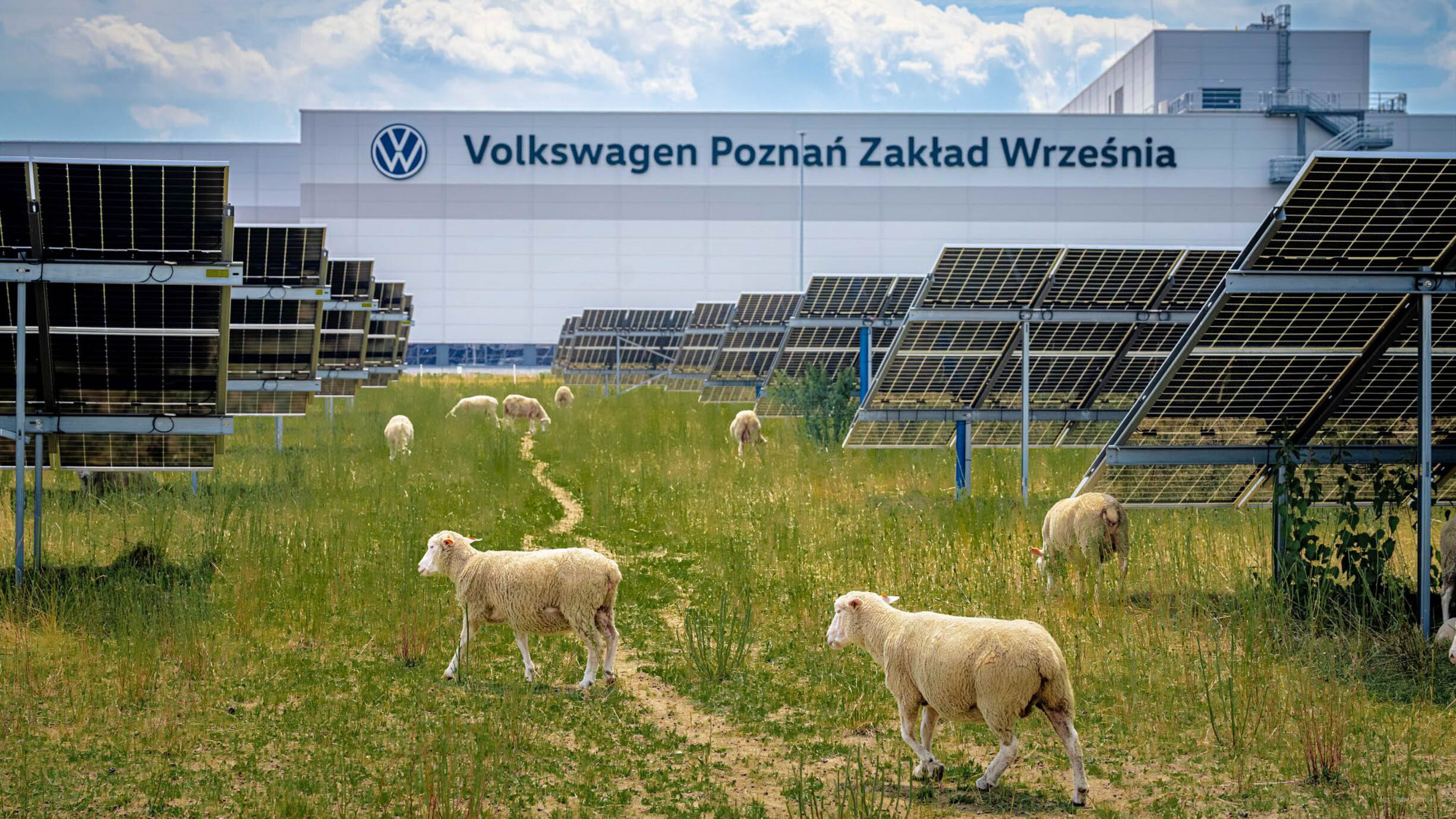
The combination of farming and solar generation, often called agrivoltaics, is attracting growing interest as landowners look for ways to make renewable energy projects more useful than simply generating electricity. If grazing livestock can reduce maintenance costs while improving biodiversity, it’s an appealing win for everyone involved.
VW Poznań’s three sites (including nearby Swarzędz) cranked out 150,000 Caddy and 25,000 Transporter models last year, plus 4 million automotive components. It employs 7,000 people, making it Greater Poland’s biggest employer, and soon more than 3,000 will start building Crafter vans at a new plant in Września, about 30 miles (50 km) away.