


- Kia will expand digital features but keep key buttons intact.
- Deep touchscreen menus frustrate drivers of all tech levels.
- Future Kia and Hyundai cabins will mix touch and physical.
Touchscreens are taking over dashboards, but not everyone is thrilled about it. As screens grow in size and importance, so does the debate around what they’re replacing. Kia, for one, isn’t pretending it’s a settled matter. Instead of picking sides, the company is staking out a middle ground. Screens will keep expanding, but physical buttons aren’t going anywhere.
Forget getting locked into a system where only one route can be successful. Kia wants to offer both together in a way that pleases customers on both sides of the divide.
More: Toyota’s New RAV4 Infotainment Overhaul Changes More Than You Might Expect
Speaking to Autocar, Kia interior design chief Jochen Paesen said future models will continue the brand’s balanced approach, blending larger screens and expanded software features with real, tactile controls for essential functions. The goal, he explained, isn’t novelty for novelty’s sake, but usability.
Essential Controls Stay Physical
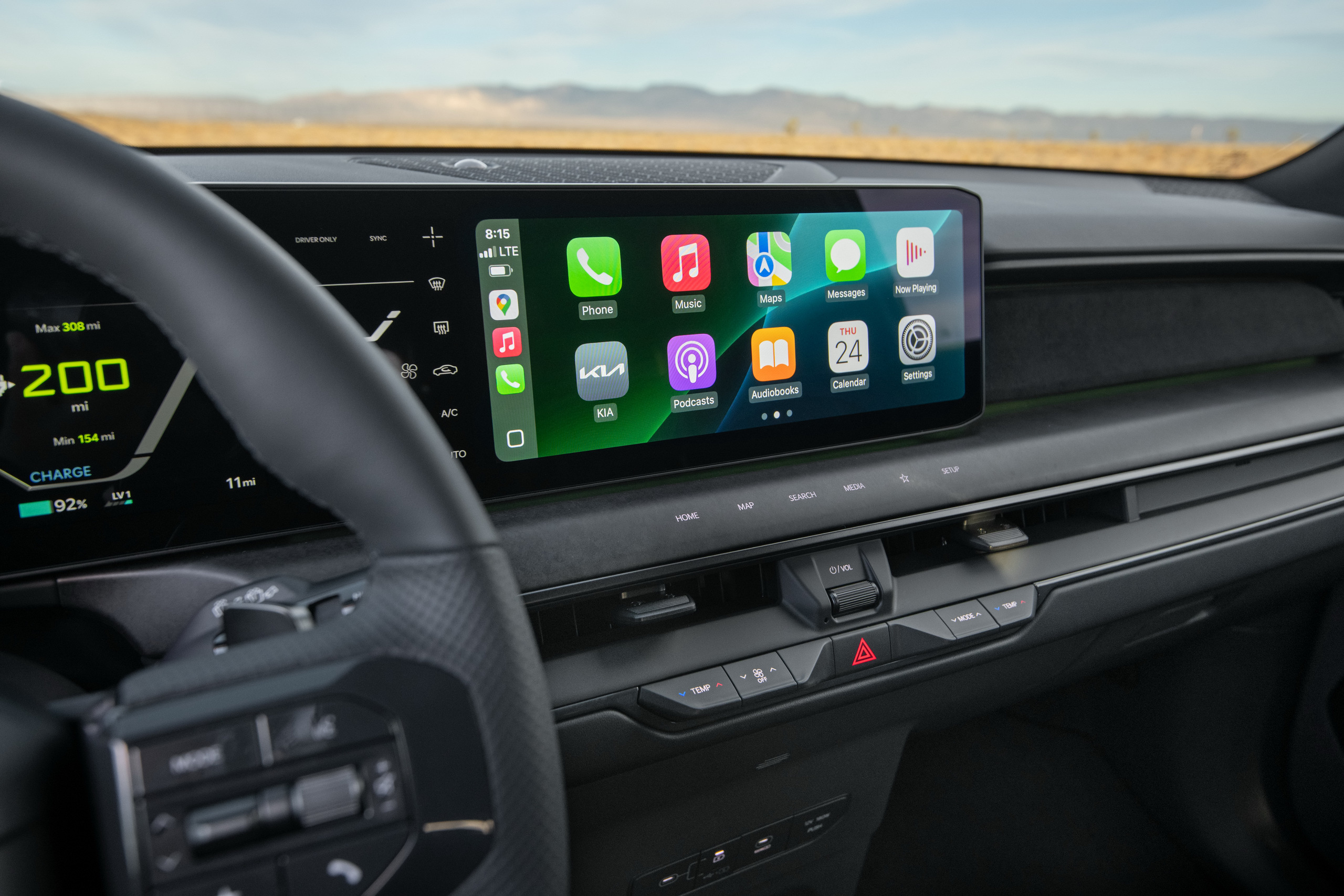
“There are certain functions you need to find straight away, and you don’t want to mess up, so we keep them physical,” Paesen told the magazine, adding that Kia is now building on that foundation to expand the “digital and experiential component” of its cabins.
“If to get to a function you have to go down three steps [in a menu], that’s bad for everybody,” he said. “People have very basic needs.”
He also noted that while some brands can succeed with fully digital interiors, Kia’s global reach demands a more universal approach. “We have studios that research markets everywhere,” he said. “And when you bring it all back together, it’s quite simple: we’re all the same.”
Not Everyone Wants a Touchscreen
It’s a philosophy that aligns with growing frustration among drivers. It’s not just with screen-heavy cabins, but with half-measures too. Kia’s current switchable haptic panel, which toggles between climate and media controls, works better than some implementations (we’re looking at you, Volkswagen), but it still introduces unnecessary friction.
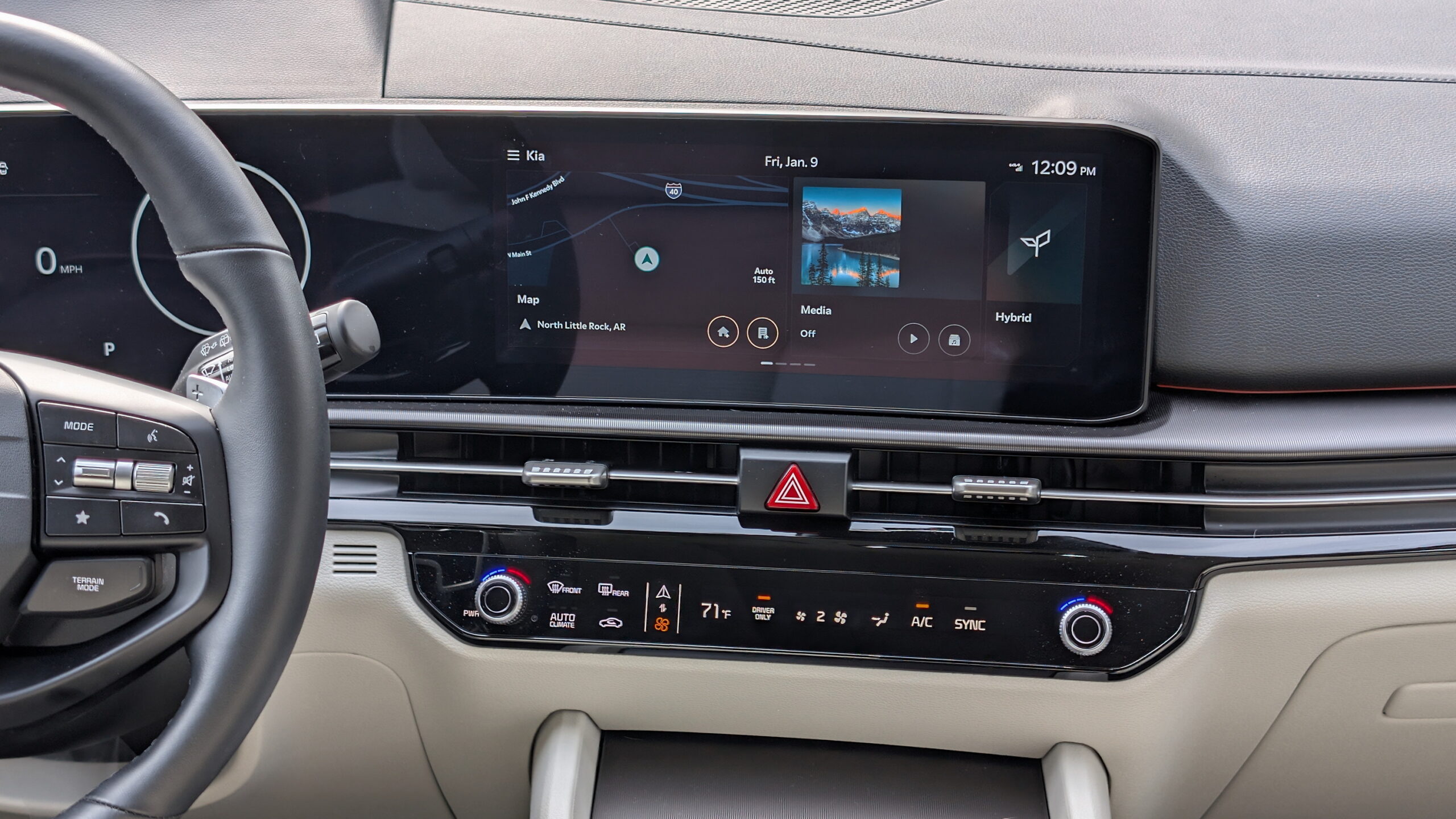
When there’s ample dashboard real estate, forcing drivers to switch modes just to adjust volume or temperature feels like an avoidable compromise. Miss the toggle without looking, and you might end up blasting the heat instead of the stereo.
Read: Audi Design Boss Wants To Remove Big Screens From Future Models
Paesen suggested future interfaces should shift from being tools that drivers must learn to systems that actively reduce steps and mental load. That’s something no automaker has fully cracked yet.
China’s Disruptive Design Push
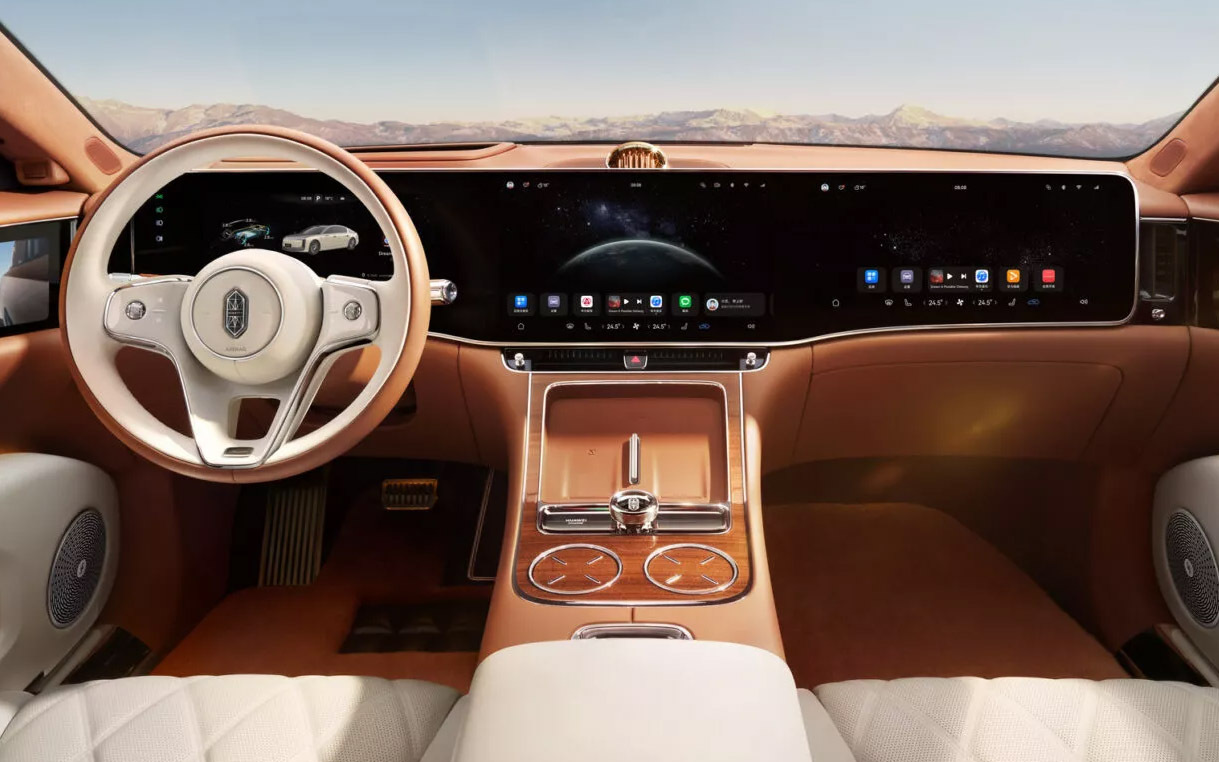
He also acknowledged that newer Chinese rivals have pushed the boundaries with features no one asked for, sometimes impressively so. “You’ve got to give them credit for pushing ideas where you go, ‘I didn’t know I needed that,’” he said. “Maybe you don’t, but they’ve done it, and you’ve got to respect that.”
Still, he believes the industry is entering a new chapter. “We’re at a place where novelty is great, but we’re going into the next phase where there’s a lot of value to be found and added,” he said. That, in his view, is where brands can start to shape their own “taste, approach and interaction logic.”
New Pleos Connect Infotainment System
Kia’s upcoming software platform might help solve all those issues. The new Pleos Connect infotainment system, first shown in concept form, paired a larger display with a generous row of physical buttons underneath. That blend of both types of control could prove to be the way forward for everyone in the end.