











Lotus has been through a transformation over the past decade, the kind that would make most purists nervous. Not only did it simultaneously kill off the iconic Elise, Exige, and Evora in 2021, but it’s also ventured into the world of all-electric sedans and SUVs with the Eletre and Emeya, with hybrids waiting in the wings.
Yet there is still one Lotus built for people who care more about steering feel than screen size. We are, of course, talking about the Emira. As the brand’s last pure internal combustion car, and the model tasked with replacing three legends at once, it has serious weight on its shoulders. Can it genuinely live up to its predecessors?
Review: Ten Years On, The V8 Lexus LC500 Still Makes The Future Look Overrated
For Lotus, the Emira is more than just another model launch. It’s a line in the sand. This is what the company thinks a traditional sports car should be: light, talkative through the steering, and properly engaging, even as the rest of the industry chases batteries, software updates, and sprint times. If this is to be the closing chapter of Lotus’s combustion story, it needs to land convincingly.
QUICK FACTS
*Manufacturer
To find out whether it delivers, we recently spent a few days living with the Emira. Our test car was not the standard version, but the new Turbo SE. As one of the last combustion sports cars standing in this segment, it feels worth savoring.
AMG Power In A Lotus



Photos Brad Anderson/Carscoops
Unlike the Evora, which was sold exclusively with Toyota’s 2GR V6 engine in naturally-aspirated and supercharged guises, the Emira is quite different. The supercharged V6 remains an option, but now, it’s also offered with Mercedes-AMG’s M139 2.0-liter turbocharged four-cylinder.
This engine, used in models like the CLA 45, A 45, and even the controversial hybrid C 63 S E Performance, is the most powerful four-cylinder in production. In the entry-level Emira, it’s rated at 265 kW (360 hp), down slightly from the 281 kW (382 hp) in standard AMG application. Importantly, the Turbo SE features a tuned version of the M139, delivering 294 kW (400 hp) and 480 Nm (354 lb-ft) of torque.
The four-cylinder, paired with AMG’s eight-speed dual-clutch transmission, is currently the only version offered in Australia. Several hundred supercharged V6 models with the six-speed manual transmission were sold in previous model years, before Australia exhausted its allocation, leaving the four-cylinder as the only option.
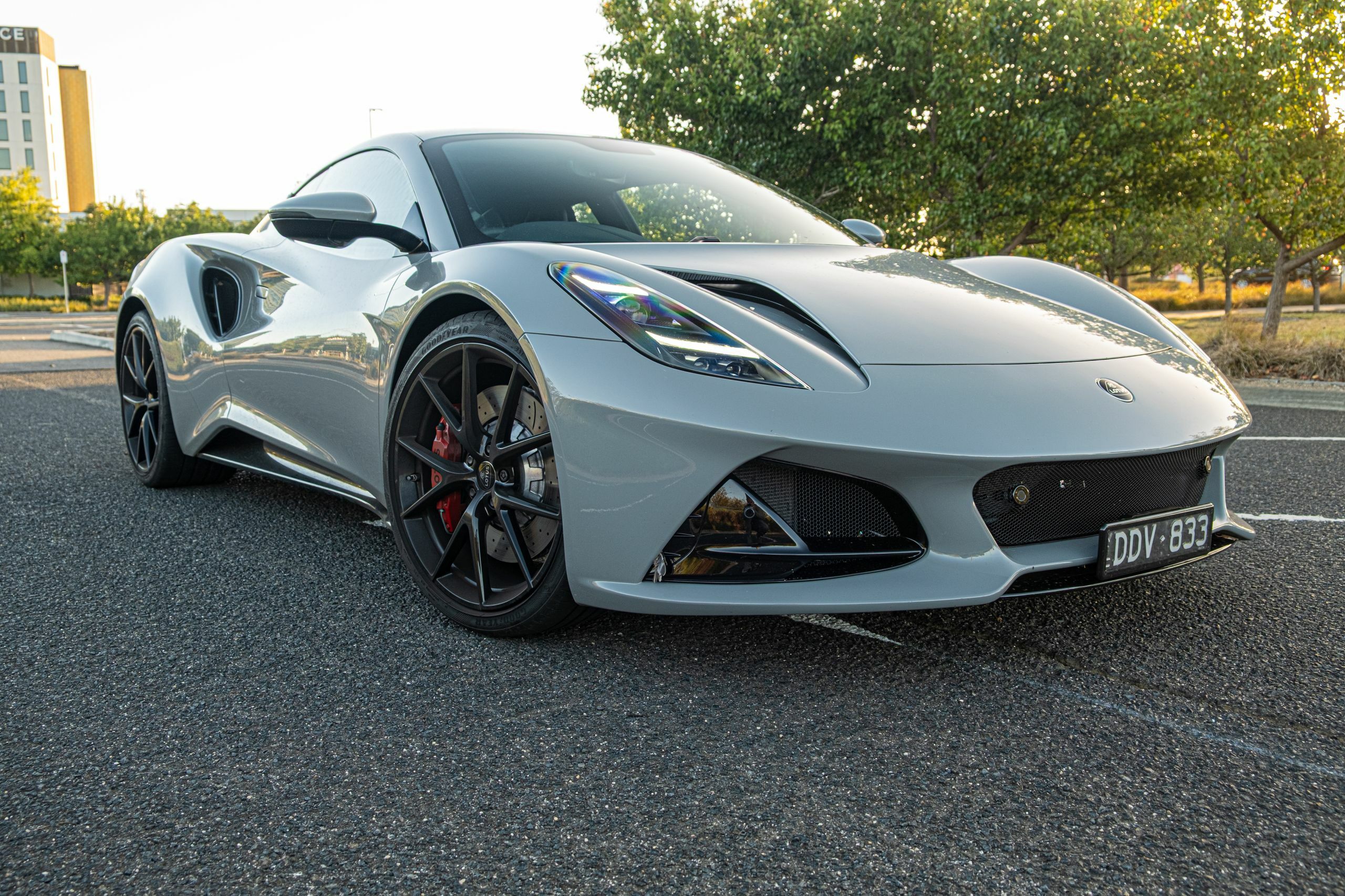
However, due to the Trump administration’s tariffs, which have increased prices in the US and reduced demand, Lotus has committed to building more right-hand-drive V6 models for Australia, updated to comply with the latest ADAS requirements for 2026.
Review: 2026 Dodge Charger Sixpack Sounds Off But Drives Better Than You Think
Australian versions of the 2025 Lotus Emira Turbo SE start at a touch over AU$210,000 ($148,400), although the car we tested had a list price of AU$214,840 ($151,874) before on-road costs. That’s roughly the same as the going rate for a Porsche Cayman GTS 4.0 before it was killed off. For similar money, you could get a highly-specced BMW M4 Competition, or even a Chevrolet Corvette Stingray, although they are both quite different in philosophy from the Lotus.
Proper Driving Thrills


Photos Brad Anderson/Carscoops
Can a car like the Emira, equipped with a turbocharged four-cylinder, make any possible sense? While you may not think an engine like this would suit a mid-engined sports car like the Lotus, it actually does.
Indeed, it’s the engine that largely dominates the initial driving impressions of the Emira Turbo SE. At startup and off-throttle, it sounds rather agricultural and isn’t particularly inspiring. However, it comes alive once you get on the throttle.
Mercedes-AMG’s M139 uses a dual ball-bearing, twin-scroll turbo that provides amazing response and an epic soundtrack. Oh, the soundtrack. Lift off the throttle, and it delivers the characteristic flutter and whine that only a ball-bearing turbo can, combined with the aural pleasure provided by the electronically-controlled wastegate.
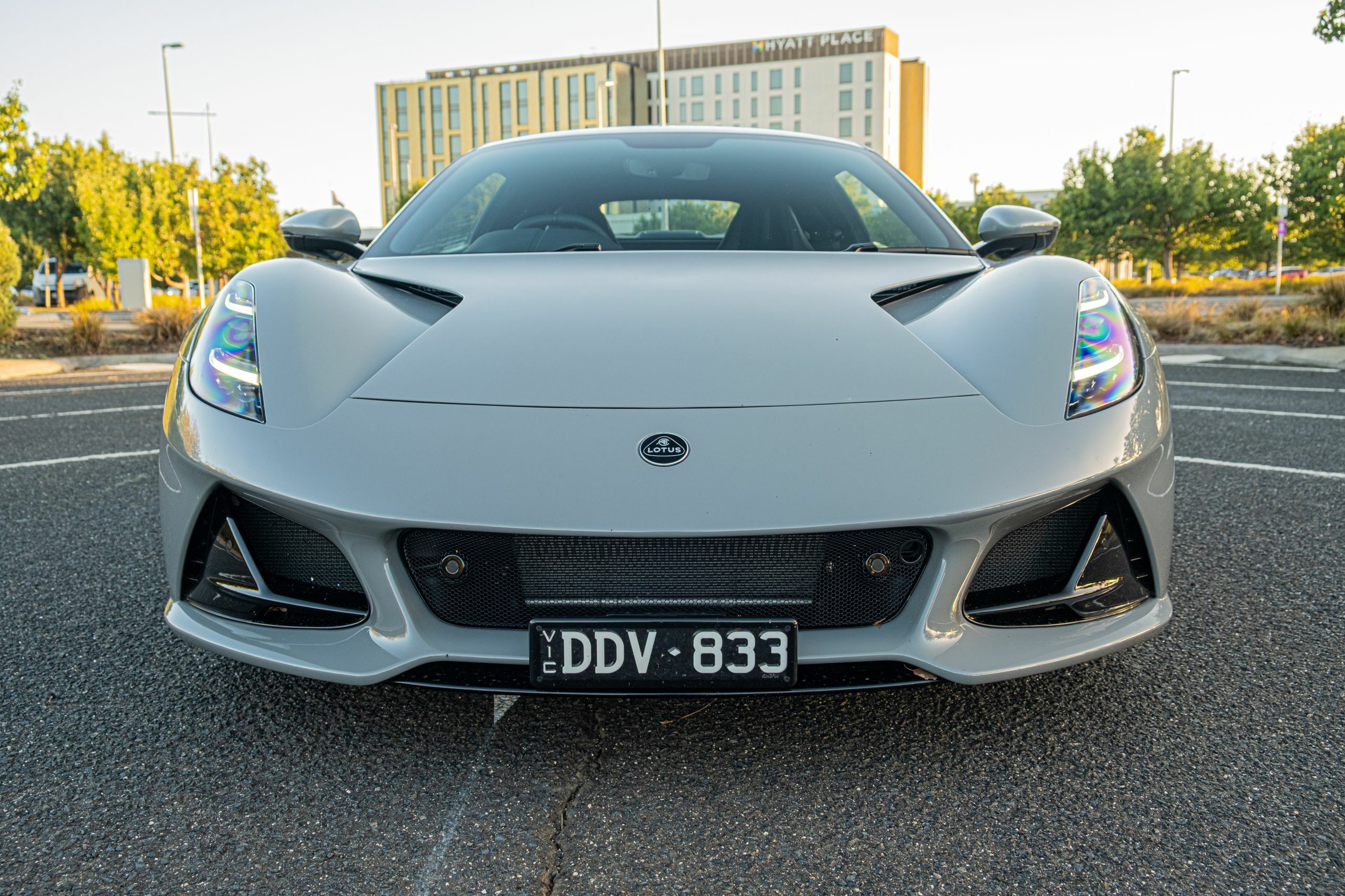
Under load, it sounds even better, thanks to the positioning of the air intake in the vent on the car’s left side, sucking in air that makes it sound more like a JDM rally hero with an aftermarket intake than a mid-engined exotic. To get the most out of the experience, it’s worth dropping the passenger-side window (or driver’s side in the US) so the turbo can be heard in all its glory. As someone who is partial to a boosted four-cylinder, it was heavenly.
The engine also offers plenty of go, even though modern safety requirements mean the Emira Turbo SE weighs around 1,457 kg (3,212 lbs), up almost 200 kg (441 lbs) from the old Evora. Lotus states the model takes 4.0 seconds to reach 100 km/h (62 mph), but we recorded repeated GPS-verified runs of 3.8 seconds.
Launching the Emira is as simple as being in either Sport or Track mode, putting your foot on the brake, and then flooring the throttle. It builds revs to around 3,000 rpm and delivers all its power to the ground, even with traction control disabled. It almost feels as if the car could launch even harder if it revved nearer to 4,500 rpm, as it can slightly bog down off line, and the engine loves being higher in the rev range.
Of course, no one buys a Lotus purely for straight-line performance. They buy it for the handling, and we’re happy to report the Emira Tubo SE delivers in this regard too, even if it can’t match models like the Exige and Elise because of the added heft.
Is The Handling Magic Still There?


Photos Brad Anderson/Carscoops
The first ingredient is the steering. While this is a modern Lotus, the company is using a traditional hydraulic steering setup, rather than an electrically-assisted system, making this one of the last cars of its kind. It’s an absolute joy.
Review: The 2026 Toyota GR86 Yuzu Edition Is So Addictive To Drive
The weighting is perfect and provides an excellent connection to the road below. Go over a bump in the road, and the wheel will shake in your hands, not something you’ll find in most cars. This means you can feel every piece of the tarmac and changes of camber mid-corner, so the Emira can be precisely placed wherever you want it to be.
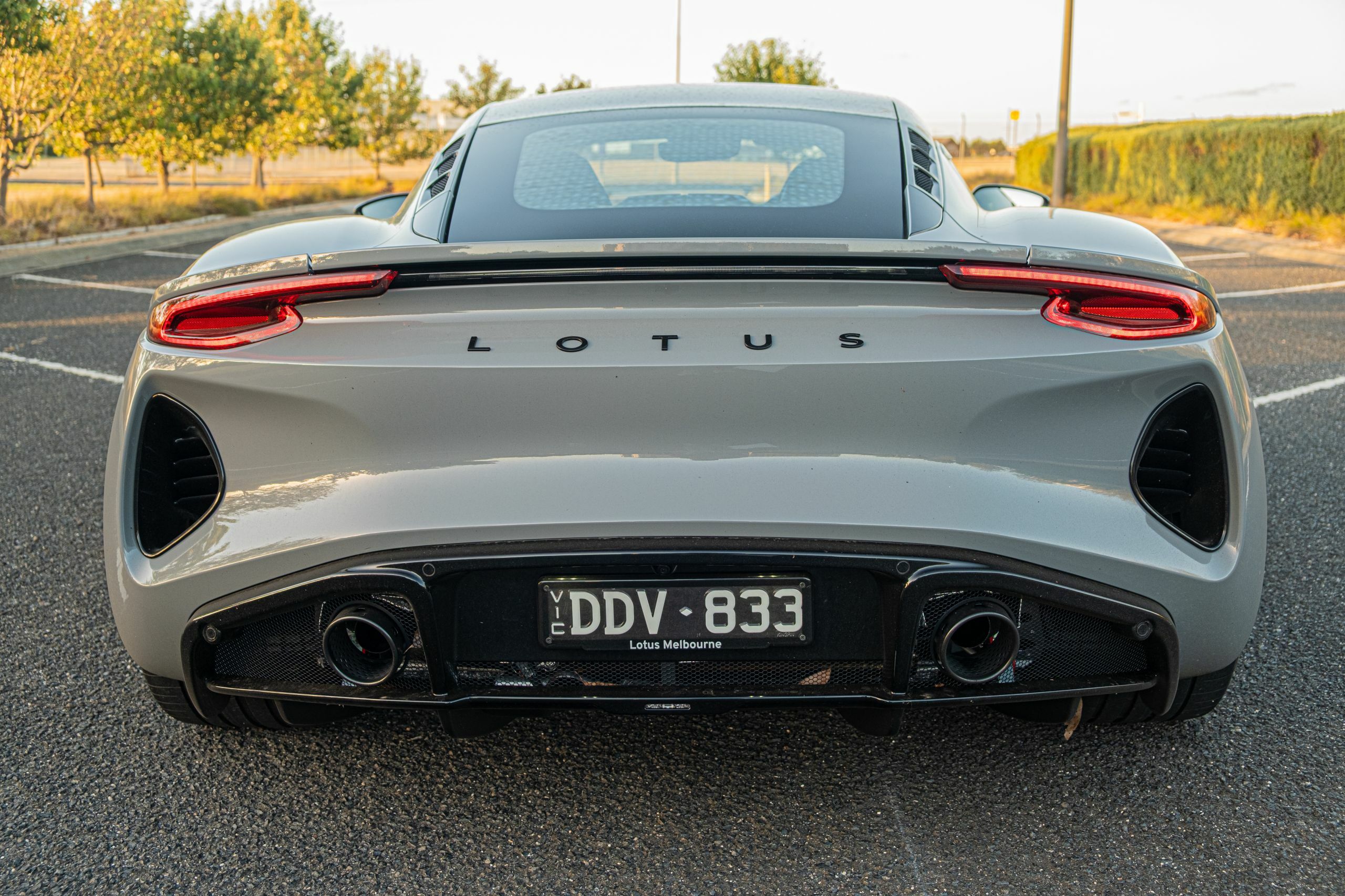
Lotus sells all versions of the Emira with Tour or Sport suspension setups. The Sport has 10 percent stiffer spring rates and comes standard with Michelin Pilot Sport Cup 2 tires, while the Tour has Goodyear Eagle F1 rubber. Most Australian cars are delivered with the Sport chassis, as was our test car, although it was fitted with Goodyear tires rather than Michelins, making it effectively a middle ground between the Tour and Sport.
On urban and country roads, the Emira Turbo SE is undeniably firm, although we’d argue that’s what a sports car should be like. It’s never uncomfortable and more than up for the task of road trips, although using it daily could be a little too tiresome. It can also feel a little busy on bump roads, but find a piece of smooth tarmac and it feels just about right.
Review: We Drove Lotus’ Electric SUV To See If It Can Silence Its Haters
Grip is exceptional, and the handling balance is beautifully neutral, allowing the Emira Turbo SE to conquer tight, twisty roads at frankly frightening speeds. It flows between corners with incredible precision and poise, and really comes alive in Track mode with the ESC partially disabled, allowing the rear end to get a little loose. Combined with exceptional brakes, it’s hard to fault the dynamics of the Emira. It also does a great job of hiding its weight and feels at least 200 kg (441 lbs) lighter than it actually is.
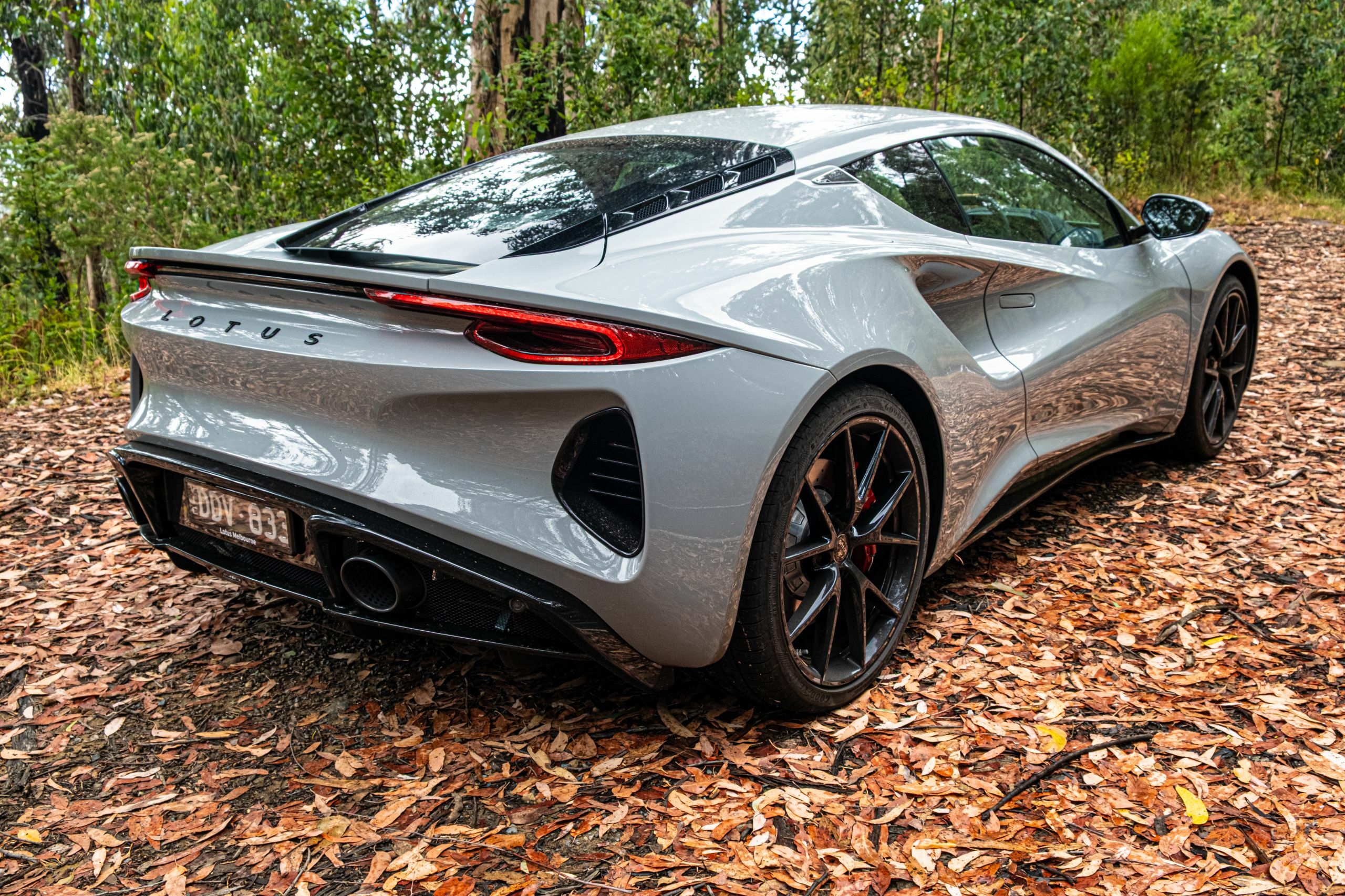
The AMG eight-speed is also excellent. It provides near-seamless shifts and is shockingly smooth at low speeds as well. It’s a shame there’s no six-speed manual available for the four-cylinder, as that’s only offered with the supercharged V6.
Review: Corvette Z06 Delivers Ferrari Thrills For A Half The Price But Leaves Buyers Torn
Enabling Track mode also boosts the soundtrack from the exhaust, allowing it to produce some faint burbles on the overrun. However, I do wish the exhaust was slightly louder, as it can be hard to hear over the induction sounds and turbo whistles.
Does It Feel Special Inside?


Photos Brad Anderson/Carscoops
The Emira’s interior feels far more premium than some older Lotus sports cars, and is shockingly spacious too.
Compared to a C8 Corvette, which is much larger externally than the Emira, the cabin of the Lotus is much roomier. Even though I’m 6’2”, I had at least an inch of headroom in my preferred seating position, and had I reclined the backrest a little further, I could have enjoyed even more room.
There’s a 12-inch display positioned in front of the driver and a 10.25-inch infotainment screen in the cluster. Fittingly, the infotainment display is quite simple, free of any fancy graphics or endless menus. It also includes wireless Android Auto and Apple CarPlay and responds quickly to inputs, making it easy to use. There are also a handful of physical controls for the climate settings.
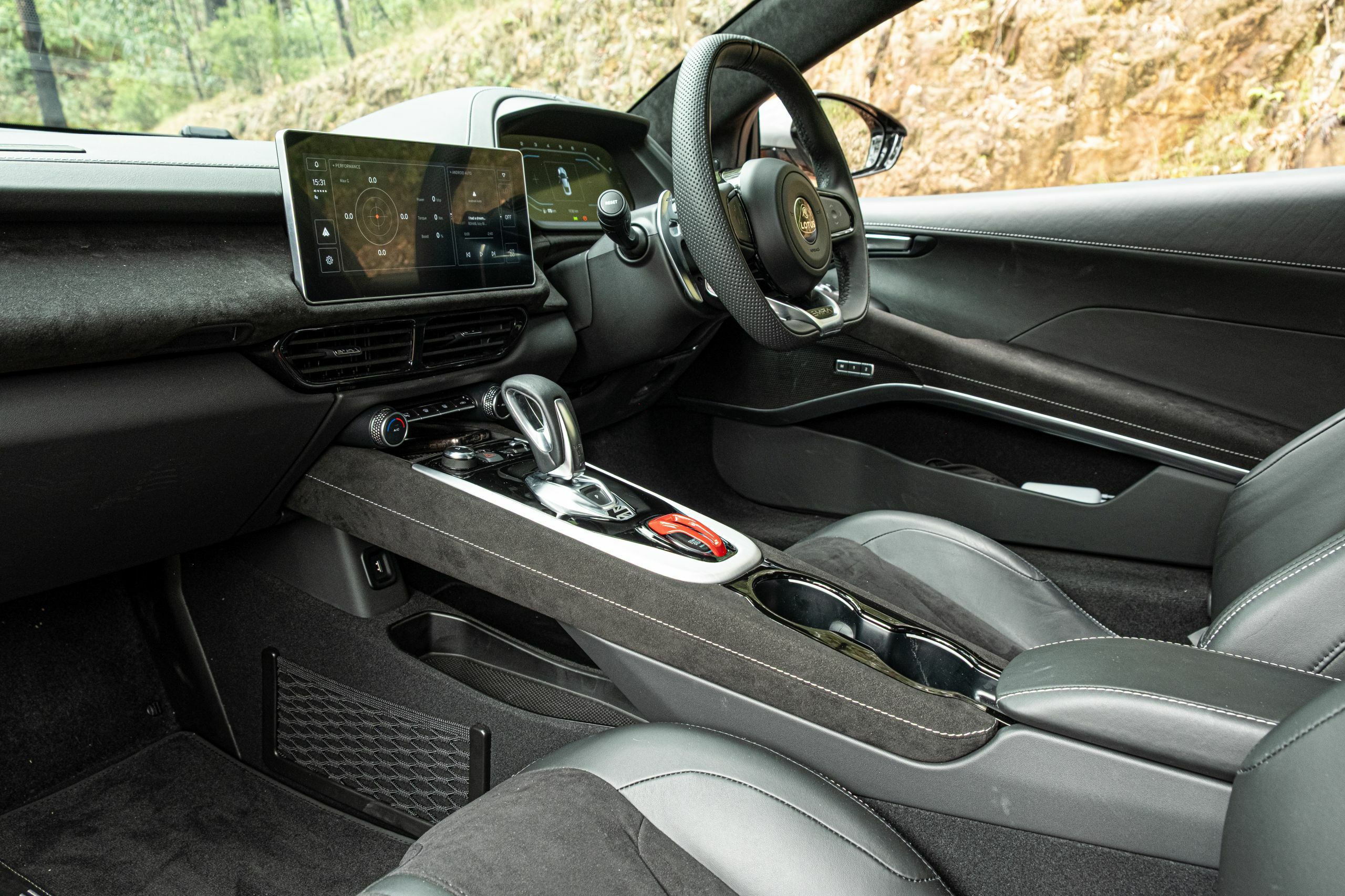
Unsurprisingly, Lotus has nailed the side and shape of the steering wheel. The plastic buttons of the wheel do feel a little cheap, but they offer plenty of functionality, particularly the controls on the right side.
Sitting on the transmission tunnel is a Lamborghini-inspired Start/Stop button positioned below a red panel that needs to be lifted up, and a leather-wrapped gear selector. The seats are okay, and do include heated functions and adjustable lumbar, but I think they could be improved with more thigh and side bolstering, gripping drivers more tightly on mountain roads and on the track.
Overall, the fit and finish are nice, with a welcome combination of leather and Alcantara surfaces. It also offers a generous 211-liter (7.4 cubic-foot) shelf behind the seats where you can store soft bags, and a 151-liter (5.3 cubic-foot) storage area behind the engine. Speaking of the engine, the four-cylinder is completely hidden by a black plastic cover, which is a shame.
Verdict


Photos Brad Anderson/Carscoops
The Lotus Emira feels like one of the final holdouts from a fading era, a proper driver’s car in a world rapidly moving on. It delivers the sort of thrills few machines can now match, especially with the 718 Cayman in its current form gone and the Alpine A110 nearing the end of its run.
It’s not cheap, but those looking for a car that delivers more smiles per mile than many supercars would be wise to put it on their shortlist. With both four- and six-cylinder engines on offer, you really can’t go wrong.