- The revived Volga brand returns with a new SUV and a matching sedan.
- Both models use 2.0-liter turbocharged four-cylinder engines as standard.
- Each one is closely based on existing Geely designs developed in China.
Volga is a familiar name in Russia’s automotive scene, and after years of silence, it’s trying to edge back into relevance. Originally produced by GAZ, Volga sedans were once a common sight across the Soviet Union, often used by government officials and as taxis. This time, though, the comeback comes with a catch. The brand’s two new models, the C50 and K50, aren’t home-grown creations.
The carmaker had planned a revival in 2024 and even previewed three models based on Changan underpinnings sold in China. That effort never materialized, but Volga is trying again. With Western automakers exiting Russia after its invasion of Ukraine, the company may now have room to position itself as a more serious player.
Read: China Powers The Return Of One Of Russia’s Most Famous Car Brands
The first model is the K50. It was teased in February and is an SUV based on the Geely Monjaro. This is not simply a case of shared underpinnings paired with a unique design. Instead, it looks largely identical to the Monjaro, with the same front fascia, chrome accents, and headlights. The only visible change is a slightly revised grille carrying Volga badging.
Volga K50



The similarities continue along the sides and at the rear, where very few components appear to have been developed in-house. Interior images have not yet been released, but Russian media reports suggest it uses a 2.0-liter turbocharged petrol engine producing 238 hp. It is paired with an eight-speed automatic transmission and all-wheel drive.
A Chinese-Russian Sedan
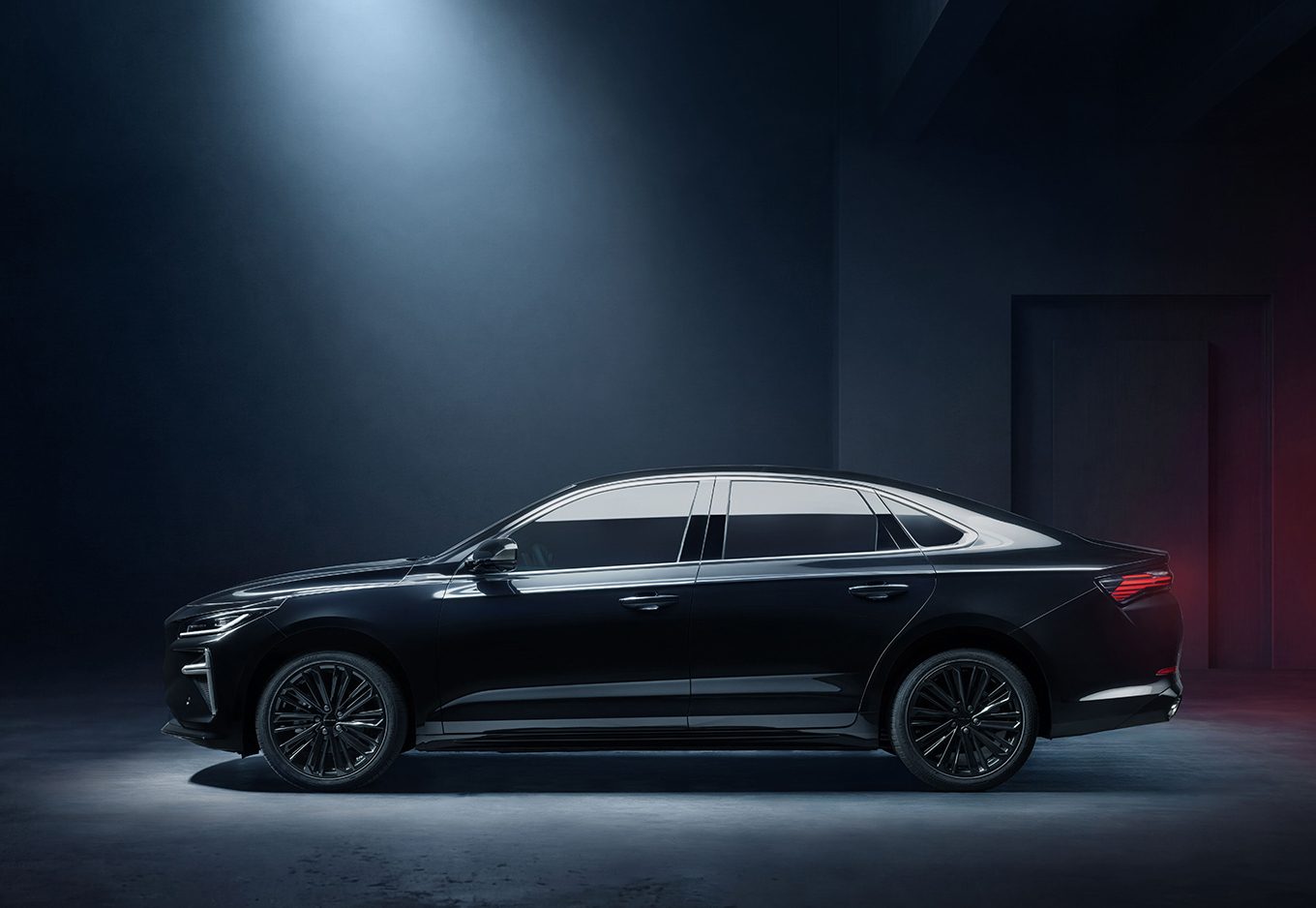
Then there’s the Volga C50, a traditional sedan. It’s built around the Geely Preface and appears to have undergone very few changes from the Chinese model. Like the K50, the C50 gets a new grille and front badge, but everything else seems to carry over largely unchanged from the Geely. That’s not necessarily a drawback, as the Preface has a clean design, even if it leans slightly bland, bringing to mind the Passat and, from some angles, the American Honda Accord.
Virtually no changes appear to have been made to the Preface’s interior in adapting it into a Volga. It retains the same four-spoke steering wheel, digital instrument cluster, and portrait-oriented infotainment display.
The C50 is powered by a 2.0-liter turbocharged four-cylinder engine, offered in 150 hp and 200 hp versions. It uses a seven-speed dual-clutch transmission. Volga has not announced pricing for either model, but both will be built at the former VW Group factory in Nizhny Novgorod, which previously produced Skoda and VW models for the domestic market.
Volga C50