











In many ways, it’s quite surprising that it’s taken Kia this long to enter the pickup space. Perhaps more surprising is the fact that the newcomer has opted to enter the space not with a cautious car-like unibody offering ala Honda Ridgeline, but with a full-blown ladder-chassis creation.
Review: Jeep’s 2026 Cherokee Stopped Pretending To Be A Jeep, And It Drives Better For It
For a brand that was once known as a budget alternative and has spent the best part of a decade trying to convince consumers otherwise, this is still a market that won’t be won easily. The Ute-faithful are famously territorial.
QUICK FACTS
But, rather than play it safe, you have to give kudos to Kia for going bold and brash with the Tasman. I’m guessing this was part of the plan. Rather than imitating the herd, Kia apparently decided to confuse it. Which leads us to our first point.
Does It Actually Look As Ugly As It Does In Photos?
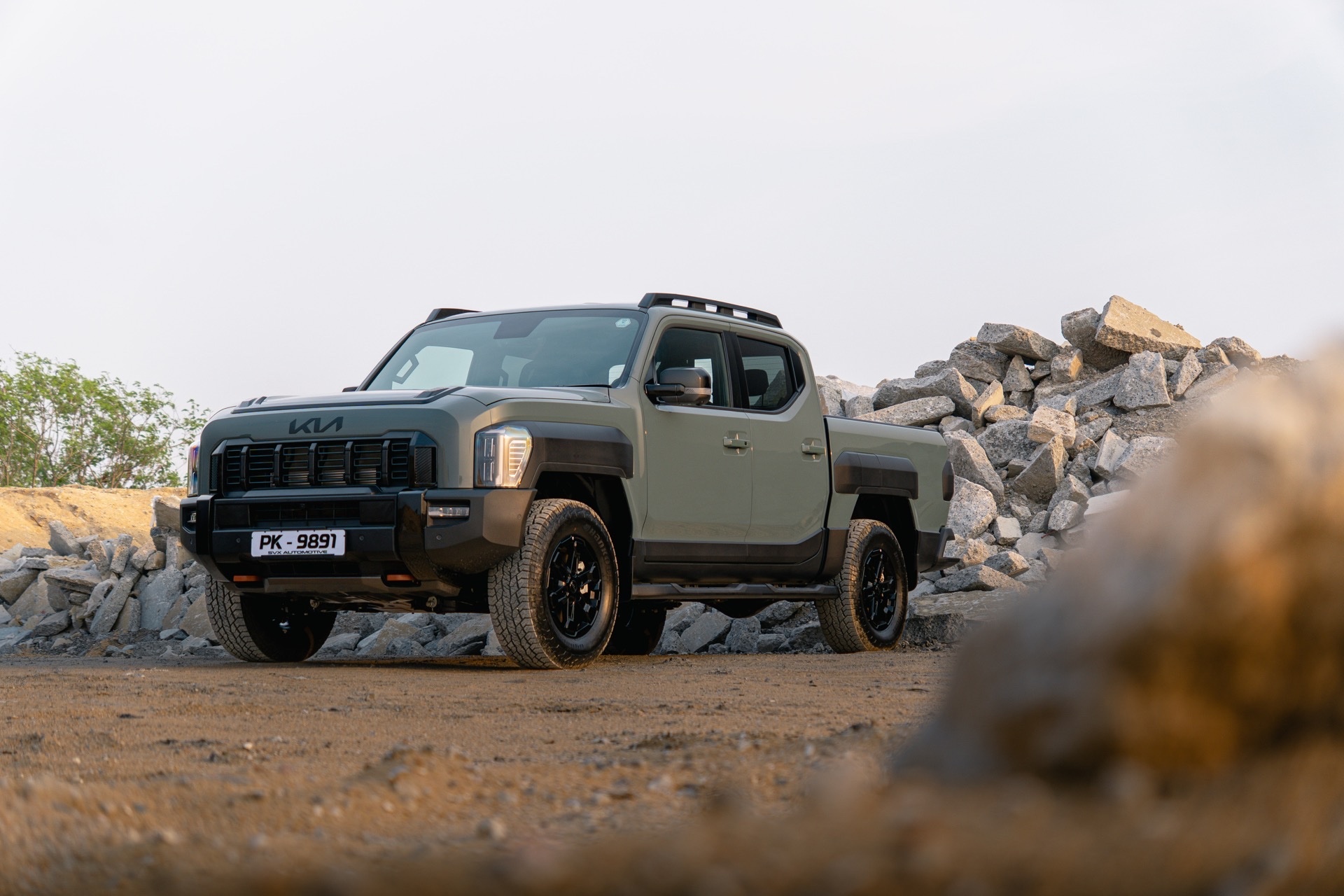
In a word, yes. But it does so not quite in a hideously appalling SsangYoung Rodius way. The rest of the car is actually well-proportioned. That face though… There’s no getting around it. If you’re familiar with pareidolia, the psychological phenomenon in which humans instinctively see faces in inanimate objects, you can see why the Tasman is so unsettling to most.
People’s brains are subconsciously looking for a face in car design. With the Tasman, you find something that’s missing eyes, with the headlights not only smoked, but integrated into the front fender flares. Turning the DRLs on helps marginally, but it’s a band-aid over something that could have been made more appeasing.
More: Kia Shoots Down Tasman Facelift Rumors After AI Renders Go Viral
If you look past the front end, though, the rest of the Tasman doesn’t look half bad to us. Its boxy, squarish cab lends itself to the pickup aesthetic more naturally than the high-wasted, upswept beltlines we see on most competitors.
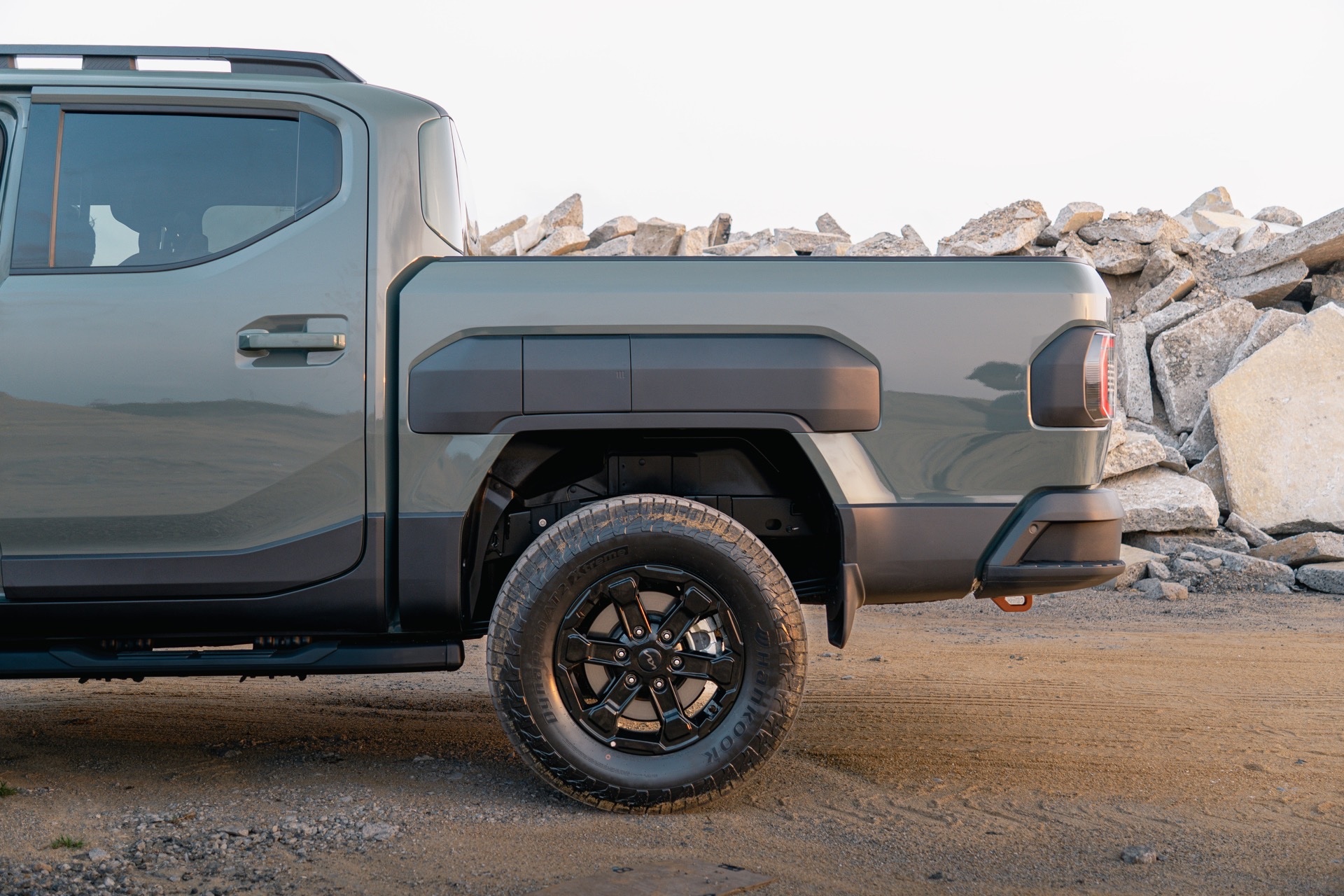
This, the South Asia-market model, oddly doesn’t feature the 6.3-liter rear fender storage option found in the Australian market, and even its top-spec trim, the X-Pro, omits the sunroof. The X-Pro does, however, get the 17-inch wheels (one inch smaller than the slightly lower-positioned X-Line), which feature taller 265/70 Hankook A/T tires.
Okay, Let’s Assume I Can Get Past The Looks. What Else Does The Tasman Do Different?
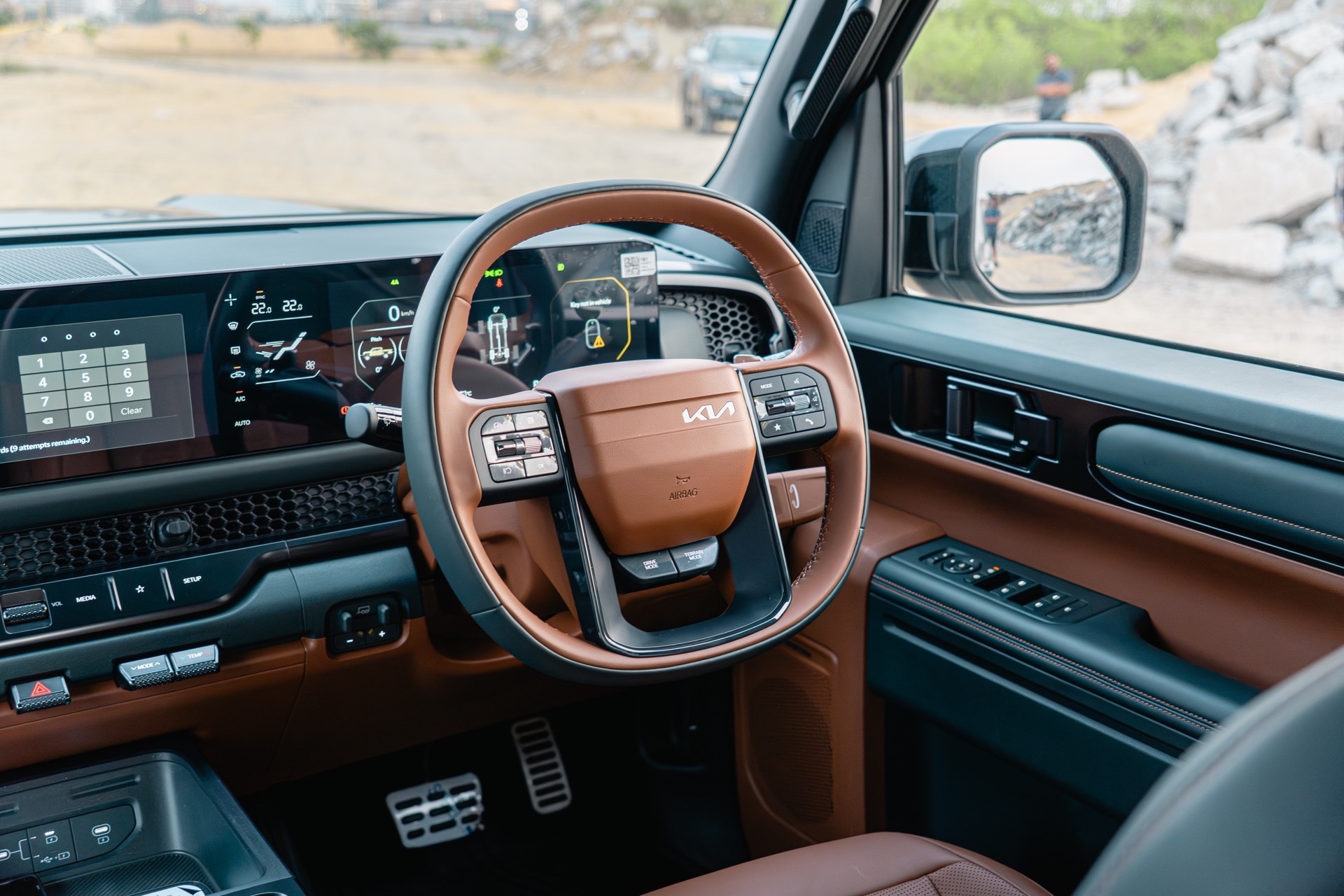
The interior is the real star of the package. Step inside the Tasman, and the first thing that hits you is how little it feels like a truck. Kia has clearly raided the parts bin of its SUV lineup here, and honestly, that’s not a criticism. The materials are genuinely impressive for the segment. This isn’t the usual “hose it down and forget about it” approach that ute buyers have had to accept for decades.
The centerpiece is the panoramic display housing twin 12.3-inch screens, which feels more EV9 than it does workhorse. However, it has to be said, the touch-heavy climate controls are one area where the Kia’s modernity works against it. Having VW-esque touchpads for shortcuts to the home screen, maps, etc, is, in a word, annoying, and no amount of premium aesthetics makes that forgivable. This goes against the rest of the interior ethos, which features a pleasing number of physical buttons that let you access various off-road features, such as the locking diff, 4×4 controls, and off-road modes, as well as more basic functions like your HVAC controls.
On the other hand, small victories: the fold-out center console table is exactly the kind of lateral thinking that makes you appreciate what Kia has done with the Tasman. Meanwhile, whoever signed off on the interior door handles deserves a raise, as they’re among the most satisfying to operate of any vehicle I’ve tested, truck or otherwise.
How Does All That Translate On The Road?



Photos Kulindu Oneth / Carscoops
We tested the 2.2-liter four-cylinder turbodiesel, producing 210 hp ( 207 PS / 154kW) and 440Nm (325 lb-ft) of torque, numbers that put it ahead of the Toyota Hilux and Mitsubishi Triton on paper, though short of the Ford Ranger and Volkswagen Amarok’s optional six-cylinder outputs. On paper, it’s competitive. In practice, it’s better than that. The torque arrives early and with real conviction, and that will doubtless prove its worth when there’s a loaded trailer behind you. Paired to the eight-speed automatic, the whole package feels unhurried and deliberate, which suits the Tasman’s character well.
Our test didn’t include any meaningful off-road work, so we’ll reserve judgment on that front, but the hardware certainly suggests it’s up to the task. The X-Pro’s suite of off-road tools is extensive: beyond the standard terrain modes — Sand, Mud, Snow, and Rock — you get X-Trek, which functions as a low-speed off-road cruise control, managing throttle and braking inputs on technical terrain without the driver needing to feather the pedal.
Review: The 2026 Subaru Trailseeker Is An Insanely Fast Wagon That Just Happens To Be Electric
The Ground View Monitor, meanwhile, projects a camera feed of what’s directly beneath the front of the truck onto the infotainment screen, a genuinely useful tool for navigating obstacles you can’t otherwise see from the driver’s seat. It’s the sort of feature that was, until recently, reserved for much more expensive machines, like the Range Rover.
As for the engine note, it’s not silent. Once you climb past idle, there’s a faint diesel thrum that reminds you of what’s under the bonnet. But Kia has packed so much acoustic insulation into this cabin that it never crosses the line into intrusive. The harshness is there if you go looking for it. Most of the time, you won’t bother.
To be honest, that four-pot only really starts making its presence known when you push it outside of its comfort zone. Sadly for the Kia, that zone is slightly hemmed in by virtue of the powerplant, i.e., if there were an option of a V6, things may be very different. I have no doubt that the chassis could take it. And while I am, by and large, happy with the torque on offer from the diesel four-banger, having tested bigger units, both in terms of cubic capacity and cylinder count, you know there will be those yearning for more. And in reality, just a bit more CC or a couple more cylinders (or both) may just make the Tasman near unstoppable. It lacks the outright power to do heavy-duty tasks with a but more hushed aplomb.
We understand that there are some differences under the skin between this South Asian model and the Australian model, which is more widely tested. Without comparing both back to back, it would be hard to discern whether this is all marketing fluff or not, but it does appear that the Tasman we had was incredibly softly sprung. Not to the point where the ride becomes bouncy per se, but rather, compared to some of the competition, it feels much more cosseting.
Dare I say, it’s the most SUV-like pickup I’ve driven? If the rumors that Kia may be looking to make a closed-body adaptation of the Tasman, much like how the Fortuner is to the Hilux, then they’re on the right track.
Okay, But How Practical Is It?


Photos Kulindu Oneth / Carscoops
The load bed checks in at 1,173 liters of capacity, which Kia claims bests most rivals. The bed itself is well thought out, with integrated mounting points along the inner perimeter that make accessorizing straightforward, and Kia has a growing list of factory options to bolt on, including a double-deck storage system that sits above the bed floor and creates a lockable upper level. This could be genuinely useful if you’re carrying a mix of gear you want secured and gear you don’t mind getting wet.
Inside the cabin, the practicality story is just as strong. The 33-liter under-seat storage compartment is class-leading, and unlike some rivals, where that space is technically there but awkward to actually use, the Tasman’s implementation is clean and accessible. On higher trims, the rear seat slides and reclines, which is something the Ford Ranger also offers, but which still feels like a genuine luxury compared to the upright, fixed pews you’ll find in a Hilux. Kia also claims best-in-class second-row headroom, shoulder room, and legroom, and while those claims are difficult to verify without a tape measure and a convoy of rivals, the rear seat genuinely feels spacious in a way that makes longer journeys less of an endurance event for back-seat passengers.
The folding center console table has already been mentioned, but it belongs in the practicality conversation too, because this is the kind of feature that a worker doing paperwork on a job site, or a family stopped at a rest area, will actually use every single day.
What rivals still have an edge in is the sheer breadth of their accessory ecosystems. Toyota and Ford have had years to build out aftermarket and factory accessory networks for the Hilux and Ranger, respectively. The Tasman’s accessories catalog is growing, but it’s starting from scratch, and buyers who want a specific canopy, drawer system, or tray configuration may find their options more limited than they’re used to.
Verdict
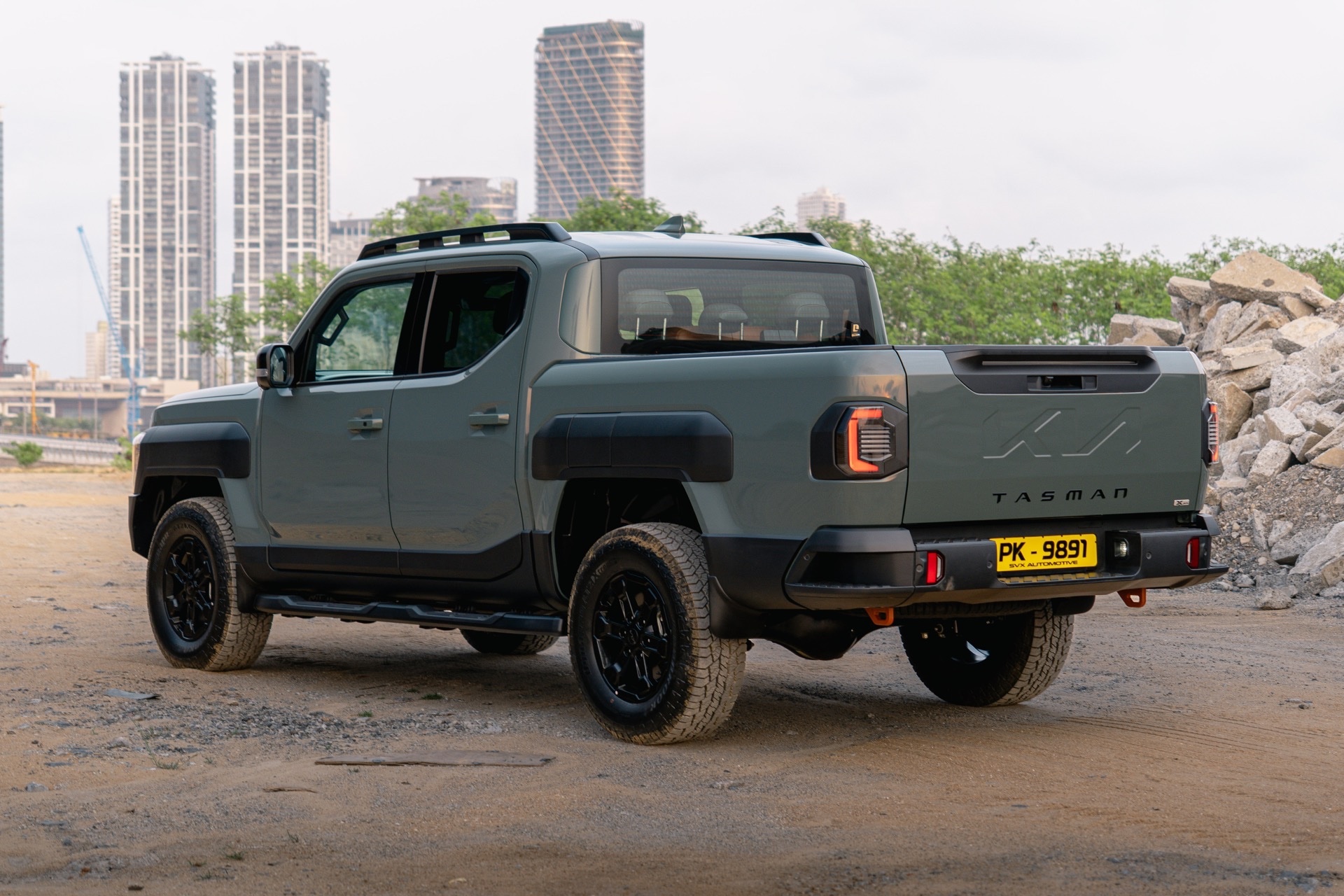
The Kia Tasman arrives with a lot to prove and, for the most part, proves it. This is a genuinely accomplished first attempt at a segment that has humbled more experienced manufacturers. The interior is class-leading, the diesel engine is refined and torquey in equal measure, and the practicality credentials are hard to argue with. For a debut truck, that’s a remarkable scorecard.
The Tasman tested here was done so in Sri Lanka, where it retails for around LKR 29,000,000 (~$91,000) in X-Pro spec, thanks to taxes. That’s a significant ask. A Toyota Hilux or Ford Ranger of equivalent specification will set you back somewhere in the region of LKR 25,000,000 ($79,100) to LKR 27,000,000 ($85,500), which means the Tasman carries a meaningful premium over the established names rather than undercutting them.
Kia will need buyers to be convinced not just that the Tasman is good, but that it’s good enough to justify paying more for an unknown quantity in a segment where the HiLux, in particular, has spent decades building an almost mythological reputation for reliability. Fortunately, as this review has shown, it has plenty of them. Whether that’s enough to overcome the price premium and the badge unfamiliarity is the question only time, and the market, will answer.