- Tesla may finally have a fix for problems tied to its vision-only system.
- A new patent shows camera units fitted with tiny wipers and water sprayers.
- Cybercab prototypes have been spotted carrying camera-cleaning hardware.
Many automakers chasing autonomy have settled on roughly the same hardware recipe: cameras, radar, and LiDAR, each covering for the others’ weaknesses. Tesla went the other way. Its driver-assist suite leans entirely on cameras, no radar, no LiDAR. While using a vision-only system has some advantages, it also has some drawbacks, including issues caused by dirty camera lenses.
Tesla is aware of the problem. Recent Cybercab prototypes have turned up wearing small washer jets aimed at the exterior cameras, spraying them clean as needed. A patent filing suggests the company wants to go further than a squirt of fluid.
Read: Tesla’s Model Y Robotaxis Can Squirt Now, But Yours Still Can’t
An image from the patent depicts the entire camera unit, including a tiny fluid reservoir that can spray water onto the camera’s lens. Tesla has also designed a tiny wiper blade that can sweep across the lens, ensuring it’s as clean as possible. This blade will be driven by a small wiper motor, also incorporated into the camera’s housing, Not A Tesla App notes.
It’s an innovative solution and could help to overcome some of the issues Tesla’s vision system experiences. Of course, a setup like this won’t help Tesla’s cameras in dealing with sun glare, for example, which can impact how the automated driving systems work.
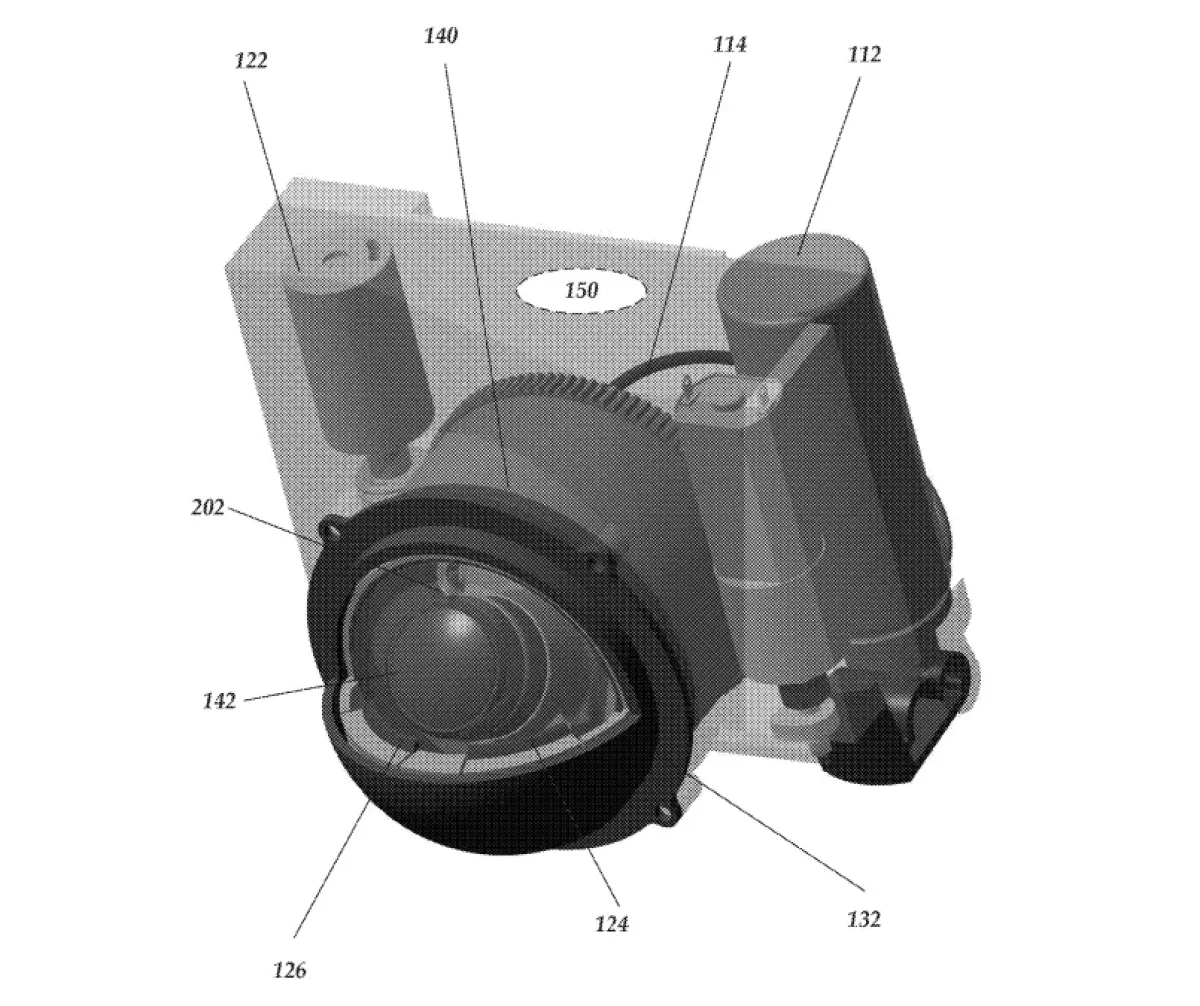
It’s also unclear if all of the exterior cameras used by current Tesla models could be fitted with these units, as they are noticeably larger than just having a camera. At the very least, Tesla may be able to squeeze camera units like these into the front of its vehicles, as well as the front quarter panels, and the rear, among the most important cameras it uses to capture 360-degree images.
Of course, these camera units will be more expensive than those currently used and, with more moving parts, will also be more prone to failure. But, as Tesla seeks to achieve full autonomy, they may be necessary.