- Hyundai bought SoftBank’s last stake, taking Boston Dynamics fully in-house.
- Korean workers struck over robots just days before the buyout landed.
- As many as 25,000 of these robots could be deployed across plants in the US.
The race among automakers to put humanoid robots on the floor at scale is well and truly on. Just days after Hyundai workers in South Korea walked out over fears that robots could take their jobs, the group revealed it would acquire SoftBank Group’s remaining stake in Boston Dynamics, turning the US-founded robotics firm into a wholly owned subsidiary.
Hyundai Motor Group made its first big move into the humanoid space in 2021, buying an 80 percent stake in Boston Dynamics, then widely seen as the leader in the field. It has crept that holding upward ever since, and confirmed on Thursday that it would take SoftBank’s remaining slice of roughly 10 percent. Full ownership, Hyundai said, gives it more room to maneuver on long-term investment, business strategy, and a possible initial public offering.
More: America Asked For More Manufacturing Jobs, So Hyundai’s Sending Humanoid Robots
Financial terms haven’t been confirmed, but South Korean media pegged the transaction at roughly 500 million won, or about $335 million, according to Reuters.
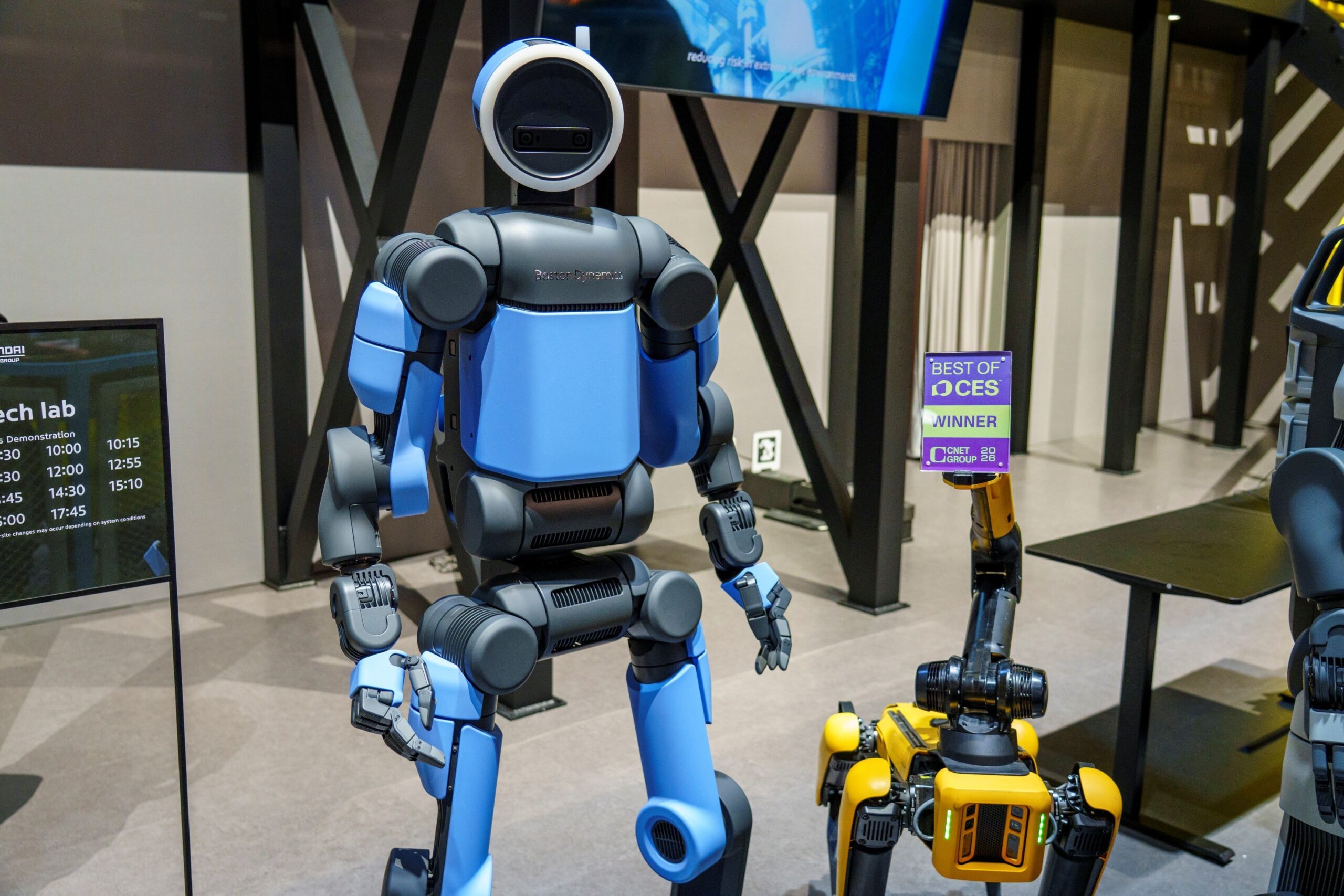
Hyundai has big plans for the Atlas humanoid robot from Boston Dynamics. It wants to deploy more than 25,000 of them across Hyundai and Kia manufacturing sites, potentially starting at Hyundai’s Metaplant in Georgia in 2028 and Kia’s Georgia plant the year after. The group also aims to build up to 30,000 Atlas units annually by 2028. Reuters reports that Atlas will first handle parts-sequencing work at the Georgia facility, with its duties possibly widening to component assembly by 2030.
Making Lifting Easy
Atlas is highly advanced, even if other robots out there look more humanlike. It relies on what Boston Dynamics calls proprioception, or internal body awareness, much like the way the human body reacts and compensates on its own when carrying weight. Per specifications published by The Wall Street Journal, Atlas stands 6’2″ (190 cm), weighs 198 lbs, and can lift 110 lbs for a moment or hold a 66 lbs load steadily. Stated battery life currently sits at four hours, though that figure should only climb as the technology matures.
Read: The AI Robots Won’t Strike, So Hyundai’s Workers Did It First
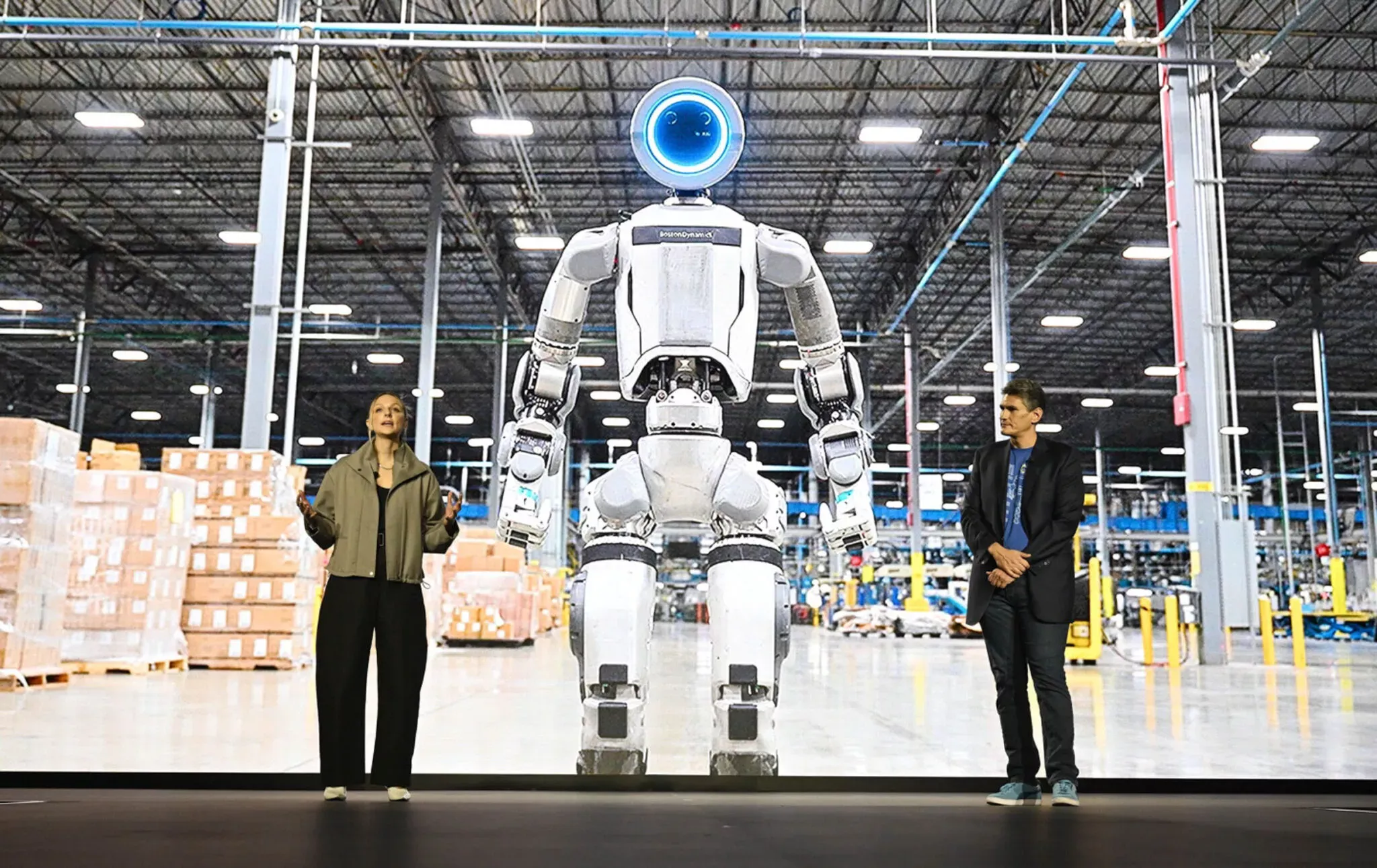
Photo Hyundai
The WSJ reported that the January reveal caught many Hyundai employees off guard, since the latest Atlas hadn’t surfaced publicly before. The original, built more than a decade ago for a US military robotics competition, ran on hydraulics and stayed tethered to a cable. Boston Dynamics later rebuilt it for industrial work.
Unions, at least the South Korean ones, may be the main thing standing between Atlas and wide deployment. Workers at its Korean plants staged a partial strike earlier this week as union leaders push to protect their members. When Hyundai and Boston Dynamics unveiled Atlas earlier this year, the union said the robot would never take on a role without the agreement of existing workers.
Union Negotiations Underway
In the talks, the union wants to move from an hourly pay model to a fixed salary for production workers, so they can still earn a living wage even if automation trims their hours.
Also: BMW’s New Humanoid Workers Never Take A Break Or Get Paid
Each Atlas robot costs around $130,000, according to a South Korean government-owned research institute. The paper reports that estimated labor savings could let each unit recoup its purchase price in about two years.
The Robots Are Coming For Your Job
The Korean automaker is hardly alone in pushing for AI-powered humanoids. Tesla is preparing Optimus for production, BMW is testing robots in Germany as well as at it’s South Carolina plant, and Xiaomi has begun humanoid trials in its EV plants. Schaeffler already runs four-fingered machines in South Carolina, while Mitsubishi wants robots building engines. GM, meanwhile, has added cobots in Detroit as it cuts roughly 1,000 jobs. The technology is still fairly uncommon on factory floors, but the direction of travel is no longer hard to read.