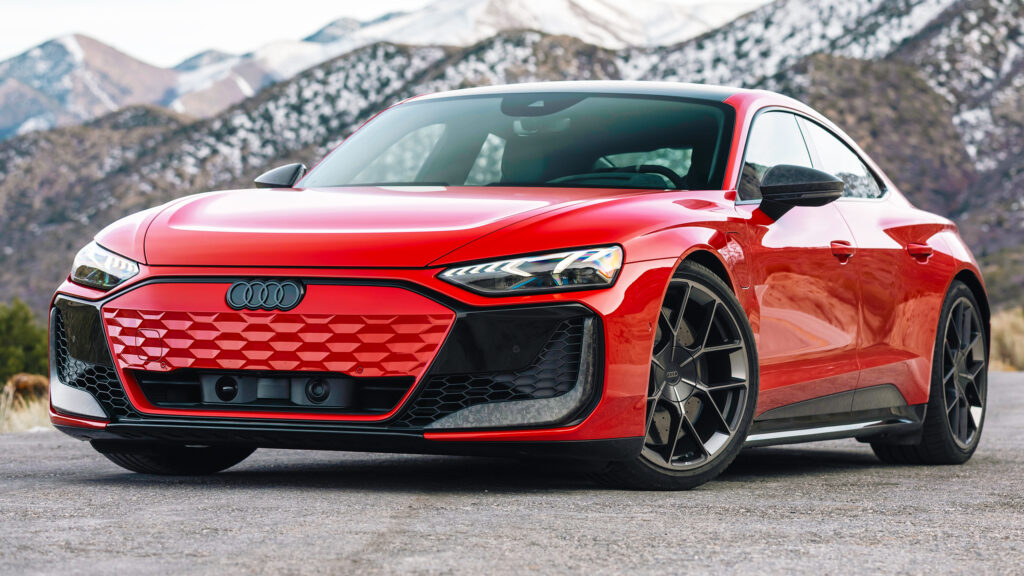



- IIHS found the highest driver death rates in small cars, sedans and several muscle cars.
- Heavy-duty pickups led a separate ranking measuring deaths among occupants of other vehicles.
- The institute says vehicle size and driver behavior both shaped the real-world results.
If you’ve spent any time on American roads, the Insurance Institute for Highway Safety’s latest death-rate study probably won’t surprise you. Physics still matters. Smaller vehicles generally fare worse when they collide with something much larger, while vehicles with lots of horsepower sometimes attract drivers more willing to explore the upper area of the speedometer.
The surprise isn’t that those trends showed up in the data. It’s that the biggest trucks appeared on the list for an entirely different reason.
Read: Wisconsin Driver Kindly Films His Own Road Rage Shooting For Exhibit A
The IIHS analyzed real-world fatalities involving 2023 model-year vehicles and equivalent earlier models. Specifically, they calculated both driver death rates and, for only the second time, “other-driver death rates.” That figure is the number of people killed in other vehicles involved in crashes with a particular model.
The highest driver death rates were dominated by small cars, sedans and performance models. The Kia Rio topped the list at 170 driver deaths per million registered vehicle years, followed by the Nissan Versa, while vehicles like the Dodge Challenger, Dodge Charger HEMI, Chevrolet Camaro and Chevrolet Corvette also ranked among the worst performers. That doesn’t necessarily mean those vehicles are inherently unsafe. IIHS notes that driver death rates reflect far more than crashworthiness.
Highest rates of driver deaths
Deaths per million registered vehicle years, 2023 and equivalent earlier models, 2021-24
The figures are adjusted for age and sex, but not for variables like driving speed, annual mileage or driver behavior. IIHS President David Harkey says sports cars and muscle cars post higher death rates largely because of “how they’re driven,” while even the safest small cars remain at a disadvantage when colliding with larger, heavier vehicles.
The flip side of the rankings is just as interesting. Sixteen vehicles recorded zero driver deaths per million registered vehicle years during the study period, a list dominated by midsize and luxury SUVs, along with a handful of electric models. The Lexus RX, BMW X3, Mercedes-Benz GLE, Rivian R1S, Tesla Model Y and Toyota Corolla Cross Hybrid were among those posting a perfect score, illustrating how a combination of modern crash protection and larger vehicle size can dramatically improve occupants’ odds in a serious crash.
Lowest rates of driver deaths
Deaths per million registered vehicle years, 2023 and equivalent earlier models, 2021-24
The other-driver rankings tell a different story. Heavy-duty pickups dominated that list, with the Ram 3500 Crew Cab Long Bed 4WD posting the highest rate at 204 deaths per million registered vehicle years. Several other Ram and Chevrolet heavy-duty trucks followed close behind, reflecting the greater harm larger, heavier vehicles can inflict in a crash.
That’s the big kicker in this entire data set. Go back and look at those figures. The single highest fatality figure in the report didn’t belong to a tiny economy car or a 700-hp muscle car. It belonged to a heavy-duty pickup, just not for the people inside it.
Highest rates of other-driver deaths
Deaths per million registered vehicle years, 2023 and equivalent earlier models, 2021-24
That’s what makes this study more interesting than a simple list of “safe” and “unsafe” vehicles. It reinforces a reality that’s been true for decades. Physics doesn’t care about marketing, horsepower, or crash-test trophies. Smaller vehicles still tend to lose when size is against them, high-performance cars often encourage higher-risk driving, and the heaviest trucks often exact the biggest toll on everyone else sharing the road. That’s a nuance worth remembering the next time someone tries to boil this report down to a single headline.
Lowest rates of other-driver deaths
Deaths per million registered vehicle years, 2023 and equivalent earlier models, 2021-24
Driver and other-driver death rates by vehicle size and class
Deaths per million registered vehicle years, 2023 and equivalent earlier models, 2021-24