









- Genesis has introduced the new GV80 Hybrid in Korea.
- It features a 2.5-liter turbo engine and two motors.
- Delivers a combined output of 347 hp and 390 lb-ft.
Genesis has quietly unveiled the new GV80 Hybrid in South Korea. It will be launched next month with an all-new powertrain for the brand.
Unsurprisingly, it follows in the footsteps of the Kia Telluride and Hyundai Palisade hybrids. As a result, it features a turbocharged 2.5-liter four-cylinder engine, a starter motor, and a drive motor that handles both driving and regenerative braking.
More: Genesis’ Entry-Level Crossover Is Getting A Hybrid Makeover
While it’s similar to hybrids from Hyundai and Kia, Genesis uses a unique water-cooled hybrid battery. The automaker says this allows them to “control battery temperature more efficiently, resulting in higher maximum discharge output compared to air-cooled systems and enabling more active battery utilization.”
In the GV80 Hybrid, the powertrain produces a combined output of 347 hp (259 kW / 352 PS) and 390 lb-ft (530 Nm) of torque. It’s connected to a new seven-speed transmission, which sends power to the rear wheels. This enables the crossover to accelerate from 0-62 mph (0-100 km/h) in 7.1 seconds.
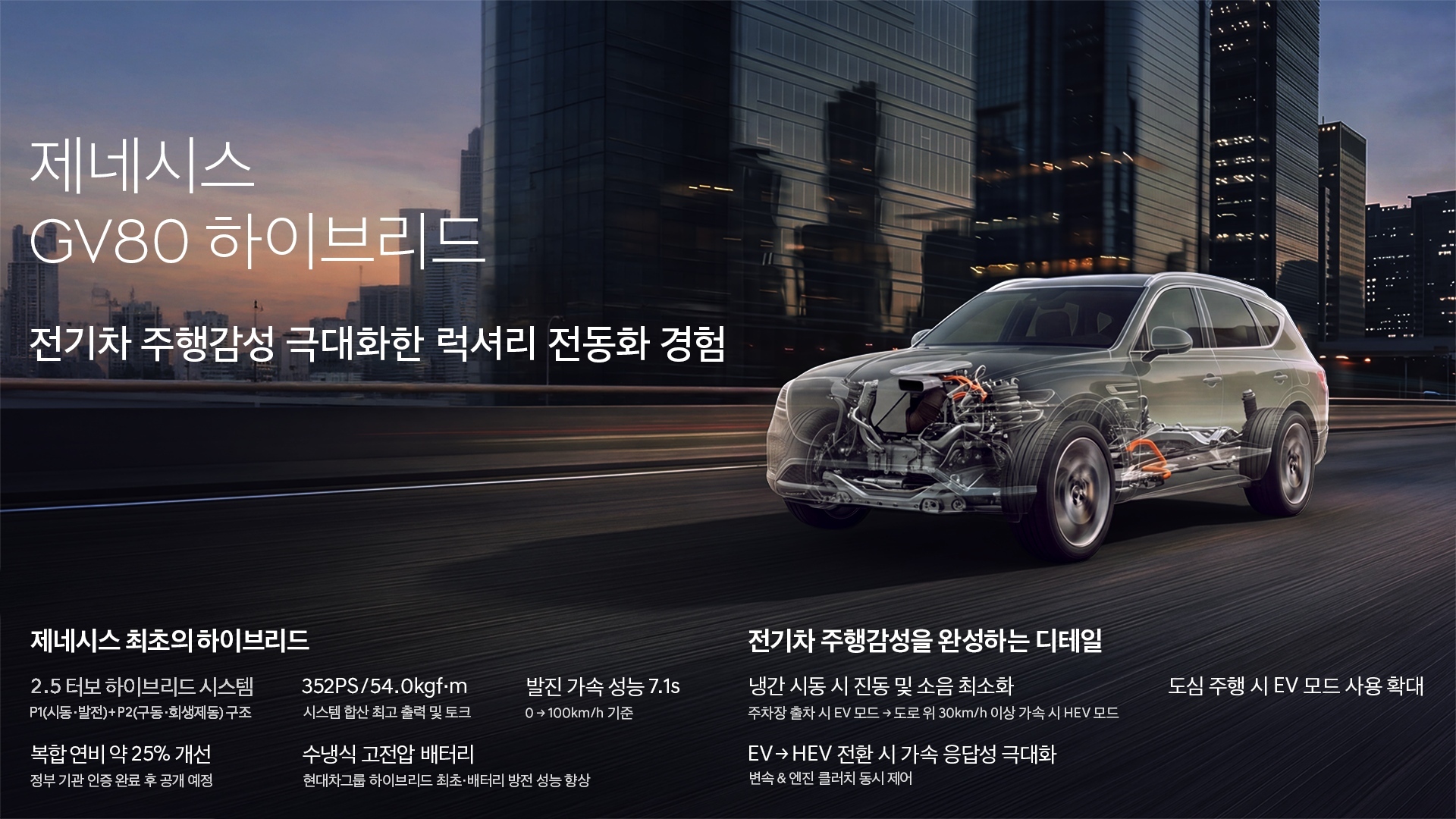
To put those numbers into perspective, the current turbocharged 2.5-liter four-cylinder develops 300 hp (224 kW / 304 PS) and 311 lb-ft (421 Nm) of torque. Besides being significantly more powerful, the hybrid variant is expected to increase fuel efficiency by more than 25%.
In order to maximize efficiency and quietness at low speeds, the model uses an EV driving mode at startup. It remains active until drivers hit a speed of approximately 19 mph (30 km/h). The crossover has also been programmed to prioritize the use of the EV mode when drivers are stuck in stop-and-go traffic or a string of red lights.
Genesis went on to say the GV80 Hybrid has a lower final drive ratio than the GV80 2.5 Turbo to keep things quiet. The company added “engine noise transmission was reduced by introducing technology that simultaneously reduces torsional and bending vibrations in the engine crankshaft damper pulley.”



Other highlights include the use of an electric motor to reverse and a smart regenerative braking system. The latter “automatically applies the optimal regenerative braking intensity after the vehicle comprehensively assesses navigation information, such as speed cameras, and the distance between vehicles.”
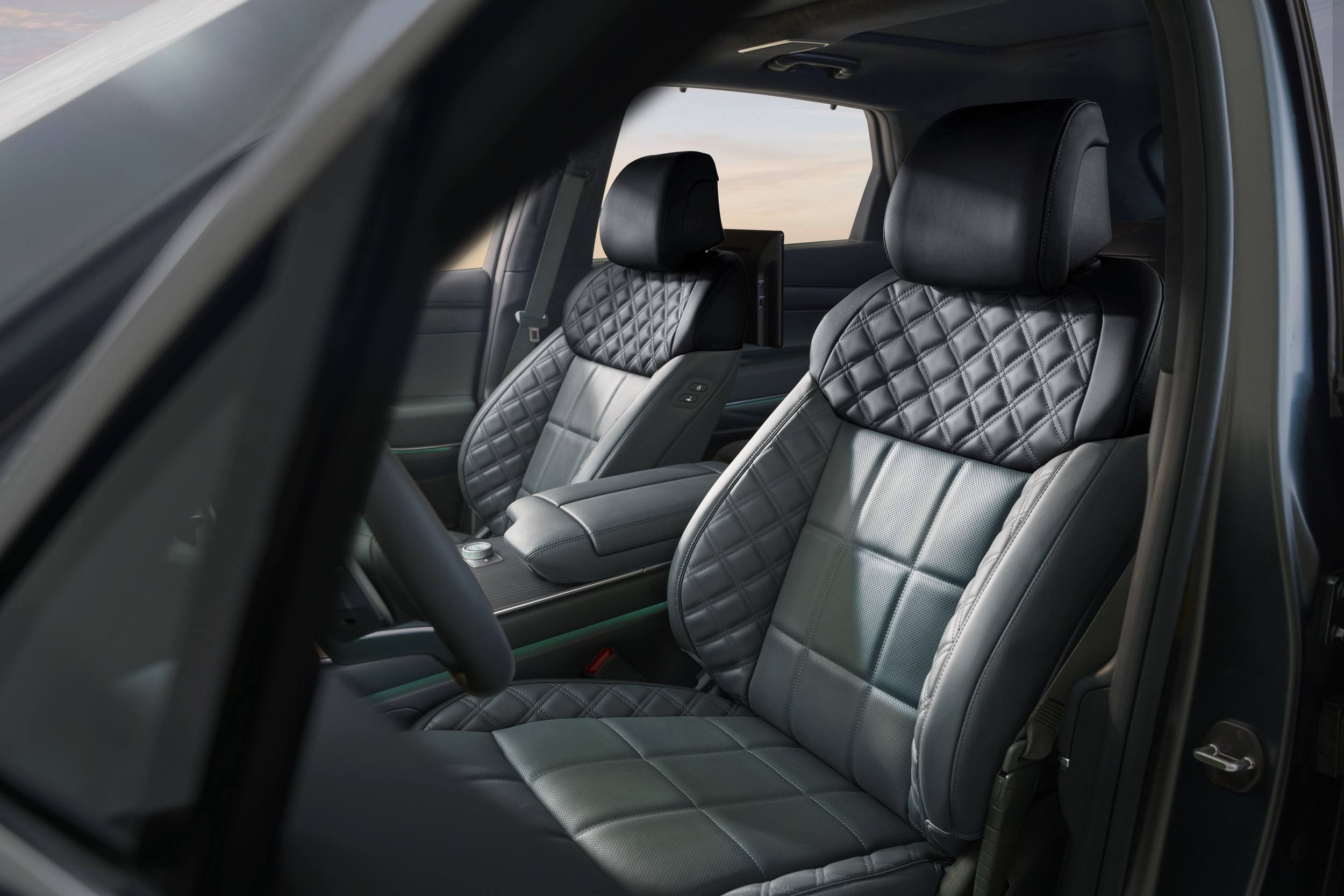
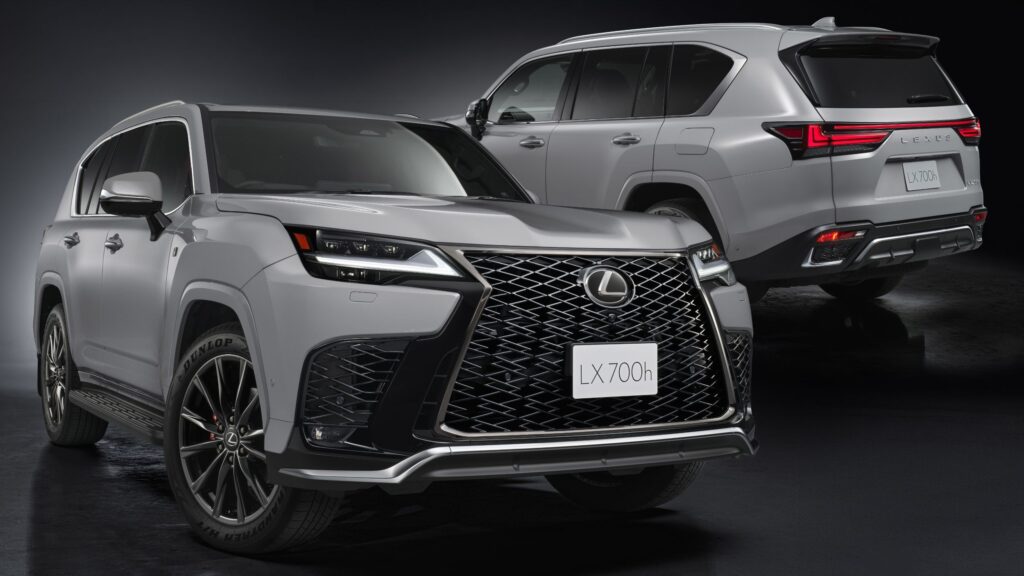
On the styling front, the hybrid adopts a revised grille and updated wheels. Buyers will also find four new two-tone interiors – with main colors of Obsidian Black, Taiga Green, Ultramarine Blue, and Travertine Beige – as well as two new types of genuine wood trim.
H/T to Car & Driver