











- In 2007, Akio Toyoda wasn’t allowed to race under Toyota’s name.
- A “humiliating” Nurburgring race changed the company’s direction.
- That rejection led to the creation of Gazoo Racing by Toyoda.
In the world of corporate branding, where most companies spend millions to plaster their names across as many surfaces as possible, Toyota is doing the opposite. Its performance division has officially dropped the Toyota prefix, stepping out from the shadow of its parent company to become a standalone brand known simply as Gazoo Racing or GR.
While the rebranding itself made headlines, the story behind Gazoo Racing is more personal, and far more revealing, than most might expect. According to Toyota Chairman Akio Toyoda, the roots of the division trace back to what he still describes as a deeply humbling experience at the 24 Hours of the Nurburgring in 2007.
A Name That Started as an Afterthought
Racing under the pseudonym “Morizo,” Toyoda took the wheel of a track-prepped Toyota Altezza, a car we know as the Lexus IS, driving alongside his mentor and Toyota Master Driver, Hiromu Naruse.
Despite Toyoda’s senior position within the company, the board wouldn’t allow the team to compete under the Toyota name. The race effort wasn’t deemed an official corporate activity, so they entered as Team Gazoo, a name borrowed, almost comically, from Toyota’s used-car website, a project Toyoda had been involved in, and which still exists today.
More: Toyota’s New Le Mans Hypercar Isn’t Wearing The Logo You’re Expecting
The car managed to survive the full 24 hours at the Nurburgring, an impressive feat in itself. Still, Toyoda emerged from the race with what he later described as a “sense “feeling of humiliation”. Toyota simply didn’t have a car that could hold its own against the benchmark sports machines from Europe, many of which were there not just to compete but to gather development data for future road cars.
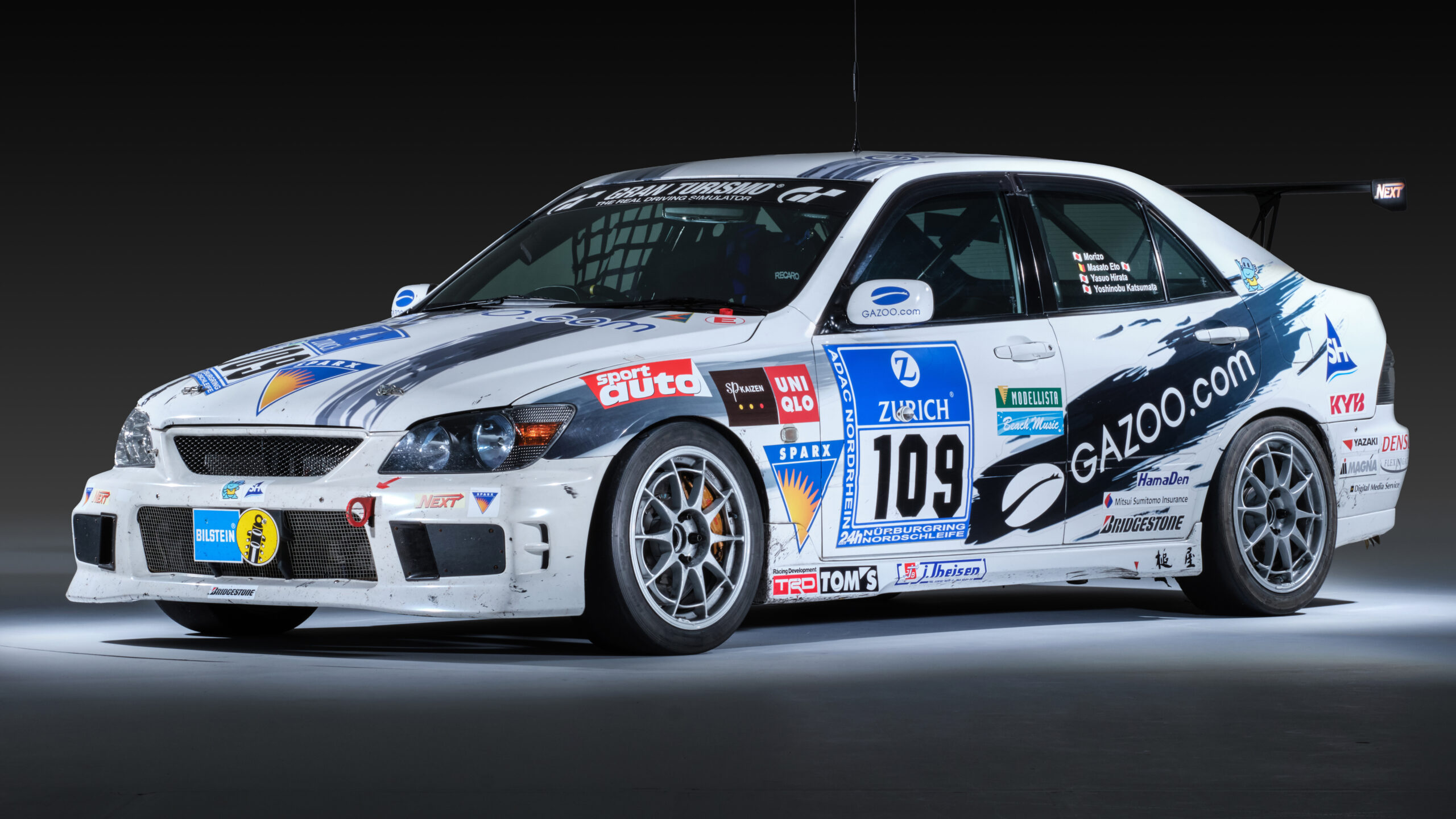
Toyota’s own telling of the story is less diplomatic: “When he was overtaken on the track by other manufacturers’ development vehicles, Toyoda imagined he could hear his rivals saying “there’s no way you guys at Toyota could build a car like this!”. It triggered a feeling of humiliation he still vividly recalls today.” That moment stuck with him, and it stung.
The Turning Point
The first real response came in 2010 with the V10-powered Lexus LFA. The performance flagship was Toyota’s first in-house-developed sports car in nearly two decades, and came into existence despite the “enormous enormous difficulties” and the “lack of wholehearted support within the company”.
Toyota’s first serious answer came in 2010, in the form of the Lexus LFA. Powered by a screaming V10 and developed entirely in-house, the LFA marked the company’s return to genuine sports car engineering after nearly two decades. Its path to production wasn’t easy. Toyoda referred to “enormous enormous difficulties” and a “lack of wholehearted support within the company”.
More: Thank God This Toyota GR Ad Was Banned Before Someone Enjoyed Themselves
Tragedy struck before the LFA was launched. Hiromu Naruse, who had been responsible for the car’s setup and was central to its development, died in a traffic accident near the Nurburgring. For Toyoda, the loss was personal, but it didn’t derail his commitment to building cars that stirred emotion. If anything, it reinforced it.
Could a Used-Car Website Name Really Stick?

What followed marked a clear shift inside the company. The GT 86 that debuted in 2012 and the GR Supra that followed 2019 were developed with the help of Subaru and BMW respectively, but there was no turning back. No longer a side project, Toyota’s performance ambitions were becoming part of its core identity.
More: Akio Toyoda Teased A Mid-Engined Two-Seater, And MR2 Rumors Are Flying
In 2015, the automaker pulled together its various motorsport activities under a single banner: Toyota Gazoo Racing. What had once been an off-the-books experiment now had an official name, a dedicated structure, and growing internal support.
Trophies, Titles, and Turbos
The road car lineup reflects that pedigree. There are compact hot hatches like the GR Yaris and GR Corolla, nimble coupes like the GR 86 and GR Supra, and a full-fledged flagship supercar known as the GR GT that will be the first to launch under the standalone GR brand. Soon, these will be joined by a revived GR Celica, with persistent rumors hinting at a new GR MR2 on the horizon too.
The latest move makes it official. Toyota has now removed its name from the Gazoo Racing badge, positioning GR as a standalone brand alongside Daihatsu, Lexus, and Century. Ironically, yet satisfying, the name Toyota once refused to endorse for racing has now become strong enough to carry itself.
