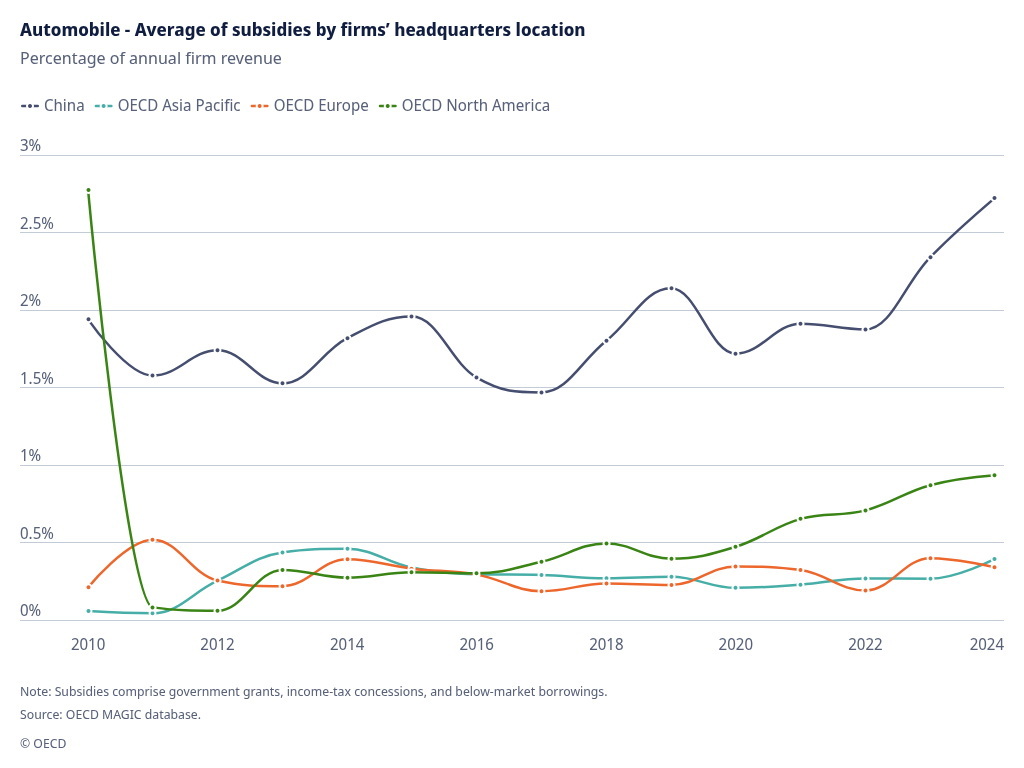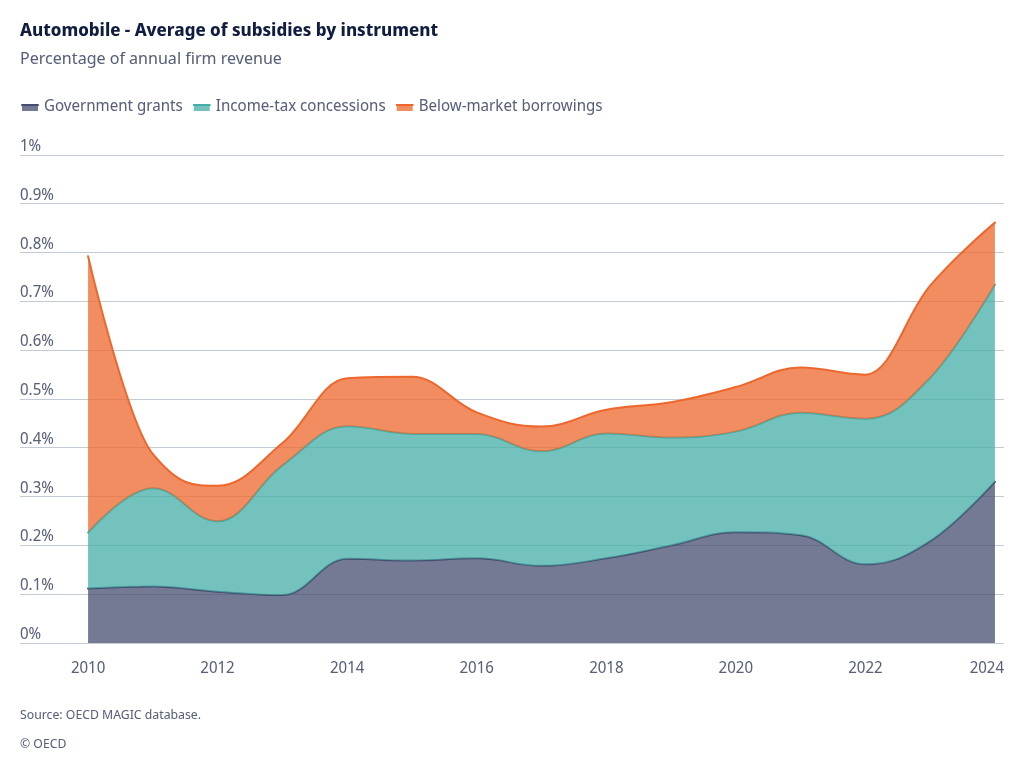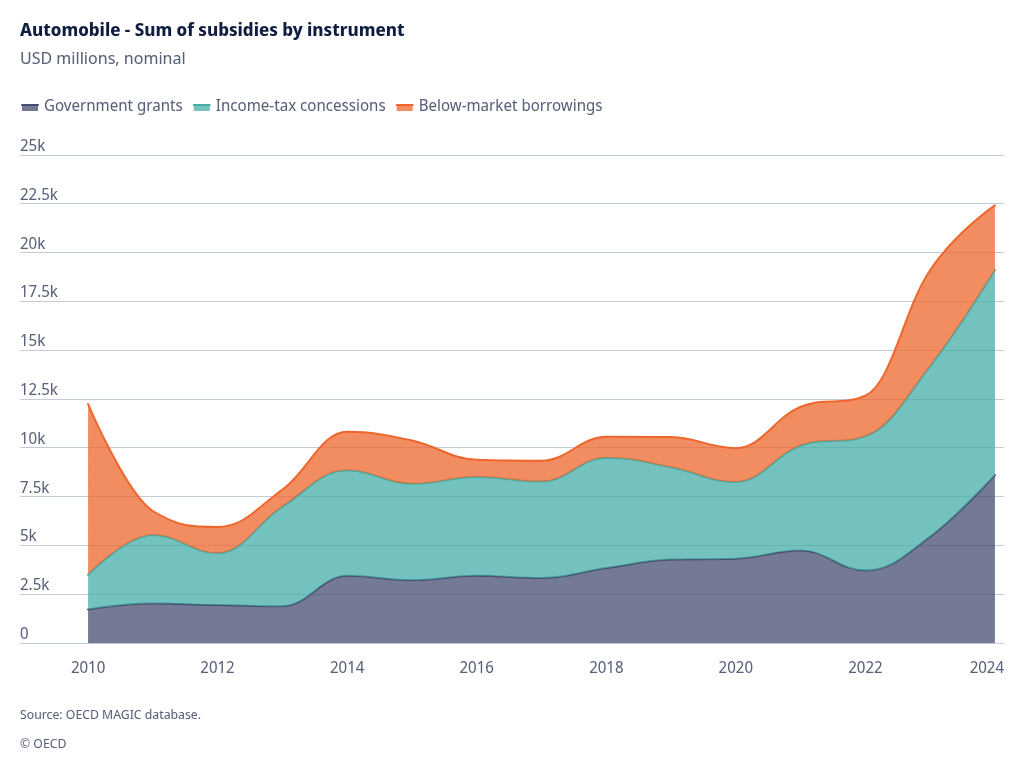
- In 2024, Chinese carmakers received subsidies totaling over $11 billion.
- Subsidies provided to North American companies are edging higher.
- The Chinese government’s support has created automotive behemoths.
It’s no secret that Beijing has bankrolled its car industry for years. Quantifying the scale is another matter. The Chinese government has spent decades pouring money into its domestic automakers, helping turn Chery, BYD, and Geely into serious global players and making China the largest car producer on the planet. The numbers behind that effort are still worth a second look.
A detailed report from the Organisation for Economic Co-operation and Development (OECD) examined 15 industrial sectors subsidized by the Chinese government and stacked them against other nations. In some sectors, Chinese companies pulled in up to eight times the government subsidies their peers received.
Read: China’s EV Scandal Shows Just How Easy It Was To Cheat The System
The data draws on 525 major corporations around the world between 2005 and 2024, digging into their annual reports, financial statements, and other key documents. In 2019, Chinese carmakers collected government grants, income-tax concessions, and below-market borrowings worth $5.122 billion. Across the Asia Pacific, the average was $1.93 billion. Europe sat at $1.95 billion, and North America at $1.2 billion.
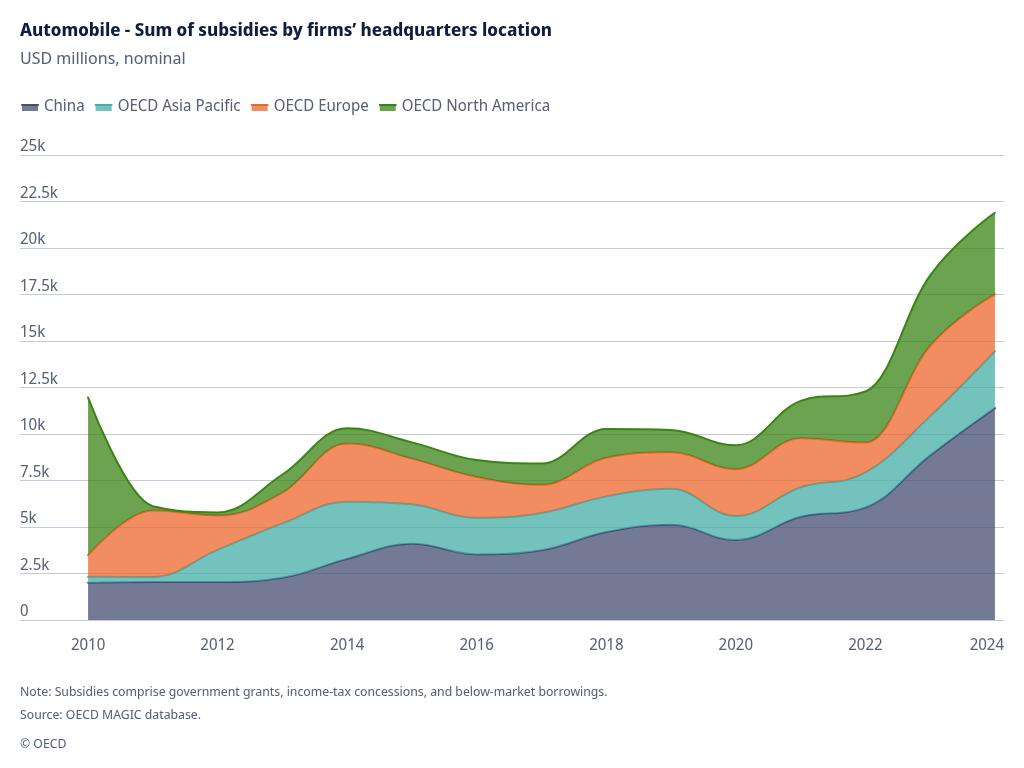
Subsidies to Chinese companies have skyrocketed since the COVID pandemic. By 2024, they reached $11.394 billion, against $3.05 billion for Asia Pacific firms. Europe and North America climbed too, to $3.06 billion and $4.38 billion respectively, yet both stayed well behind China. The only time North American firms came close to Chinese levels was during the one-off rescue packages handed to GM and Chrysler in the global financial crisis.
Creating An Uneven Playing Field?
According to OECD data, the value of support provided to Chinese automakers was twice as much in absolute terms and four times as much in relative terms as that provided to OECD-based rivals.
The group notes that tracking government support like this can help to uncover factors with “the potential to disrupt international markets” where companies have to compete on an uneven playing field. It has compared industrial subsidies received by firms as the equivalent of “doping in sports.” And cars are only part of the story. Across most of the other 14 sectors the OECD studied, Chinese firms again came out on top for government support.
The OECD also warned that persistent subsidy gaps can affect innovation, fair competition, and global trade over time.