- Hyundai’s Level 2+ semi-autonomous driving system arrives in 2028.
- Future EVs will use new cells that reduce battery costs by 30%.
- Global production capacity is set to increase by 1.27 million units.
Hyundai’s massive product push dominated their investor day event, but it wasn’t the only thing the company announced. Quite the opposite as the automaker talked about increasing production, ramping up autonomous driving efforts, and offering improved technology.
Starting with autonomous driving, the first Ioniq 5 Waymo robotaxis will be delivered in the fourth quarter and they’ll “enable an international expansion of robotaxi services as early as 2027.”
More: Hyundai Is Launching More Than 100 New Vehicles By 2030
Besides the Waymo effort, Hyundai-owned Motional will use Ioniq 5 robotaxis. They’re scheduled to begin commercial operations later this year in Las Vegas. Additional cities should then follow in 2027.
On the consumer front, “Hyundai Motor Group is standardizing its sensor architecture around the NVIDIA ecosystem so that data acquired by Hyundai Motor, Kia, 42dot, and Motional can be integrated and used to a single consistent standard.” This means learnings from one company can be applied to others.



Hyundai is also working to deploy its autonomous driving artificial intelligence, known as Atria AI, by the end of the year. It will eventually be used to power the company’s Level 2+ system, which arrives in 2028.
The automaker went on to say “Atria AI will be extended progressively across mass-produced vehicles, building a full lineup of autonomous driving capability from Level 2+ to Level 4.” Since Hyundai sells millions of vehicles annually, they’ll collect a ton of data, and this will be used to rapidly improve the AI’s self-driving capabilities and performance.
Improved EVs


Hyundai has been an electric vehicle pioneer and this experience is about to pay off as the company has developed its own battery cells. They “deliver more than double the output of the high-nickel cells … used previously, while cutting charging time by 40 percent.” The new cells will apparently debut in the upcoming Santa Fe or Genesis range-extended vehicle.
Starting next year, EVs will use new “mid-nickel NCM cells.” This will reduce battery costs by approximately 30%, while “maintaining optimal performance under real-world driving conditions.” Furthermore, the new batteries will have 30% more energy than equivalent LFP batteries of the same size.
Lastly, the company will improve its cloud-based battery management system by 2028. This will reportedly extend battery life by an average of 20%.
Amazon Partnership
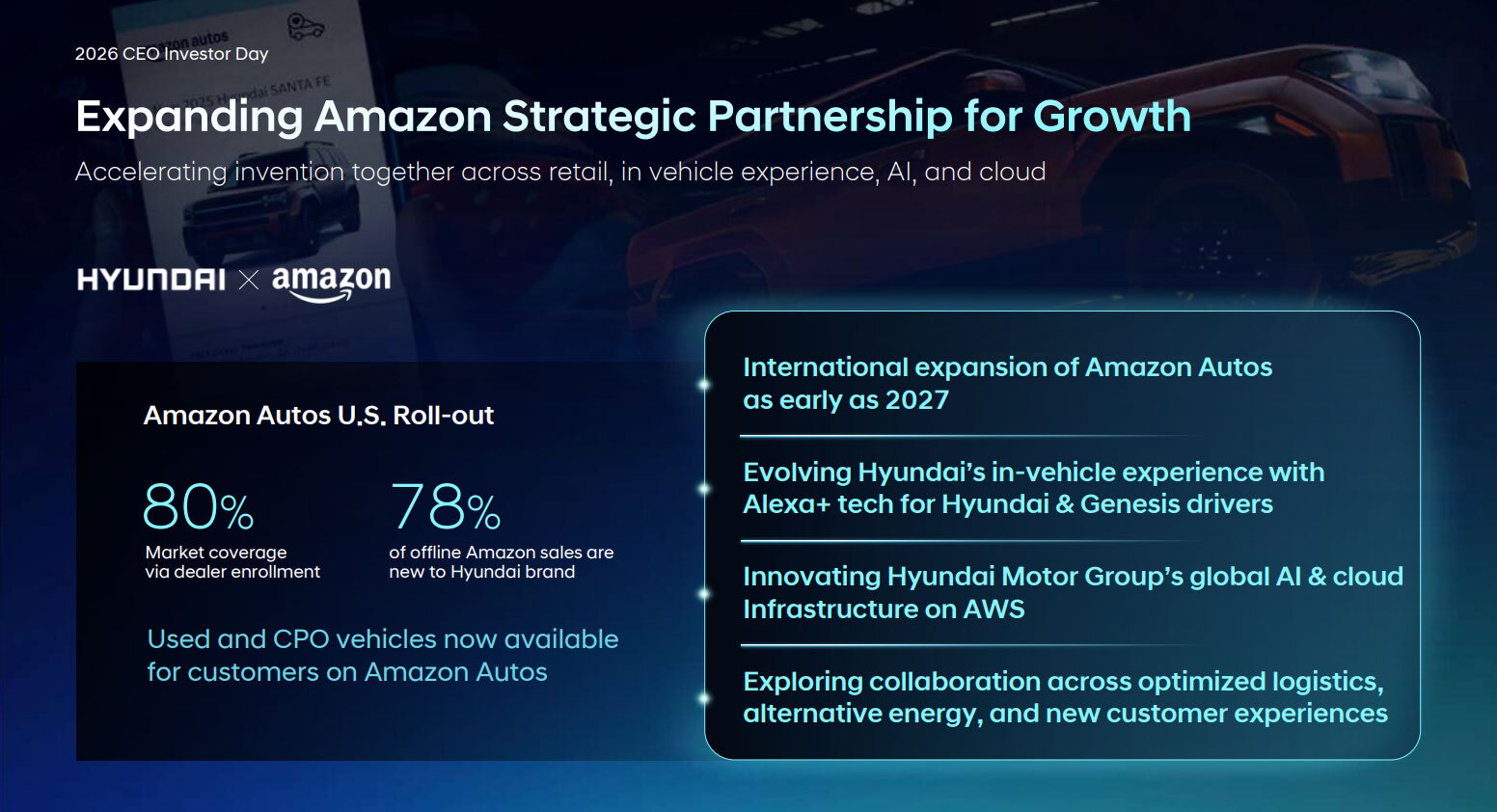
Hyundai’s partnership with Amazon on Amazon Autos appears to be a success as they’ll expand listings to markets outside of the United States next year. Alexa built-in will also roll out across the Hyundai lineup, while Genesis models will follow.
Speaking of tech, Hyundai is relying on Amazon Web Services to accelerate their “cloud and AI capabilities.” Amazon is also said to be looking at using Hyundai fuel cell vehicles.
Increased Production Capacity
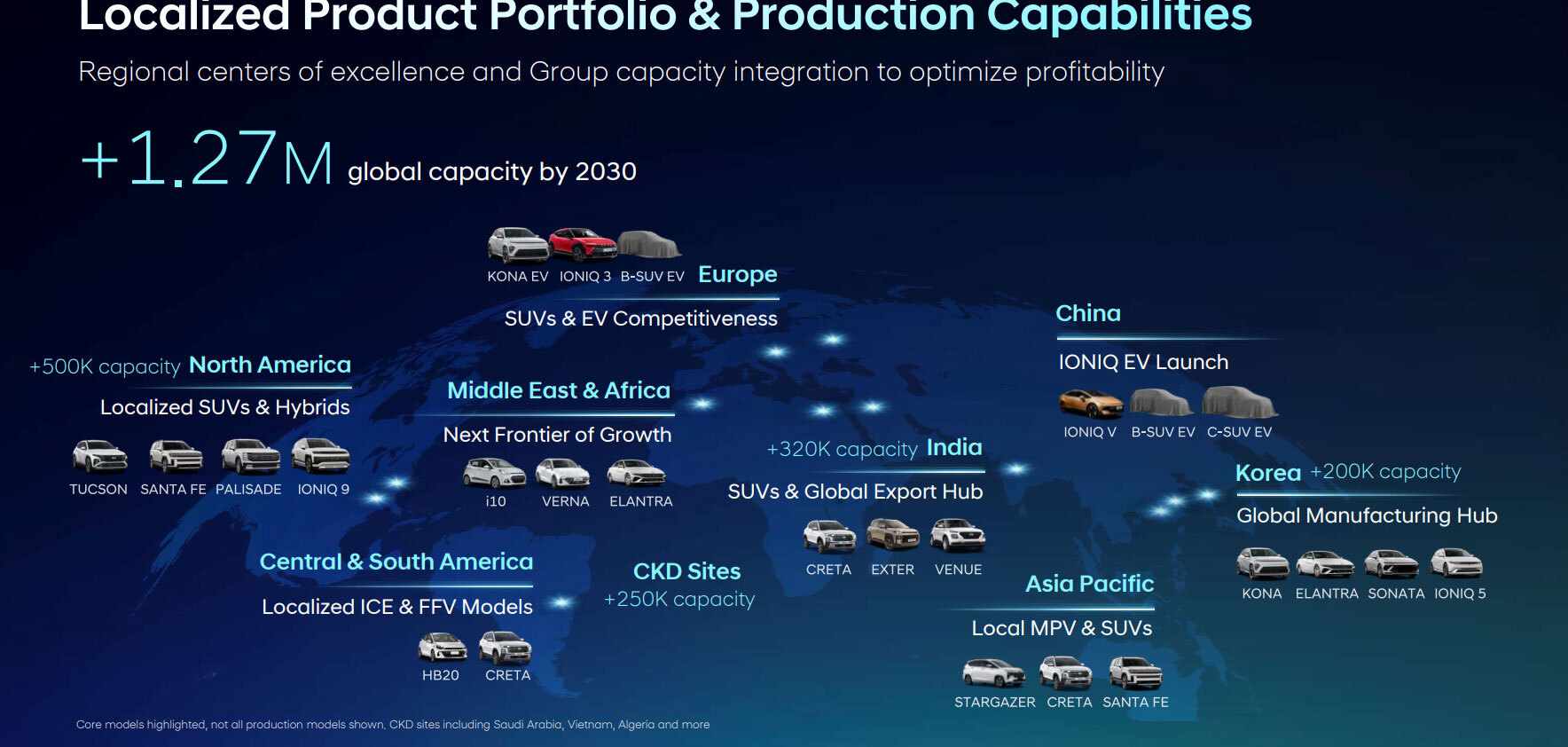
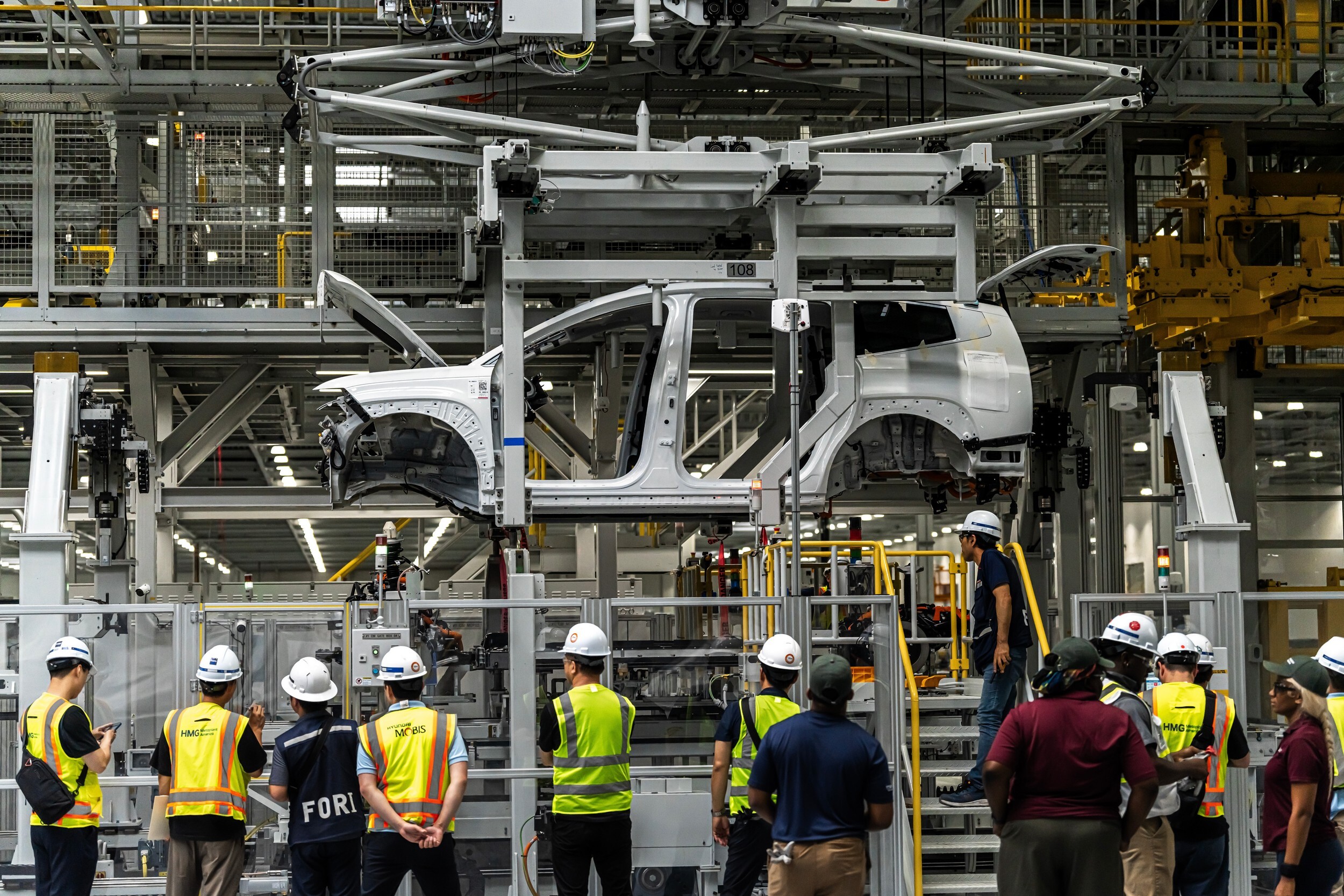
With more than 100 new models coming by 2030, Hyundai is ramping up their production capacity by 1.27 million units globally. North American plants will be able to build an additional 500,000 units, while Indian facilities add 320,000 units. Korean production will increase by 200,000 vehicles, while CKD sites will see their capacity grow by 250,000 units.
Focusing in on North America, Hyundai is increasing their local parts sourcing target to 80%. That’s up from 60% and the automaker confirmed there will be more than ten hybrids on the continent by 2030, which are produced at Hyundai Motor Manufacturing Alabama and Hyundai Motor Group Metaplant America.