


SUVs may have flooded European streets, but compact, affordable hatchbacks haven’t packed up and left just yet. Stellantis seems to have taken note, quietly repositioning the Citroen C3 into a value-focused crossover-style hatchback and offering Fiat the same platform to build the new Grande Panda. We recently drove both, back to back, curious to see whether the distinctions ran deeper than design.
More: We Imagined Stellantis’ Tiny EV As Jeep, Dodge, And Chrysler Oddballs
Citroen and Fiat play a specific role within the Stellantis portfolio. They’re the budget-conscious brands, tasked with delivering the most affordable cars in each segment. That’s why the new C3 and Grande Panda are built on the cost-effective Smart Car platform, rather than the more sophisticated CMP architecture underpinning their Opel Corsa, Peugeot 208, and Lancia Ypsilon cousins.
Despite the lower-cost foundations, Stellantis didn’t skimp on drivetrains. Buyers get the same menu of internal combustion, mild hybrid, and full electric powertrains.
Quick Facts
Predictably, the two hatchbacks share a wheelbase and sit within millimetres of each other in length and width. The Citroen measures 16 mm (0.6 inches) longer, while the Fiat is 5 mm (0.2 inches) wider. On paper, these are rounding errors, but the styling does help differentiate them more than the tape measure might suggest.
Different Shells



Photos Thanos Pappas for CarScoops
Most would agree that Citroen and Fiat’s designers did well to set their cars apart. Although the two models inevitably share core proportions, roof structure, and key hardpoints, every body panel is unique. That gave each brand the freedom to apply its own design language across the entire exterior.
More: You’re Not Wrong, The New Mercedes GLB Looks Suspiciously Like A Smart
The Citroen looks chunky and aggressive with sculpted details, while the Fiat is boxier and retro-futuristic with many Easter Eggs doubling as references to its Italian origins. Both hatchbacks sit higher than usual and carry crossover styling cues, but the slightly thicker plastic cladding and taller roof rails of the Grande Panda make it look a bit more adventurous than the C3.
Examples that highlight the fine line between cost-cutting and design statement include the combinations of the identical mirror caps with different indicators (from the Stellantis parts bin), the shared door handles with bespoke door stampings, and the common greenhouse with slightly different window lines.
Two Interiors, Two Moods


Photos Thanos Pappas for CarScoops
The unique character of each model is even more pronounced inside the cabin. The Citroen has a modern and minimalist approach, with horizontal lines on the dashboard. Highlights include the small two-spoke steering wheel, the tiny digital instrument cluster that resembles a head-up display, and the fabric trim that disguises the hard plastics.
Review: We Drove The New C5 Aircross And Lost Our Jeep’s Compass To Citroen’s Comfort
The Fiat is far more playful and colorful. It has an oval shaped digital cockpit with a miniature Panda trapped in the transparent perimeter, a Bamboo-like cover for the glovebox, vintage emblems and glossy black surfaces.
Of course, many of the core components are shared. The climate controls remain mercifully physical, the infotainment screen is a 10.25-inch unit across the board, and most of the switchgear and door handles are the same. It’s what you’d expect from two cars built from the same parts bin.
Comfort and Practicality
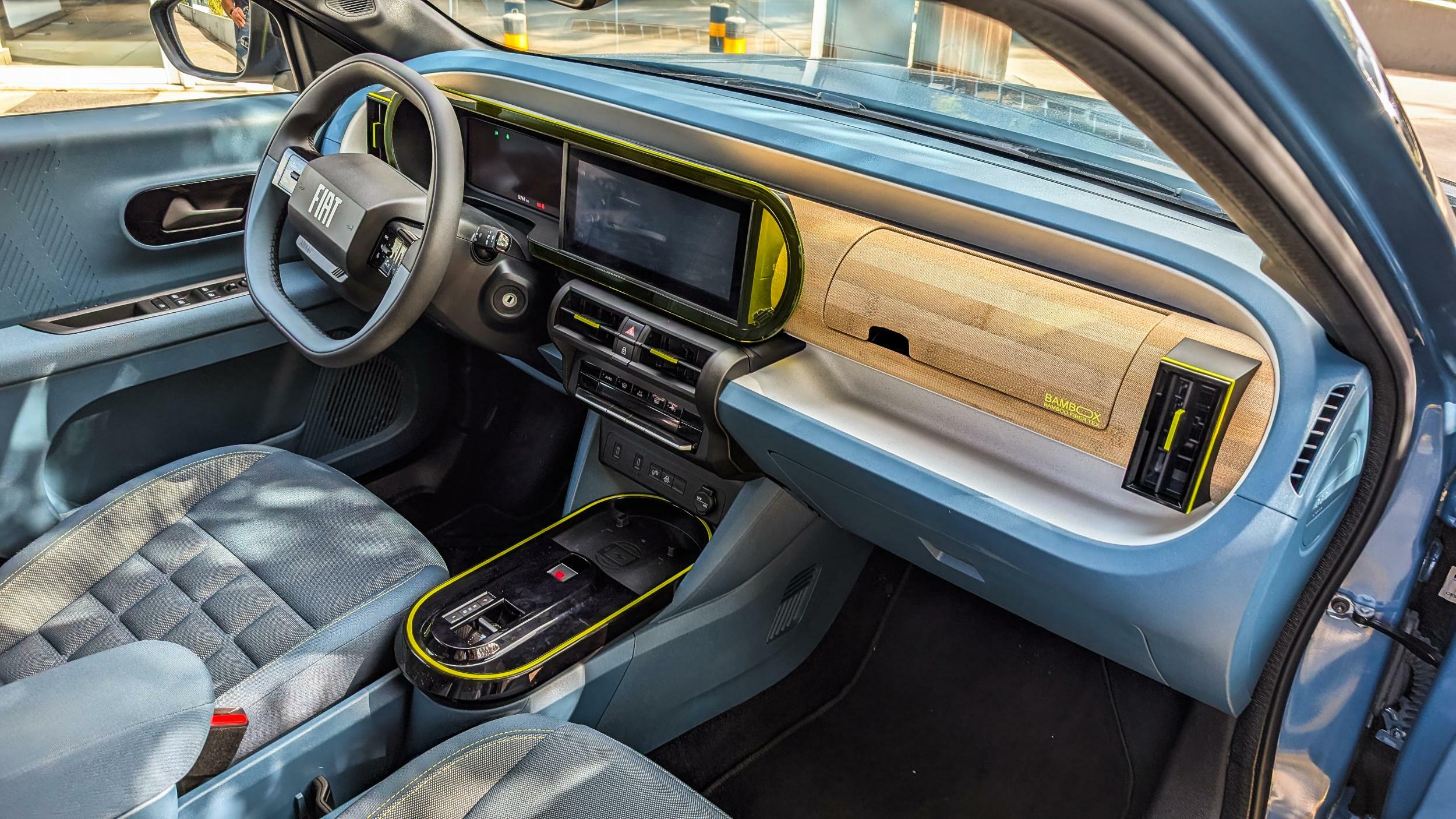
Cabin space feels identical, with both cars offering enough legroom and headroom for four adults to travel comfortably. The seats are plush and equally stylish in their own regard, leaving Citroen’s “Advanced Comfort” marketing claim mostly symbolic. The boot also looks the same to the naked eye, despite the notable difference on paper in favor of the Fiat.
Overall, the Fiat has the most unique interior ambiance that will make passengers smile. On the other hand, the Citroen might age better and has a narrow lead in perceived quality – most likely due to the darker trim.
Trim levels mirror each other from the base models to the range-toppers we tested. In Greece, the Fiat is the more affordable choice across the range. But in other markets like Germany and the UK, the Citroen often comes in cheaper, at least for the electric versions.
Driving Impressions
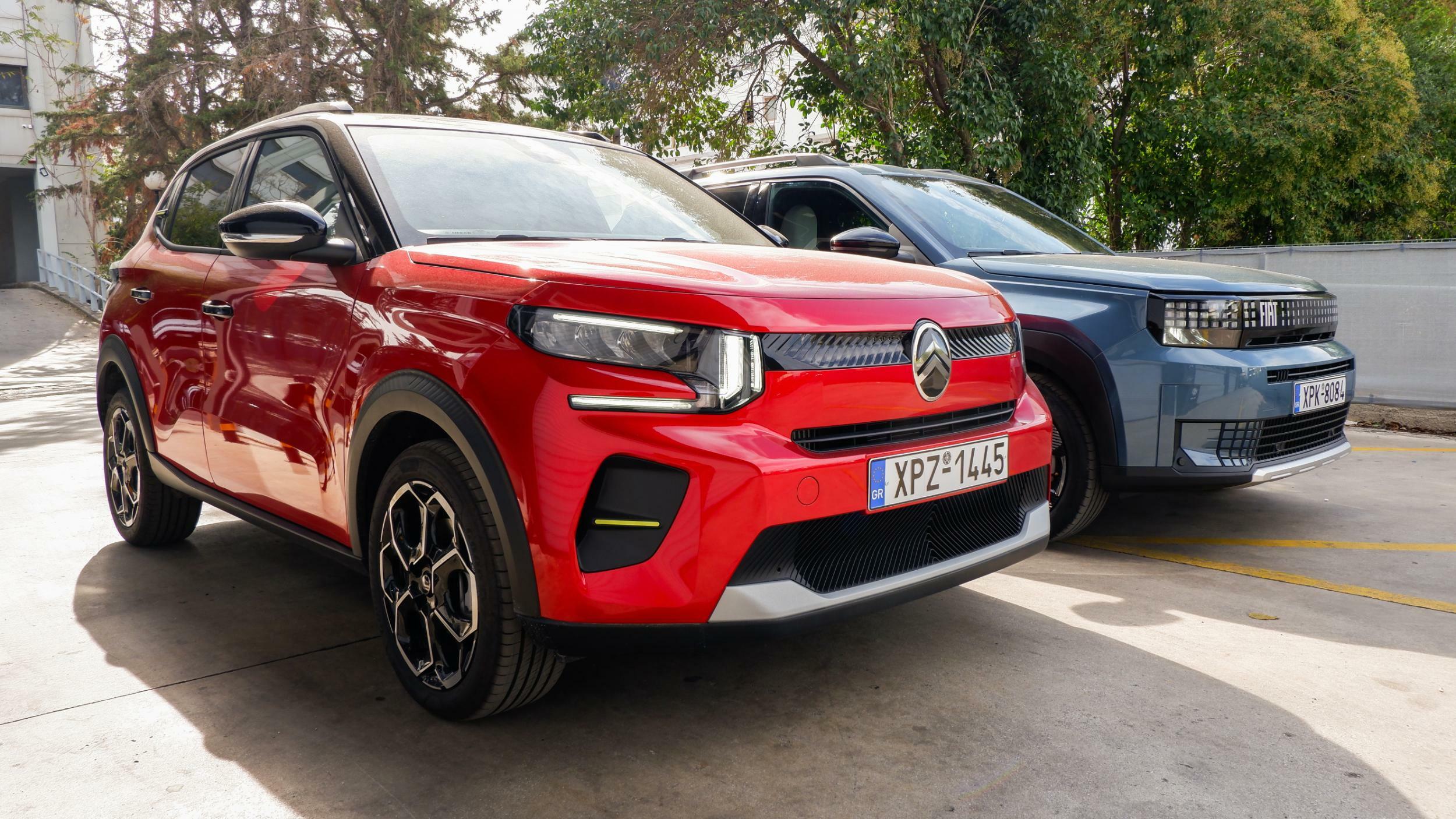
Behind the wheel, the similarities are immediately obvious. Contrary to what some reviews suggest, both models share identical suspension geometry and a soft overall tune. The Citroen does have a slight advantage over rough surfaces, thanks to its “Progressive Hydraulic Cushions” that take the edge off full damper extension.
Both small hatchbacks are very easy to drive and proved to be agile in Athens’ narrow streets. Of course, performance is identical across the range, which includes electric and turbocharged 1.2-liter engines in regular and mild-hybrid forms. The Grande Panda may eventually offer an all-wheel-drive version, potentially reviving the spirit of the Panda 4×4.
The steering feel is also very similar, but at least it gave me something to write about. In the Grande Panda I got the sense of the ultra-light City mode of older Fiats – but only when stationary. The Citroen’s steering adds a barely perceptible touch of extra weight, likely a result of the smaller steering wheel diameter.
Verdict


Photos Thanos Pappas for CarScoops
In the end, the Citroen C3 and Fiat Grande Panda are two interpretations of the same idea, delivered in French and Italian dialects. Both target the value end of the subcompact market and use a shared platform to keep costs down, while still managing to carve out distinct personalities through design.
They don’t face much direct competition beyond the Dacia Sandero Stepway, though small SUVs and traditional hatchbacks are always hovering nearby. Beneath the styling, they’re mechanically identical, with only slight differences in ride and agility. The C3 feels a bit more composed when the suspension hits its limits, while the Grande Panda comes across as slightly more nimble. These nuances only really emerge if you drive them one after the other.
For car enthusiasts and romantics, a little more character in the driving dynamics wouldn’t have gone amiss, but for most buyers, design is what matters. On that front, the fraternal twins deliver more than enough distinction to stand on their own.
The final verdict ends in a clear draw, with each car bringing its own strengths to the table and appealing to slightly different sensibilities. The Grande Panda leans into playful energy and quirky charm, while the C3 carries itself with a more restrained, minimalist poise. If it came down to styling alone, which one would you take home?