









- Kia delays its rugged SUV plans due to slow Tasman sales.
- SUV project depends on global demand beyond Australia.
- Electrified Tasman could help it compete with hybrid rivals.
Kia’s first midsize pickup, the Tasman, has struggled to hit its sales targets, and that shortfall is now having a ripple effect on future plans. An SUV variant, which had reportedly entered early development, has been shelved for now.
Still, there may be a silver lining. Kia is considering a plug-in hybrid version of the Tasman, which could give it a better shot at competing with rivals that have already embraced electrification.
More: Kia’s Pickup Isn’t Selling and Someone Just Designed a Better One
Back in June, Kia executives floated the idea of a rugged SUV based on the Tasman’s ladder-frame platform, suggesting a possible launch within three years. By August, a senior figure confirmed that such a model was on the table, though final approval would hinge on global demand.
That demand now appears uncertain. The SUV’s fate is closely tied to the pickup’s performance, and so far, things haven’t gone as planned.
Why the SUV Is on Hold
Speaking with Australian outlet Drive, Roland Rivero, General Manager of Product Planning at Kia Australia, acknowledged that a body-on-frame SUV is still being discussed internally. But he also made clear that any additional bodystyle hinges entirely on the success of the existing Tasman pickup.
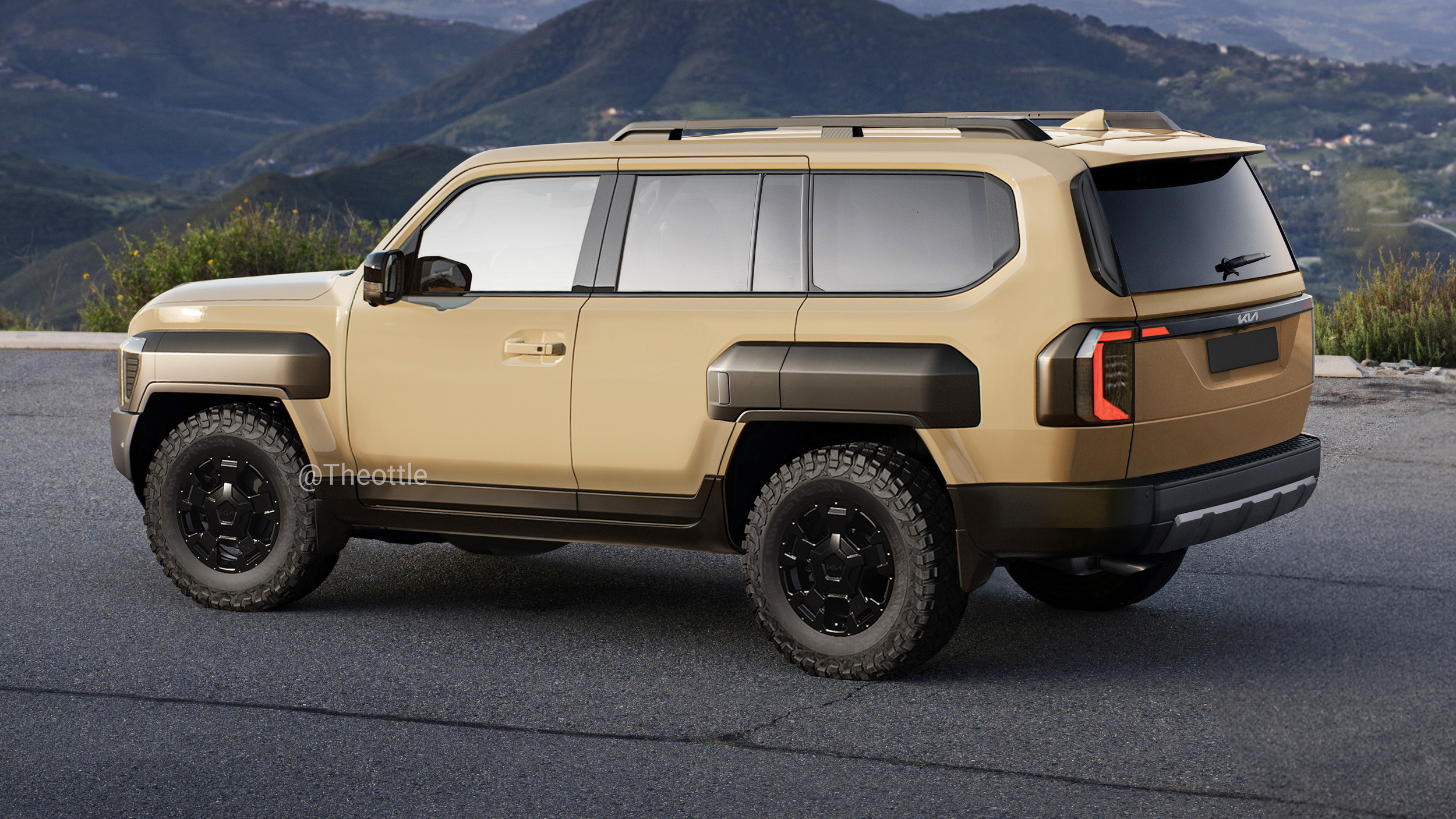
“By all means, any study of an added body style variant would be incumbent on the success of the ute first and foremost,” Rivero said. “I’m not saying it’s off the shelf, or it’s no longer on the cards, but an SUV is not the highest of priorities right this very moment.”
Rivero also pointed out that global interest, not just regional enthusiasm, is essential to justify development.
“From an Australian perspective, we obviously have said we’d love to see an SUV variant of it,” he said, “but … it has to be the same situation for other markets that take Tasman, they have to want an SUV. It can’t just be Australia as the sole region with its hand up for an SUV. You need South America, Middle East, the Korean domestic market, all those regions that take Tasman need to want an SUV as well.”
Can New Variants Turn It Around?
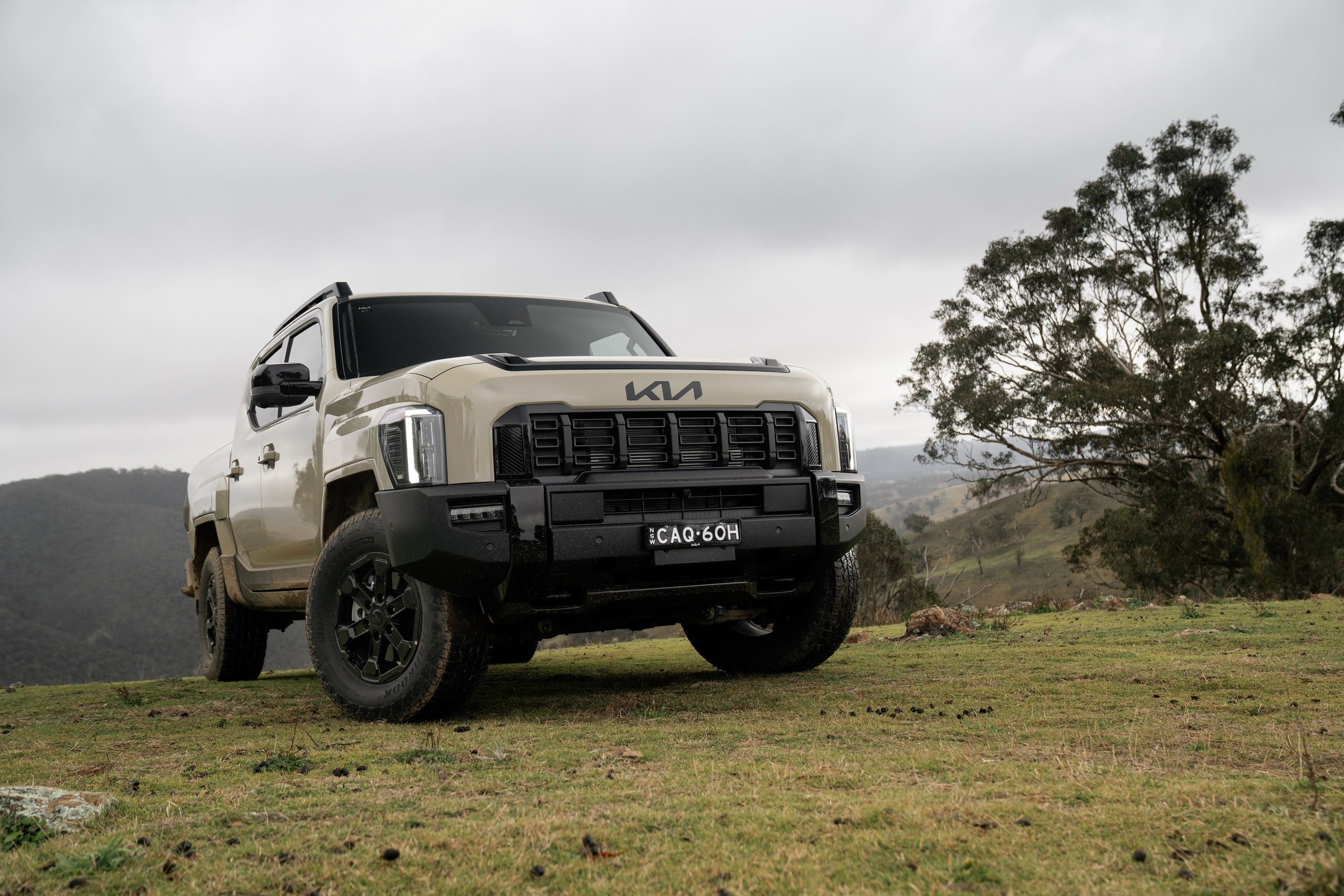
The Tasman placed ninth in Australia’s midsize truck segment in November, delivering 607 units. In South Korea, its home market, the Tasman performed slightly better with 592 units sold, making it the country’s top-selling pickup for the month.
Review: New Kia Tasman X-Pro Is Great, But Its Biggest Flaw Is Hard To Miss
Kia is betting that upcoming model variants will help boost those figures. If sales gain momentum, the SUV project could return to development.
What a Tasman SUV Might Look Like
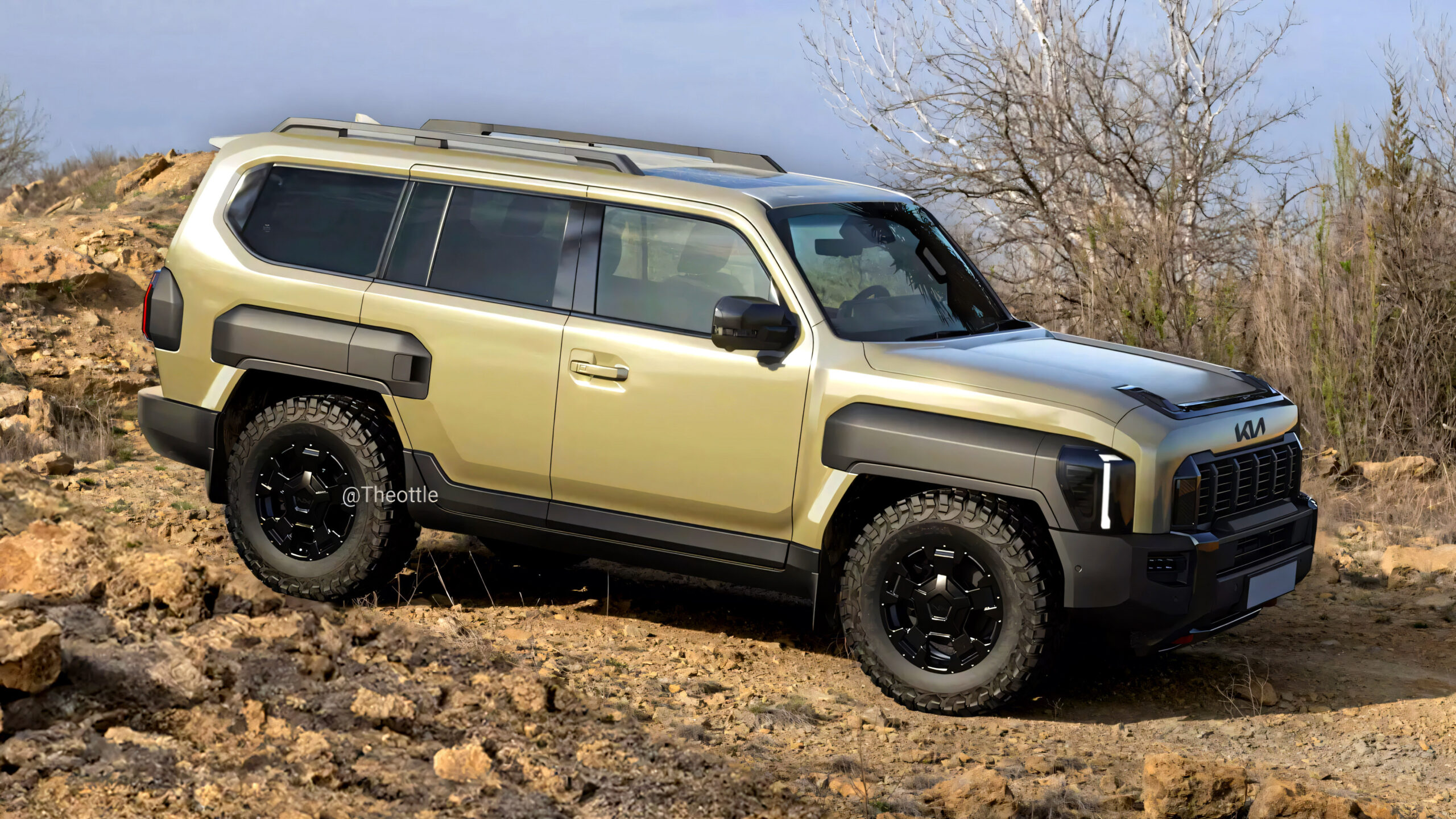
If it does move ahead, the Tasman SUV would enter a competitive field that includes ladder-frame stalwarts like the Toyota Land Cruiser and Fortuner, the Ford Everest, Mitsubishi Pajero Sport, and Isuzu MU-X. Most of these models blend off-road capability with family-friendly layouts, typically offering three rows of seating.
Speculative renderings from digital artists, including Theophilus Chin, show a possible direction for the SUV’s design. These illustrations imagine a model with a shorter wheelbase than the Tasman pickup and a reshaped rear end to better suit passenger-car duty.
Electrifying the Tasman
While the SUV is on pause, Kia hasn’t slowed down on the electrification front. Rivero confirmed that powertrain development is still very much in progress.
More: Hyundai Boss Says New Midsize Pickup Will Blow Your Mind
In earlier statements, he noted that the Tasman’s body-on-frame architecture can support a range of powertrains, including hybrid and fully electric systems. The latest word suggests a plug-in hybrid is being seriously considered, potentially allowing the Tasman to take on models like the mild-hybrid Toyota Hilux and the plug-in Ford Ranger.
A range-extender setup, albeit less likely, could also find its way into a future Hyundai truck. Whether that would be enough to give the Tasman a second wind is still unclear.