


The compact SUV market in Europe is crowded, lucrative, and fiercely contested, which leaves little room for half measures. That’s likely why Renault didn’t wait long before giving the Austral an early refresh, aiming to sharpen its appeal in a sea of similar offerings.
We recently got behind the wheel of the top-spec Esprit Alpine version, paired with the strongest self-charging hybrid in the range, to find out if this reworked French contender can hold its ground.
Review: New Fiat Grande Panda Hybrid Makes Budget Look Cool Again
Take a look at Renault’s lineup in Europe, and you’ll find no fewer than nine SUVs and crossovers, many of which share overlapping footprints. The Austral stretches to 4,532 mm (178.4 inches), placing it just above the Captur-based Symbioz and just below the mechanically similar Espace.
QUICK FACTS
Sportier And Angrier Looks
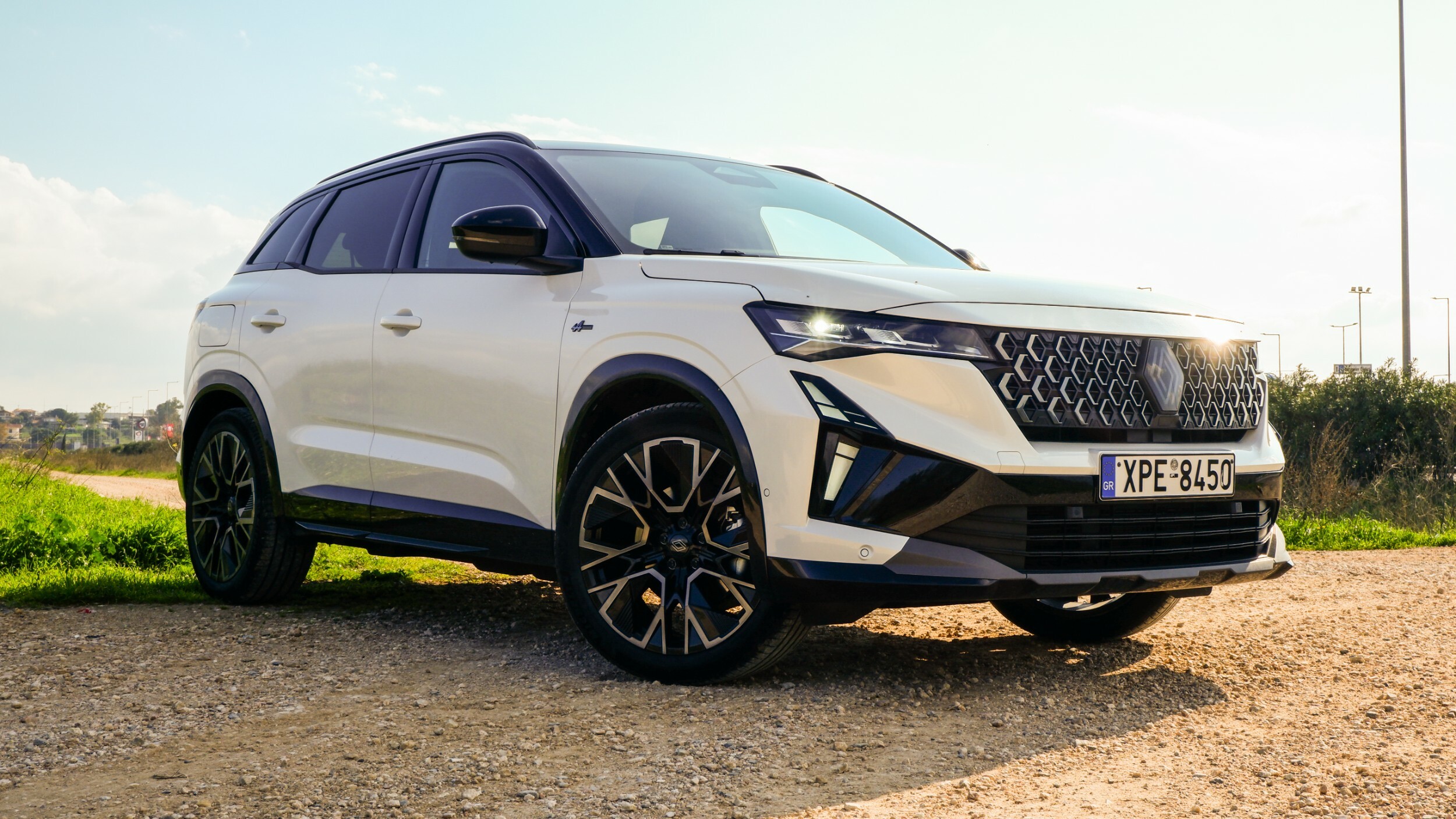
Since arriving in 2022, the Austral has replaced the soft curves of the now-retired Kadjar with a more angular, defined look. The updated model, launched three years later, sharpens that design further with a more aggressive front end, featuring sleek LEDs and a sportier bumper that closely echoes the flagship Rafale.
More: Renault Finally Has A Proper Premium SUV, But Europe Doesn’t Get It
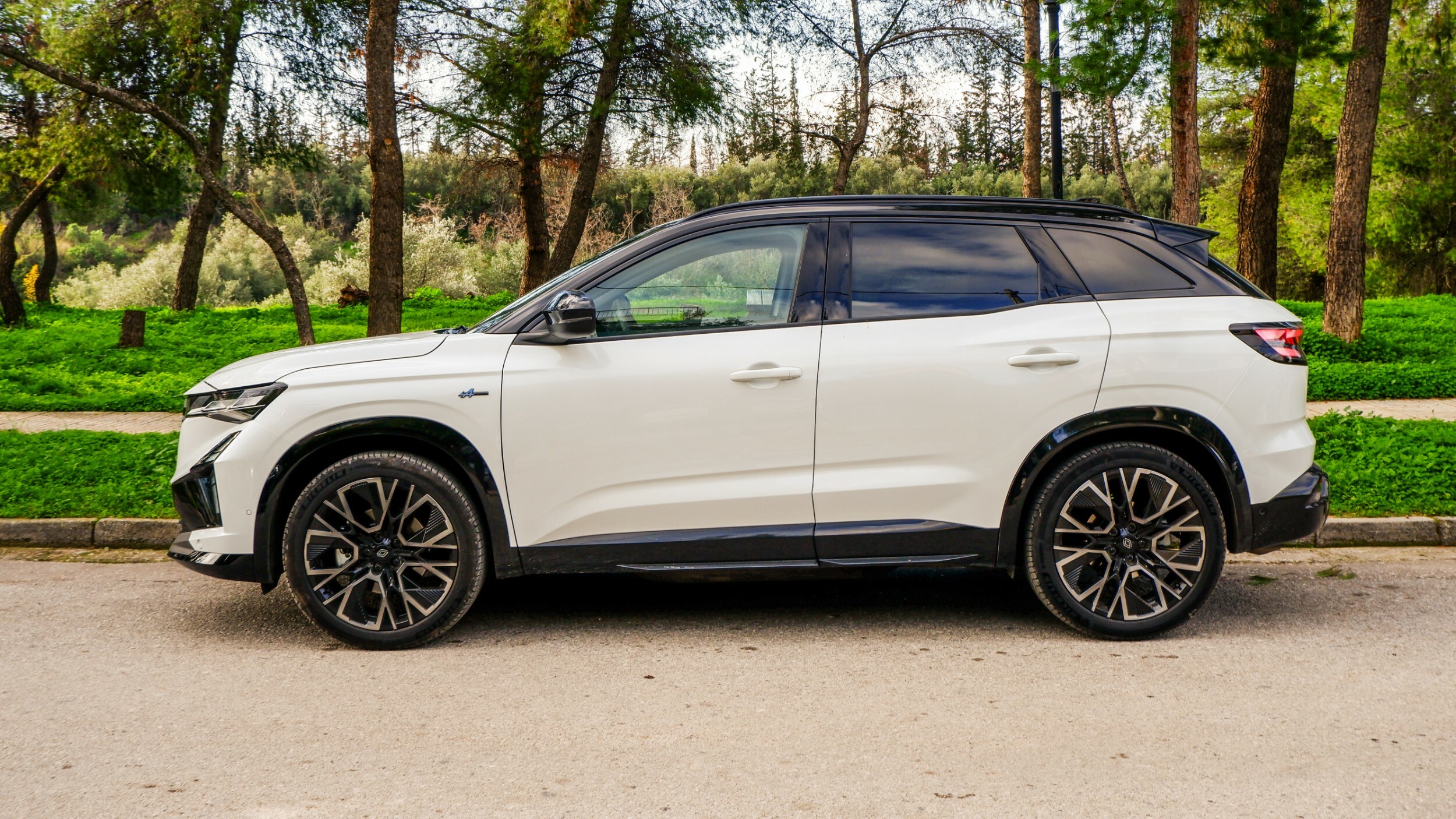
The profile is largely unchanged but the fresh taillights are smaller and sit further apart from each other. The 20-inch alloy wheels, black roof and special badges of the Esprit Alpine trim contribute to a sporty and premium stance.
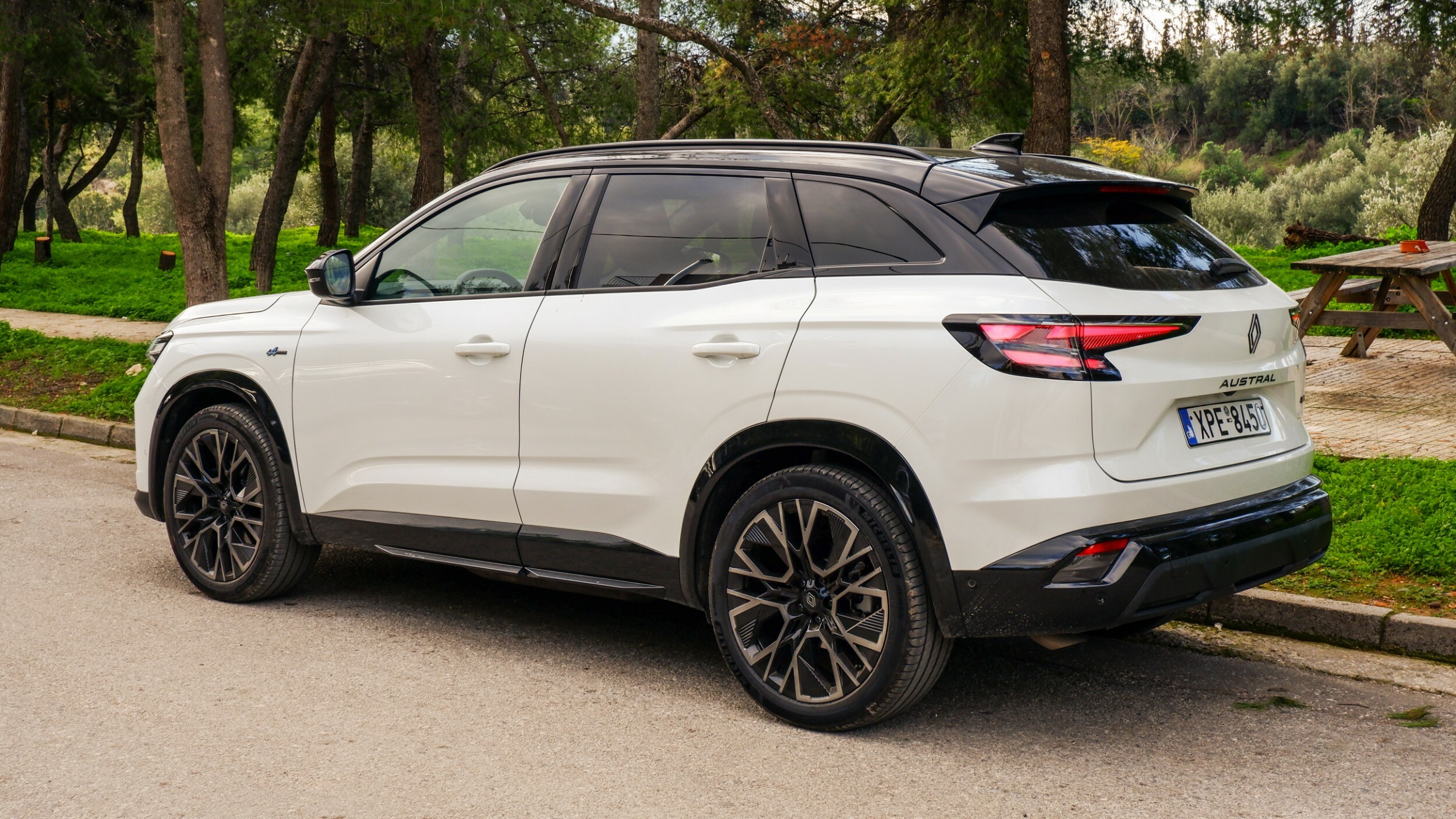
Many people believe that the styling cues of the facelifted model send subtle Peugeot vibes. This is a byproduct of Renault’s current head of design, Gilles Vidal, who spent years sculpting the lion-branded competition.
Plenty of people think the facelifted model gives off subtle Peugeot vibes, and there’s a good reason for that. Renault’s current design chief, Gilles Vidal, previously spent years shaping the look of its lion-badged rival.
Class-Leading Legroom And Plenty of Tech Inside



Photos Thanos Pappas / Carscoops
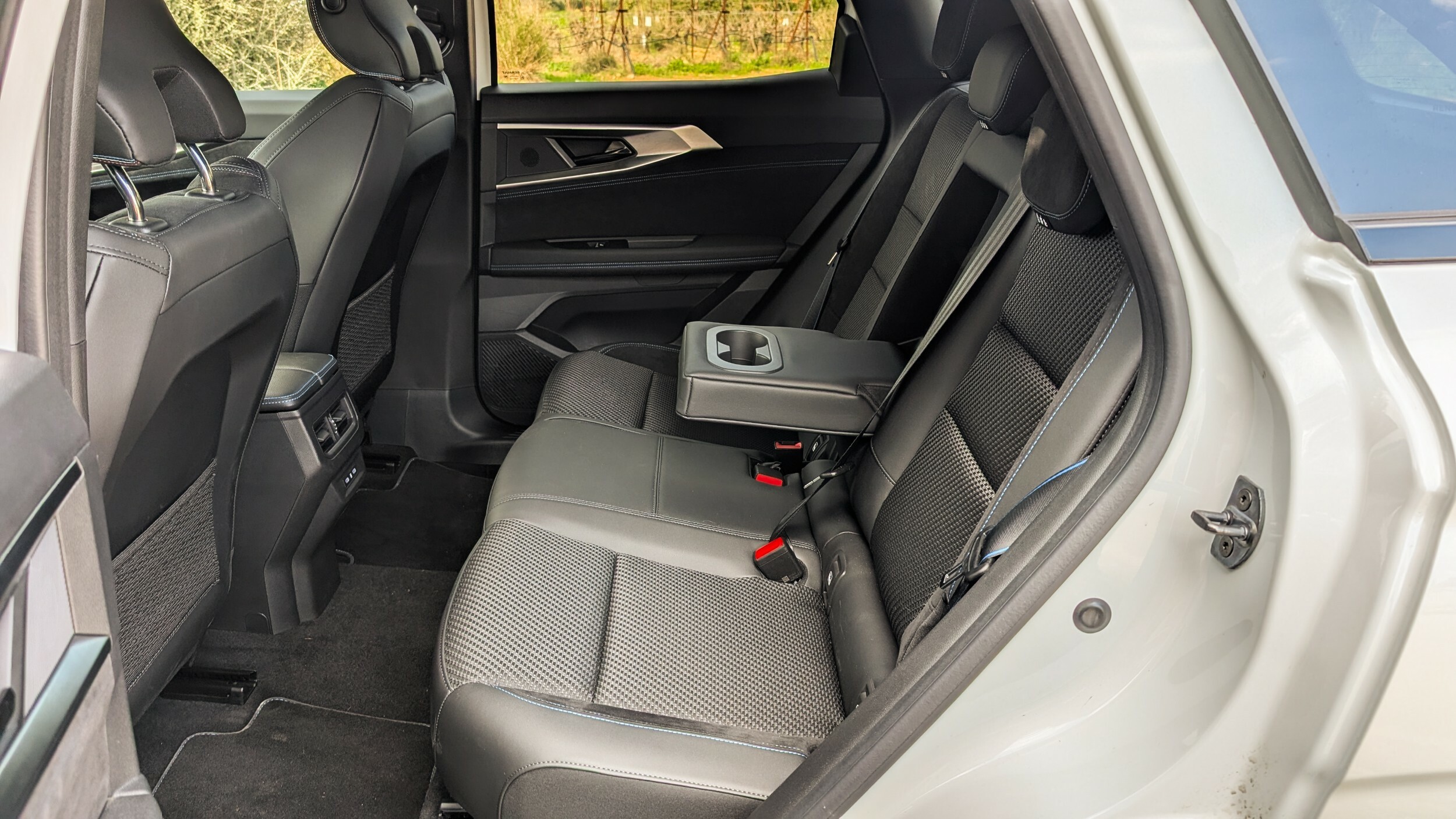
Step inside, and the Austral immediately makes its case as a family-friendly SUV. Rear legroom is among the best in class, aided by a sliding rear bench that lets you dial in either passenger space or cargo volume. You may need to use that flexibility, since the boot isn’t especially generous. Hybrid variants start at 418 liters (14.8 cubic feet) and go up to 657 liters (23.2 cubic feet) in the mild-hybrid version.
More: Renault’s New Electric Van Probably Looks Better Than Your Car
The OpenR digital cockpit remains largely unchanged from the pre-facelift model. You get a 12.3-inch driver display, a 12-inch infotainment screen, and an optional head-up display. The Google-based software runs smoothly, with sharp visuals and intuitive menus.
More importantly, Renault resisted the urge to go full touchscreen by keeping a row of physical climate buttons below the screen, which makes daily operation far less frustrating.
Unfortunately, the same can’t be said for the volume controls. Touch-sensitive and oddly organized, they make simple adjustments far more annoying than they need to be. The system also separates different audio types, including media, navigation and calls, requiring frequent toggling that distracts more than it helps.
Perceived quality is nearly in premium territory, especially in the Esprit Alpine trim, where Alcantara accents on the seats, door panels, and dashboard create a more upscale feel. Ambient lighting that shifts with the drive mode adds a nice touch.
The equipment list includes a full suite of driver assistance features, though the absence of a 360-degree camera feels like a notable omission at this price.
Compact Powertrain With a Punch


Photos Thanos Pappas / Carscoops
Every Austral comes with some form of electrification and front-wheel drive. The base setup is a mild-hybrid 1.3-liter turbo four-cylinder, with 148 hp or 158 hp depending on spec. Our test car, however, featured the flagship E-Tech 200 hybrid, which delivers the most potent powertrain available.
The system pairs a 1.2-liter turbocharged three-cylinder with two electric motors, a compact 2 kWh battery, and a multi-mode automatic gearbox. Total output is 197 hp (146 kW / 200 PS), good for a claimed 0–100 km/h time of 8.4 seconds.
More: The World’s Favorite Renault Got Longer, Wider And Weirder
In everyday use, the Austral feels quicker than the figures suggest. The electric motors provide strong low-end torque, helping the SUV glide around town with the internal combustion engine often staying dormant. At highway speeds, the cabin remains well insulated, and the powertrain settles into a smooth, unobtrusive rhythm.
If you drive with a light foot, the hybrid Austral can be surprisingly efficient, averaging under 6.5 lt/100 km (36 mpg) in the combined cycle. Renault claims it can cover up to 1,100 km (684 miles) between refuelling stops, which is nice to have for longer journeys.
How It Feels on the Road


Handling is one of the Austral’s strong suits, helped by the CMF-C/D chassis, confident braking, and fairly direct steering. The steering could benefit from more variation between drive modes, which mostly adjust the cabin visuals and throttle response rather than feel at the wheel.
Review: New Zeekr X Got Me Questioning My Feelings For Volvo
Ride quality takes a hit from the stiff suspension, especially on the rougher streets of Athens. The 20-inch wheels and low-profile tires on the Esprit Alpine trim only add to the discomfort, and even the 19-inch setup on the base model doesn’t seem like a perfect fit for family duty. That said, drivers in parts of Europe with smoother roads may not notice much of an issue.
The Austral is available with four-wheel steering and multi-link rear suspension, although the standard setup we tested is more than adequate for the majority of use case scenarios. To keep costs in check, Renault left out the adaptive suspension offered in the larger, more upmarket Rafale.
Pricing and Rivals
Our test took place in Greece, where the entry-level mild-hybrid Austral starts at €34,900 ($40,400). That’s a few thousand more than rivals like the Citroën C5 Aircross, Kia Sportage, Peugeot 3008, and Ford Kuga, which generally begin between €31,000 and €32,000 ($35,900 to $37,000). It’s more in line with the Mini Countryman, and slightly under the new VW Tiguan, which opens at €35,980 ($41,600).
More: Renault’s Electric Megane Could Soon Burn Fuel Again
The more powerful and efficient Austral Hybrid E-Tech 200 starts at €42,000 ($48,600) and climbs to €45,900 ($53,100) in Esprit Alpine trim. Add a few options, and it’s not hard to push it close to €50,000 ($57,900). At that point, it’s brushing up against premium territory, overlapping models like the BMW X1, Mercedes GLA, and Volvo XC40, tough competition for buyers who put weight on brand image and long-term resale.
Verdict
The Renault Austral E-Tech 200 is a polished all-rounder that successfully distances itself from its Nissan Qashqai route and marks a significant step up from the previous-generation Kadjar.
The facelifted model brings a sharper, more upmarket design, a roomy interior, and an infotainment system that’s genuinely enjoyable to use. The hybrid powertrain performs better than its size might suggest, and handling is solid for the segment, lending some real substance to its sporty exterior.
A few compromises hold it back from class leadership, including a firm ride, some ergonomic missteps, and most notably, a price that edges into premium territory. Even so, for buyers who want more personality and polish in their family SUV, the Austral makes a convincing case.