


- Reuters alleges Tesla exaggerated FSD safety stats through disputed crash comparisons.
- Former staff described failures alongside extensive testing and safety reviews.
- The report highlights the gap between autonomous driving promises and reality.
Tesla and its CEO, Elon Musk, have spent years talking up how important true autonomous driving is. Throughout this time, the technology has often been treated as though it’s right around the corner, just a few months away, or just a few software updates away. Musk has gone as far as to indicate that the brand’s value is directly tied to solving autonomous driving. According to a new investigation, several current and former employees have a warning for the rest of us: don’t buy the hype.
The investigation conducted by Reuters dives deep into Tesla’s Full Self-Driving program. It allegedly includes insider information from those still with the company and some ex-employees. Somehow, the result is a picture that’s both alarming and reassuring at once.
More: Feds Expand Tesla FSD Investigation After Visibility Failures
Reuters says it spoke with former Tesla data labelers, self-driving engineers, researchers, and safety experts while also reviewing Tesla’s public safety claims and methodology. The outlet found that workers tasked with helping train FSD regularly reviewed footage showing Teslas struggling with everything from school buses and emergency vehicles to construction zones, pedestrians, and speed control.
Several former workers reportedly said they personally wouldn’t trust the system to drive them around.
One of the more emotionally charged claims evolves around an internal Tesla group informally referred to as the “trauma team.” Reuters says these workers focused specifically on near-misses involving pedestrians, including children. Former employees also described footage allegedly showing FSD-enabled Teslas striking animals, missing hazards, or requiring human intervention at the last possible second.
Safer Than Humans?
Then there’s the statistics side of the story, which may ultimately be the most important part of the entire investigation.
For years now, Tesla executives, including Elon Musk, have publicly argued that Full Self-Driving is dramatically safer than human drivers. Reuters says outside researchers reviewed Tesla’s methodology and found several major issues with the comparisons being used. We’ve also called out the potential holes in Tesla’s claims here, but now there are insiders to back it up.
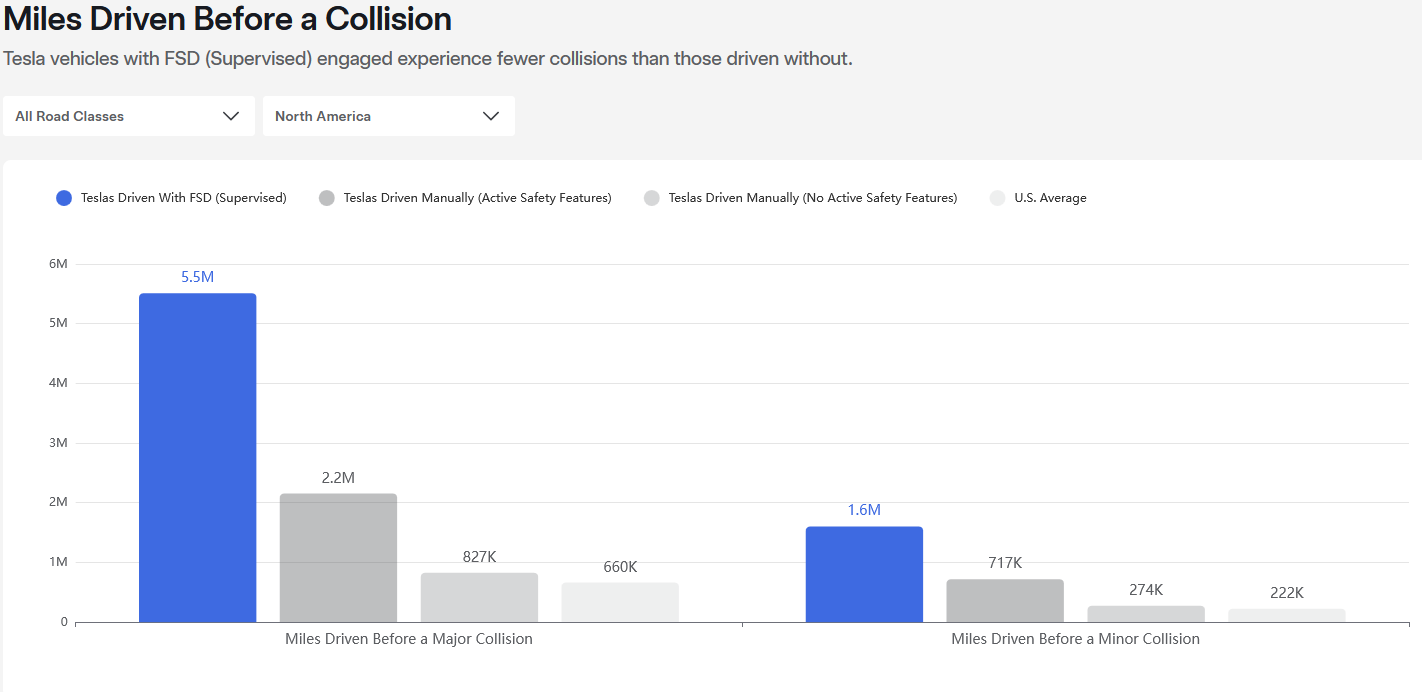
Reuters claims Tesla compared crashes involving airbag deployments in FSD-equipped vehicles against broader federal crash datasets that included less severe incidents. Researchers also criticized Tesla for comparing relatively new Teslas against the entire U.S. vehicle fleet, which averages well over a decade old.
The investigation additionally alleges Tesla only counts certain crashes if they occur within five seconds of FSD disengagement, despite federal reporting standards using a longer 30-second window. Researchers interviewed by Reuters argued these choices potentially paint a much rosier picture of FSD safety than a stricter apples-to-apples comparison would show.
The Negative Space
Of course, some of the biggest “reveals” might not actually surprise anyone closely following the autonomous vehicle space. To a degree, they might be reassuring.
Reuters spends considerable time discussing Tesla’s alleged use of mapped robotaxi zones and extensive route preparation ahead of launches in places like Austin and California. Former employees described teams annotating roads, curbs, pickup zones, signs, and difficult traffic situations to help ensure successful demonstrations and smoother operation.
Elon Musk in 2019: “If you need a geofence area you don’t have real self driving!”
by u/bladerskb in SelfDrivingCars
That’s notable largely because Musk has repeatedly criticized rivals like Waymo for relying heavily on mapped operating zones rather than generalized AI capable of functioning anywhere. In the clip above he literally says, “If you need a geofence area, you don’t have real self-driving.” Yet the report simultaneously reveals something else, too. Tesla appears to be obsessively reviewing edge cases, safety interventions, and system failures internally.
Frankly, if Tesla wasn’t doing those things, that would probably be far more concerning.
The Reuters investigation unintentionally exposes the strange duality at the center of Tesla’s self-driving ambitions. Internally, the company reportedly appears deeply aware of how difficult autonomous driving remains. Employees review failures, annotate hazards, retrain scenarios, and monitor disengagements in painstaking detail. Externally, Tesla leadership continues to speak about autonomy as though it’s perpetually just around the corner. That gap between engineering reality and public-facing rhetoric may ultimately be the real story here.
Credit: Tesla