









- A 68.8 kWh CATL battery gives the Insight a quoted range of 311 miles.
- Honda built the Insight with Dongfeng under its Chinese joint venture.
- EV demand in Japan sits below 2 percent of new car sales nationally.
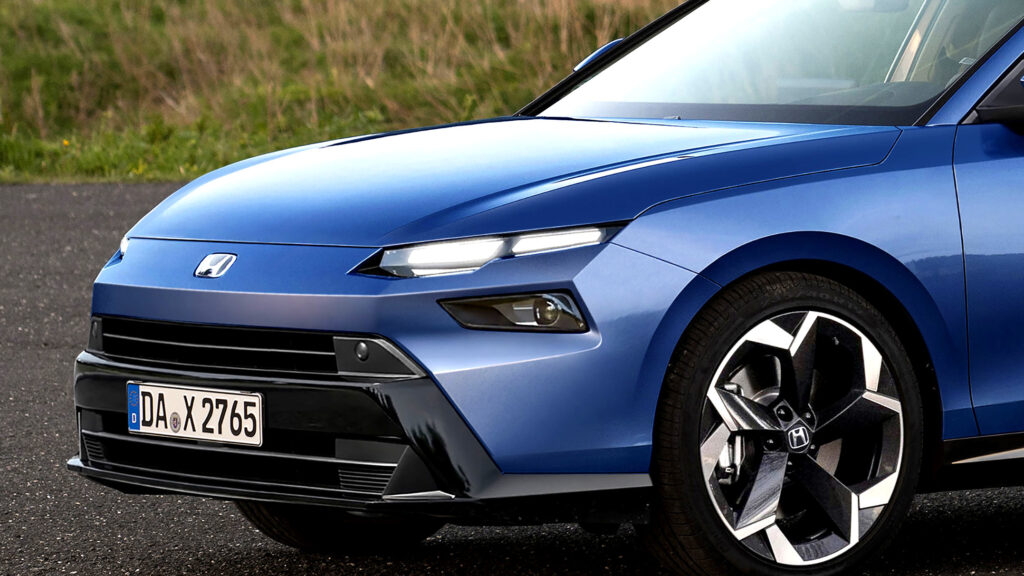
The Chinese-made Honda Insight will touch down on Japanese roads this week, but it won’t become a common sight, no matter how good it may prove to be.
Honda revealed the all-electric Insight earlier this year, developed in collaboration with Dongfeng, its joint venture partner in China. It began life as the e:NS2 before being revised and rebadged for this market as the Insight.
Read: There’s A New Honda Insight, But Americans Can’t Have It
Japanese pricing is set at 5.5 million yen, roughly $34,500. A government EV subsidy of 1.3 million yen ($8,100) brings the effective price down to 4.2 million yen ($26,350). Even so, with EVs making up less than 2 percent of new car sales in Japan, Honda is not expecting strong demand. In fact, the company plans to sell just 3,000 units nationwide.
According to Honda’s local manager for product planning, “We set a limited sales volume based on the number of targeted customers and Honda’s market share in the segment.”
What Do You Get For Your Money?



Underpinning the new Honda Insight is the company’s e:N Architecture F platform, running a 68.8 kWh CATL battery pack and a front electric motor with 201 hp. It has a quoted WLTP range of 311 miles (500 km), which is respectable given that the battery pack is relatively small.
Japanese customers will be offered five different colors for the Insight, including bright shades of Obsidian Blue Pearl and Aquatopers Metallic II. As for the cabin, it will be available with either black or white upholstery.
Among the car’s key interior features are a head-up display, a 12-speaker Bose audio system, a large central infotainment screen, and a small digital driver’s display. It also includes heated front and rear seats, a heated steering wheel, and heated front door panels, which should be perfect for Japanese winters.