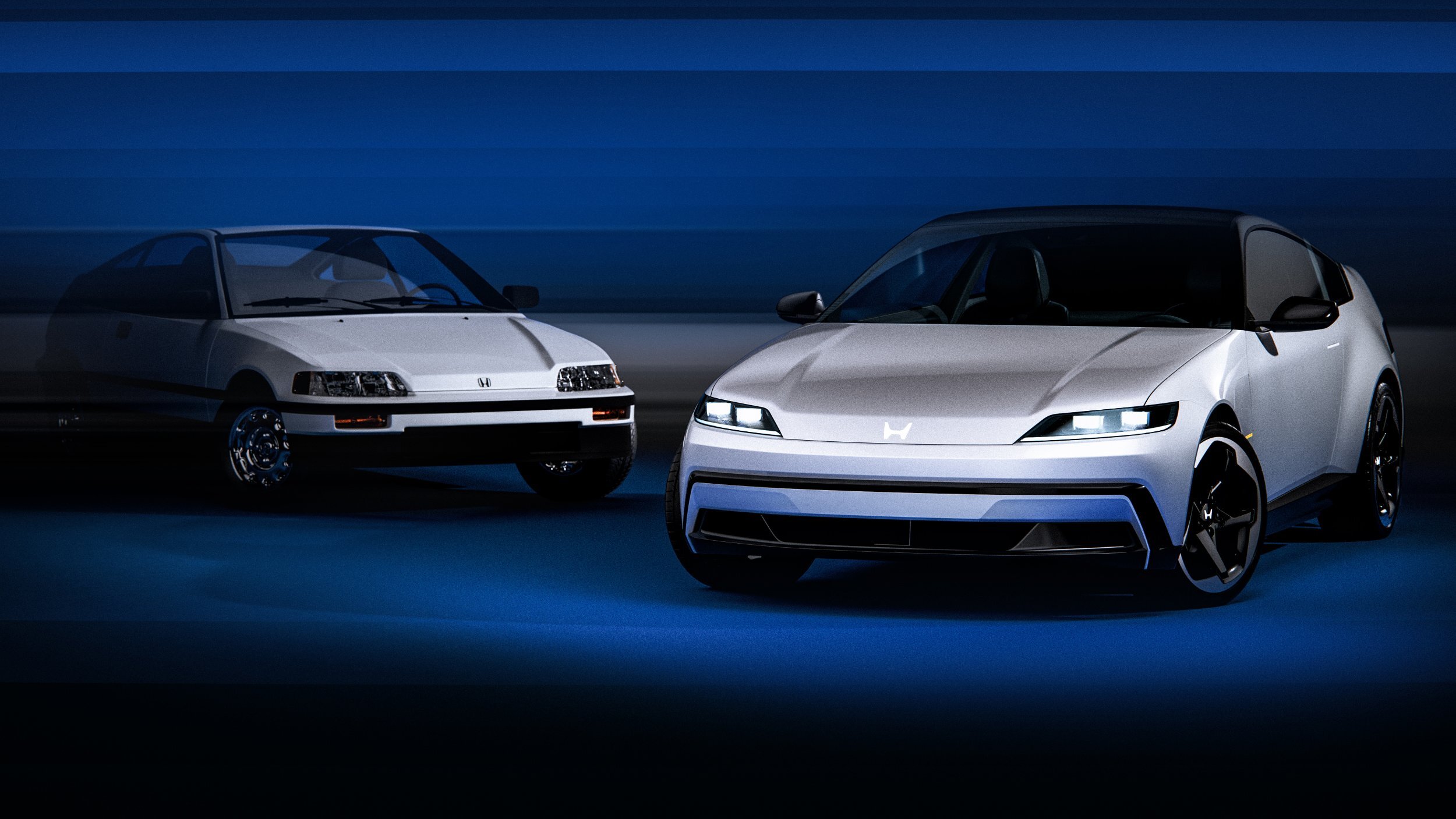
- Independent designers revive the iconic Honda CRX.
- Its retro stance echoes the second-generation model.
- The study is envisioned as an electric hatch with 350 hp.
Honda’s product planners are deep in the weeds with the returning Prelude, but a sharper memory from the company’s back catalog has caught the internet’s attention. A digital concept drags the original CRX from the late 1980s into the present, and the result is the kind of car that makes you wonder why Honda isn’t building it.
More: Honda Previews New Fastback Sedan And Next Acura RDX, And Neither Is An EV
The modern CRX prototype comes from designer and modeler Vitaly Batalka, with CG artist Valentin Komkov handling the visualization. The reference point is the second-generation CRX sold between 1987 and 1991, built on a shortened Civic platform and remembered for being one of the more entertaining small Hondas of its era.
Original Silhouette Carries The Update
The proportions are all there: short wheelbase, low roofline, and the split rear window layout that gave the original its profile. Up front, the blocky sealed-beam headlights have been swapped for slimmer LED units that flank a grille-less nose with the new Honda emblem at the center.



Illustrations: Vitaly Batalka and Valentin Komkov
The sculpted hood and the black trim on the bumpers are clear references to the original, joined by horizontal taillights and an illuminated CRX emblem at the back. The profile features clean surfacing with toned rear fenders, flush door handles, black pillars, frameless doors, and futuristic bi-tone alloy wheels.
More: This Practically New 1990 Honda CRX Could Be The Lowest-Mileage Example In The World
The designers also put together a retro-styled “Turbo 2026” collector card with fictional specs to round out the exercise. The card pitches the reborn CRX as a fully electric machine rather than a hybrid, with 350 hp (261 kW / 355 PS) on tap. A claimed top speed of 285 km/h (177 mph) feels wildly optimistic for an EV of that output, and it would handily eclipse what the original 1.6-liter VTEC could manage.


Illustrations: Vitaly Batalka and Valentin Komkov
The two creators emphasized that the project was completed using traditional digital modeling workflows rather than generative AI tools. Batalka was responsible for the initial design and the 3D Alias modeling, while Komkov executed the final visualization in Blender.
More: Designers Are Doing What Honda Won’t With The S2000
The nearest thing Honda built to a true CRX successor was the short-lived CR-Z. The somewhat sporty three-door hatchback launched in 2010 with a self-charging hybrid powertrain and was discontinued in 2016 without a replacement. Projects like this one keep the idea alive, but the math gets harder every year. The current market gives Honda very little reason to spend the R&D money required to put a small, sporty three-door back on a showroom floor, and that’s a shame.
Illustrations: Vitaly Batalka and Valentin Komkov