

Lexus Charges BMW Money On A Toyota Budget, And It's Working
While rivals rethink EV investments, Lexus is betting that flexibility and Toyota's scale will play to its advantage
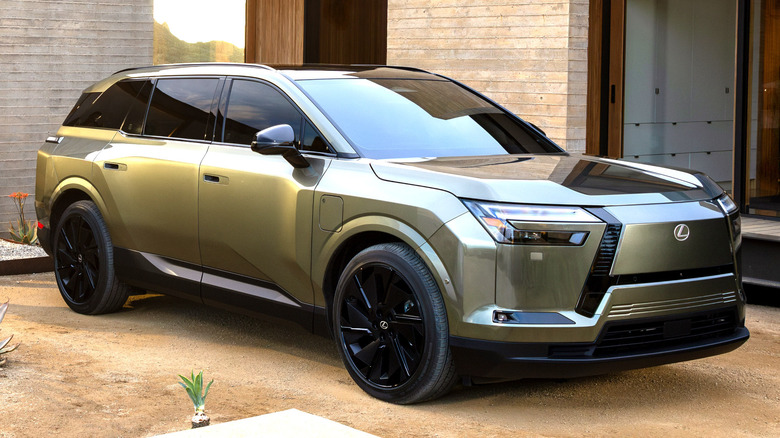
- Lexus plans EVs and hybrids from one common vehicle architecture.
- Flexible platforms help preserve profits if consumer tastes change.
- Experts say Lexus benefits from Toyota technology and buying power.
For years, automakers, including Lexus that once pledged to go EV-only by 2035, told us the future would be electric. Now that EV growth has cooled in several key markets, many of those same companies are quietly changing course, often at a huge cost. Lexus, however, thinks it has found a smarter, less financially painful way forward.
Related: The 2027 Lexus TZ Borrows The Highlander's Bones And The LFA's V10 Voice
Instead of betting everything on dedicated EV platforms, or U-turning in favor of old-fashioned gas cars, Toyota's luxury division is developing vehicles that can be built as either hybrids or fully electric models using much of the same underlying architecture. It's a strategy designed to give Lexus maximum flexibility while competitors wrestle with expensive shifts in demand.
One Platform, Two Powertrains
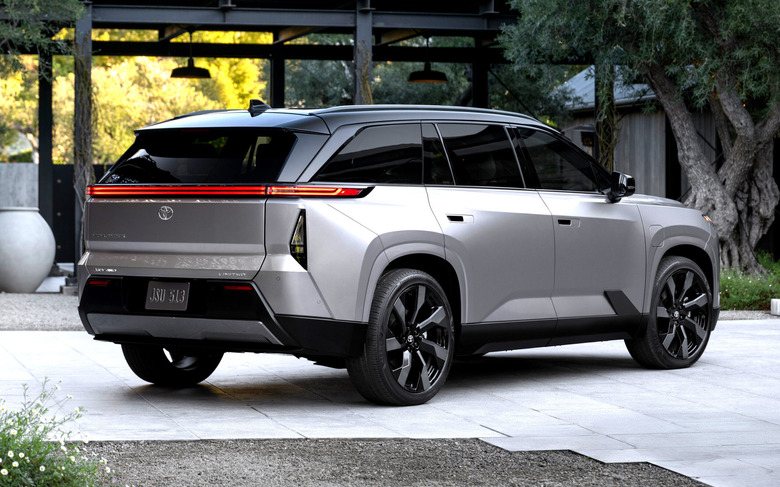
Future products will be designed so the two brands can install either a battery pack or a hybrid powertrain within essentially the same vehicle structure, according to Lexus and Toyota executives who presented the plan to Handelsblatt and other media at the Shimoyama development center in Japan. That means Lexus can react faster if customer demand swings toward EVs, hybrids, or somewhere in between. Or if the next US president reinstates tax credits for cleaner vehicles.
Toyota CTO Hiroki Nakajima told reporters that Lexus's upcoming TZ electric SUV is expected to be profitable from launch in North America. That's a claim many automakers would love to make right now, because some, like Honda/Acura and Porsche, are hurting badly from having written off billions of dollars in EV development, and US EV sales are dire.
Christopher Richter, an automotive analyst at CLSA in Tokyo, traces that edge to Lexus's lower cost base. Toyota doesn't break out Lexus financials, but Richter told the German outlet he figures the brand's margins sit well into the double digits. By comparison, Mercedes posted a return on sales of 5% last year and BMW managed 5.3%. The trick, Richter says, is that Lexus can charge BMW money while leaning on the purchasing volume and development resources of the world's largest carmaker.
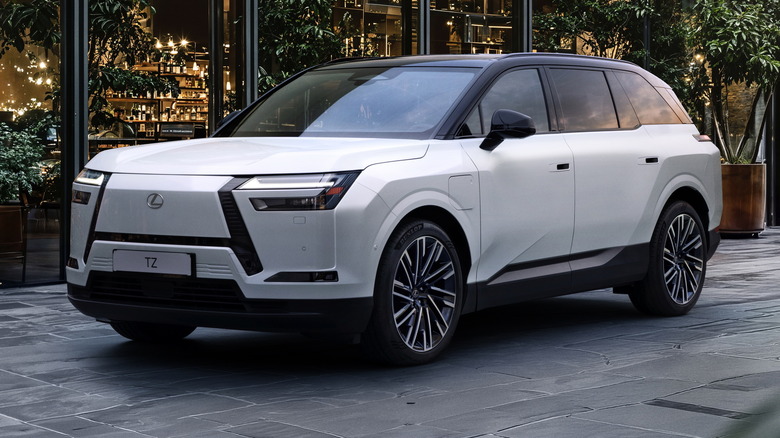
The TZ isn't the first Lexus or only Lexus to benefit from common-platform thinking. The new ES sedan is already available as a hybrid or EV, both versions built from the same basic architecture. It's not a strategy peculiar to Lexus. BMW and Mercedes also build some EVs and hybrid cars on shared platforms, including the X1 and iX1, 5-series and i5, and CLA.
But the two German brands also have EV-specific platforms. BMW's new ICE 3-series sedan, for instance, will look almost identical to the i3 electric 3-series, yet they'll ride on totally different architectures.
Profit Over Volume
BMW and Mercedes both sell more than twice as many cars as Lexus, which moved 882,291 vehicles worldwide in 2025, nearly half of them in North America. In particular, Mercedes shifted around 1.8 million that year and BMW close to 2.2 million under its core brand. But in the luxury game it's profit, not registrations, that counts, and Toyota's upscale division seems convinced it holds the better hand.


