


Few pickup trucks on the market actively encourage owners to head into the wilderness quite like the Jeep Gladiator. Complete with all of the same removable panels as the smaller Wrangler, and fitted with chunky tires in Rubicon guise, it’s perfect for disappearing into the mountains and tackling difficult off-road trails.
The reality for most owners is different. Jeep Gladiators, just like most other off-roaders, spend more of their time stuck in traffic than climbing rocky passes. It has to be comfortable on the highway, practical enough for school runs, and maneuverable enough for grocery parking lots.
Read: The V8-Powered Jeep Wrangler Just Got $10,000 Cheaper
While living with the 2026 Gladiator for a week, it became clear that it excels in the areas it was designed to conquer, yet is compromised in other areas. Still, it provides a unique pickup truck experience without any true rival.
QUICK FACTS
Like in the US, the Gladiator used to be sold in several different variations in Australia. Things have changed for 2026. It’s now available solely in Rubicon configuration, and equipped with the familiar Pentastar 3.6-liter naturally-aspirated V6.



Photos Brad Anderson/Carscoops
Priced at AU$82,990 ($56,800) before on-road costs in Australia – which bring that price up to AU$90,515 ($62,000) – it stands out amidst a sea of other mid-sized pickups. Perhaps its most logical rival is the Ford Ranger Raptor, but it costs about AU$8,000 ($5,500) more and has a much more powerful engine and a more advanced suspension system.
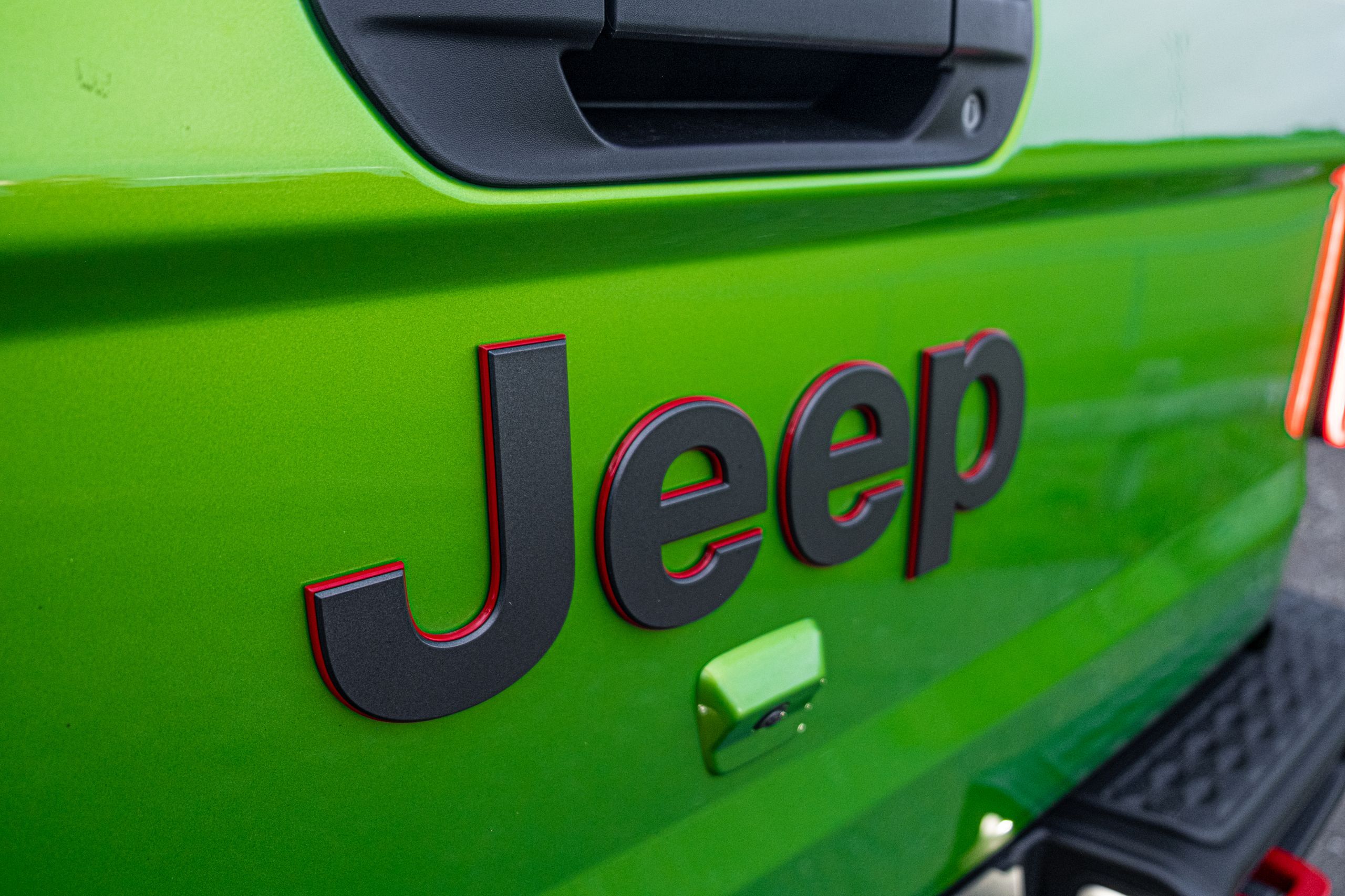
Our tester was finished in Mojito! Green, a color that Jeep only launched for the Gladiator in 2025, but one that’s long been available Down Under. Equipped with Rubicon graphics, 17-inch wheels, and off-road tires, it means business.
A Familiar Cabin


Photos Brad Anderson/Carscoops
Very little has changed in the Gladiator’s cabin since it was first introduced. The most obvious update that Jeep has made is the fitment of a larger 12.3-inch infotainment display.
This screen is great, using the company’s latest software with an in-depth menu system, plenty of dedicated off-road pages, as well as wireless Apple CarPlay and Android Auto. It contrasts with the rest of the interior, which is very traditional and old-school, yet has an evocative appeal. The only other screen is a small display positioned in the middle of the two analog gauges.
Jeep – and many other brands under the Stellantis umbrella – doesn’t exactly have a reputation of keeping up with the times, other than in the all-electric Wagoneer S. Recently, I’ve spent plenty of time in fresh new EVs with minimalistic interiors that hardly have a button in sight, so stepping into the Gladiator was a little bit of a shock.
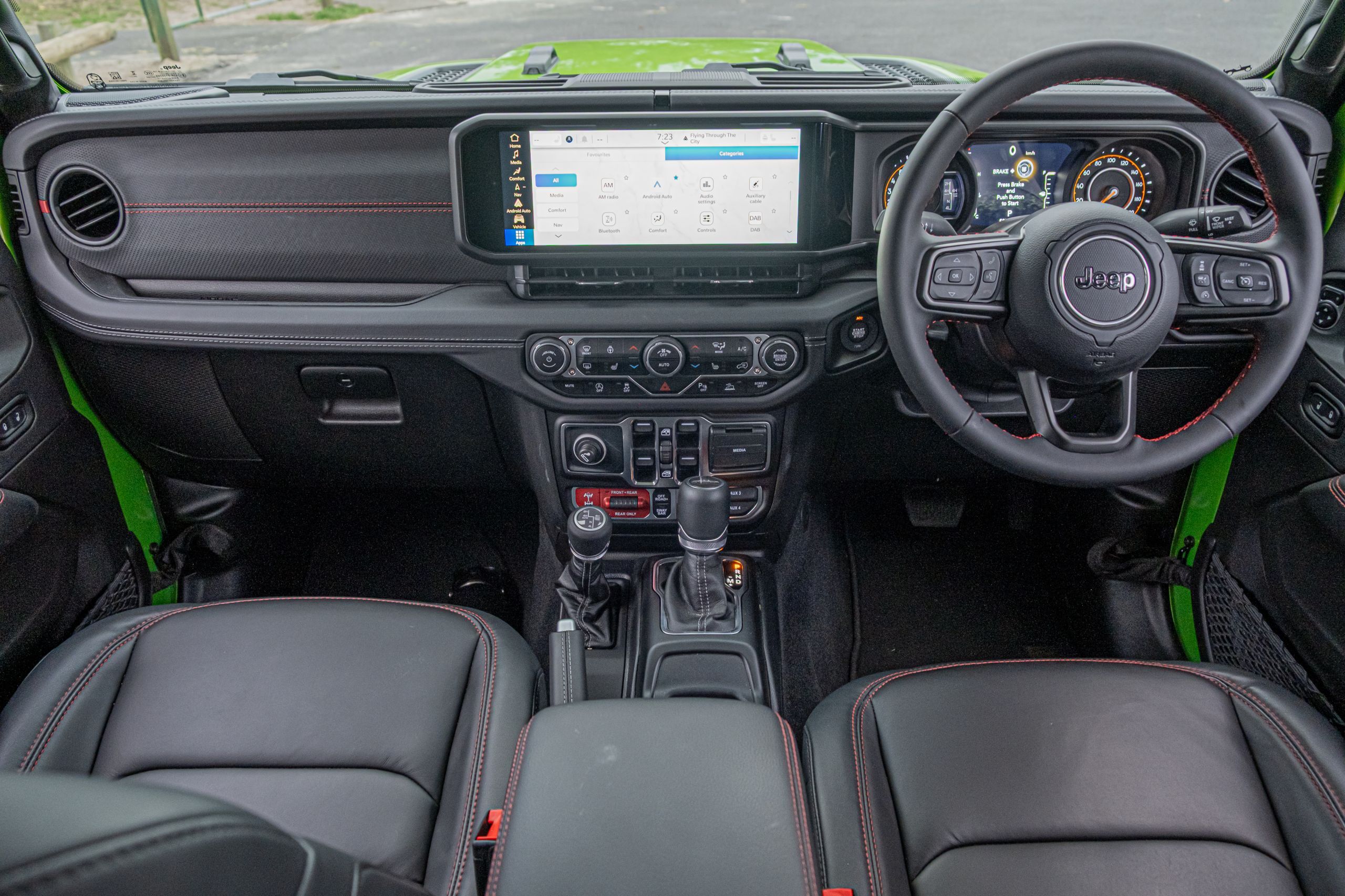
The cluster and console are dominated by physical buttons for the climate control and all the different off-road and powertrain settings. While it may seem like a button overload at first impression, you quickly get used to it, and operating them is a joy, especially compared to the screen-dominated interiors that are now common.
As with the Wrangler, stepping into the Gladiator requires taller drivers to bend their necks forward or risk smashing their head into the roof pillar. I found this a little annoying, but quickly got into the habit of doing it, so much so that it took me a week or so to stop doing it when climbing into other cars after returning the Jeep. Overall, the cabin quality is high, but the seats leave a lot to be desired and don’t provide enough support.


Photos Brad Anderson/Carscoops
Given the commanding size of the Gladiator, measuring in at 5,591 mm (220.1 inches) long with a huge 3,488 mm (137.3-inch) wheelbase, it’s no surprise the rear is absolutely palatial. Leg room is excellent, and there’s even a small rear window hatch that can be opened, although it can’t be operated with a switch up front, like the old Nissan Navara.
The bed is modestly sized and smaller than more traditional options in this segment. The payload capacity of 693 kg (1,527 lbs) and the braked towing capacity of 2,721 kg (6,000 lbs) are also down on the competition, which is usually around the 3,500 kg mark (7,716 lbs).
Great Off-Road, But What About On-Road?


Photos Brad Anderson/Carscoops
Driving and living with the Gladiator proved to be an interesting experience, with both its pros and cons.
The 3.6-liter V6 is rated at 209 kW (280 hp) at 6,400 rpm and 347 Nm (255 lb-ft) of torque at 4,100 rpm, respectable figures but nothing spectacular given the Gladiator’s size and the fact it weighs 2,282 kg (5,030 lbs). The engine has a relatively meaty and guttural growl to it, and feels more muscular than the newer 2.0-liter turbocharged four-cylinder, even though it’s down on torque. However, it’s not particularly exciting, and obviously, no match for the raging twin-turbo 3.0-liter V6 of the Ranger Raptor.
Around town and on the highway, it offers up just enough power, and drivers will never have trouble keeping up with traffic. Mated to the V6 is an eight-speed automatic transmission, which does the job fine, yet isn’t particularly quick to shift.
Efficiency isn’t a strong suit of the 3.6-liter mill. Jeep quotes a combined fuel economy rating of 12.4 l/100 km (18.9 US mpg), but I ended my time with the Gladiator sitting at 14.7 l/100 km (16 US mpg).
Rubicon Or Nothing
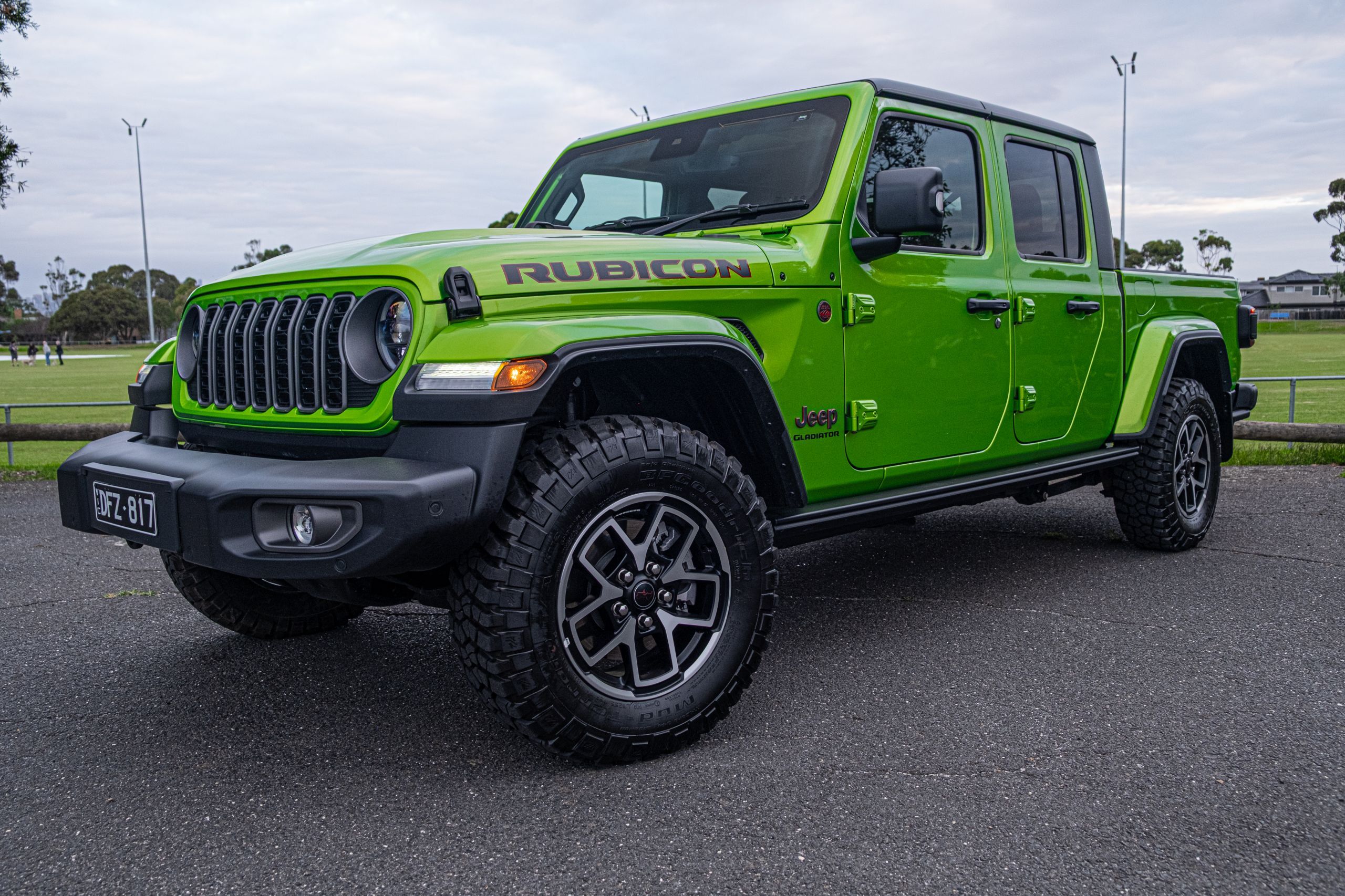
Due in part to the chunky 33-inch BFGoodrich tires and solid front and rear axles, the Gladiator is not as comfortable or refined as some of the competition on the road – not that this should come as a surprise. The steering feels wayward and almost completely void of feel, and the groan from the tires at highway speeds quickly grows annoying.
Review: The Jeep Wrangler Rubicon 392 Is A Muscle Car That Can Rock Crawl
It’s a little disappointing that Jeep Australia no longer sells non-Rubicon versions of the Gladiator, equipped with more road-oriented tires. After all, I’ve seen plenty of Gladiators on the road, but I’m yet to see one being driven on an off-road trail, despite always seeing a gaggle of Wranglers whenever I do go off-roading.
I only had the opportunity to take a short off-road stint with the Gladiator, and this is where it feels most at home. Like the Wrangler Rubicon, there’s the Jeep Rock-Trac 4×4 system with a 4:1 low-range ratio, electronic locking front and rear differentials, and an electronic front sway-bar disconnect. It also offers excellent levels of articulation and up to 281 mm (11.1 inches) of ground clearance.
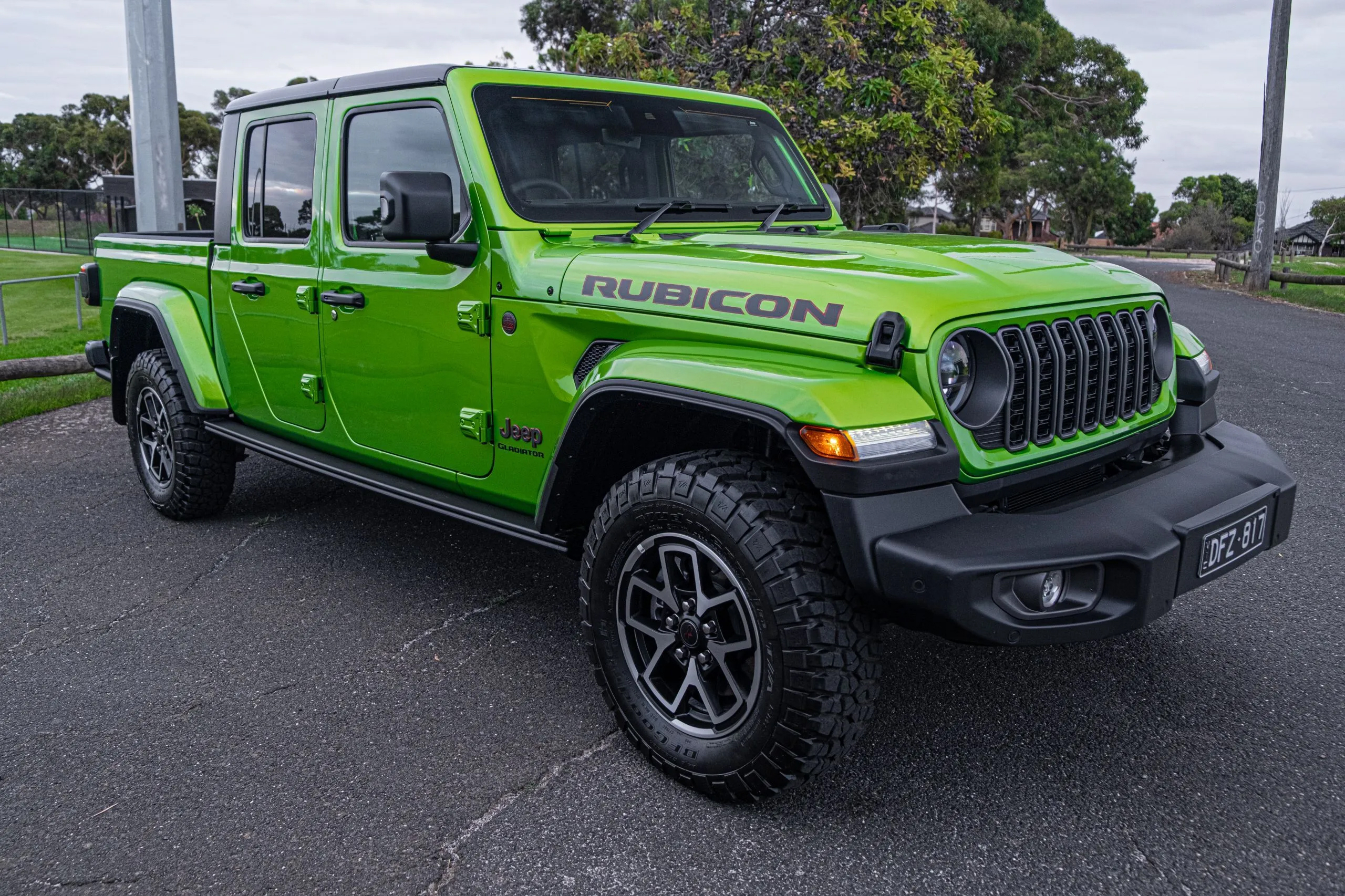
As Jeep describes in its press material about the Gladiator, it is “up for the impossible,” and that’s very much what it feels like along a trail. It feels as if no obstacle is too much for it to overcome, whether that be a massive boulder, fallen trees, corrugated dirt roads, or steep inclines and declines. It can also ford through up to 800 mm (31.5 inches) of water straight off the showroom floor.
One not-so-good thing about taking a Gladiator off the beaten path is just how long it is, which makes tight, twisty trails very difficult to navigate.
Ultimately, however, all of the Gladiator’s off-roading prowess impacts its usability on the road, and it doesn’t do basic things like towing or carrying hefty loads, as well as some of the competition. Buying a Gladiator isn’t something you do with your head, but rather with your heart.


Photos Brad Anderson/Carscoops
Sales figures from the US show that many people are doing this, even as the Gladiator continues to age. Last year, more than 56,000 were sold, an increase from the 42,125 sold in 2024 and the 55,187 that found new homes in 2023. Admittedly, sales have declined from a peak of 89,712 in 2021, but the Gladiator still ticks a lot of boxes for buyers.
Back on the road, the ride was surprisingly pleasant, and manages to avoid some of the harshness that’s common with vehicles competing in this segment. The ability to remove the roof panels with just a few latches and to unscrew the door panels with the supplied tools is another welcome feature and is something that no other pickup can match.
Verdict
The Jeep Gladiator may be getting a little long in the tooth, but like the Wrangler, it has an everlasting appeal that ensures it remains desirable, even if some of the hardware and technology are starting to feel dated.
Selling it in just one highly specced configuration in Australia feels like a mistake and perhaps explains the fact that only a few hundred examples were sold locally last year, easily making it the lowest-selling pickup on the market. However, if you need a pickup that can do almost everything while still being livable on a daily basis, the Gladiator might be right for you.