- The Calvin-40 robot is perfect for heavy and repetitive lifting tasks.
- Unlike the Tesla Optimus, this robot doesn’t have much dexterity.
- Renault wants to cut production hours per vehicle by 30 percent.
Whether you like it or not, humanoid robots are edging closer to real factory work, and Renault is preparing to put them on the line. The automaker plans to deploy 350 humanoid robots across its facilities by 2027, developed in partnership with French startup Wandercraft, with the goal of speeding up production and cutting costs.
Read: BMW’s New Humanoid Workers Never Take A Break Or Get Paid
The robot, called Calvin-40 and reportedly developed in just 40 days, is headless and deliberately avoids looking too human, unlike Tesla’s Optimus. Rather than chasing cutting-edge autonomy like the robots being trialed by Hyundai, Mercedes-Benz, and BMW, Renault is taking a more restrained approach.



Photos Wandercraft
Calvin-40 is not designed to think independently or mimic human behavior. Its role is simpler, focused on repetitive, physically demanding tasks such as lifting and carrying heavy loads, and doing so without fuss.
Speaking at a presentation of the robot, Renault’s head of production and quality Thierry Charvet said that “Honestly, I am not interested in having humanoid robots.” He added he’s “interested in having efficient and low-cost automation devices, even if they look like humans.”
Here To Save Your Lower Back
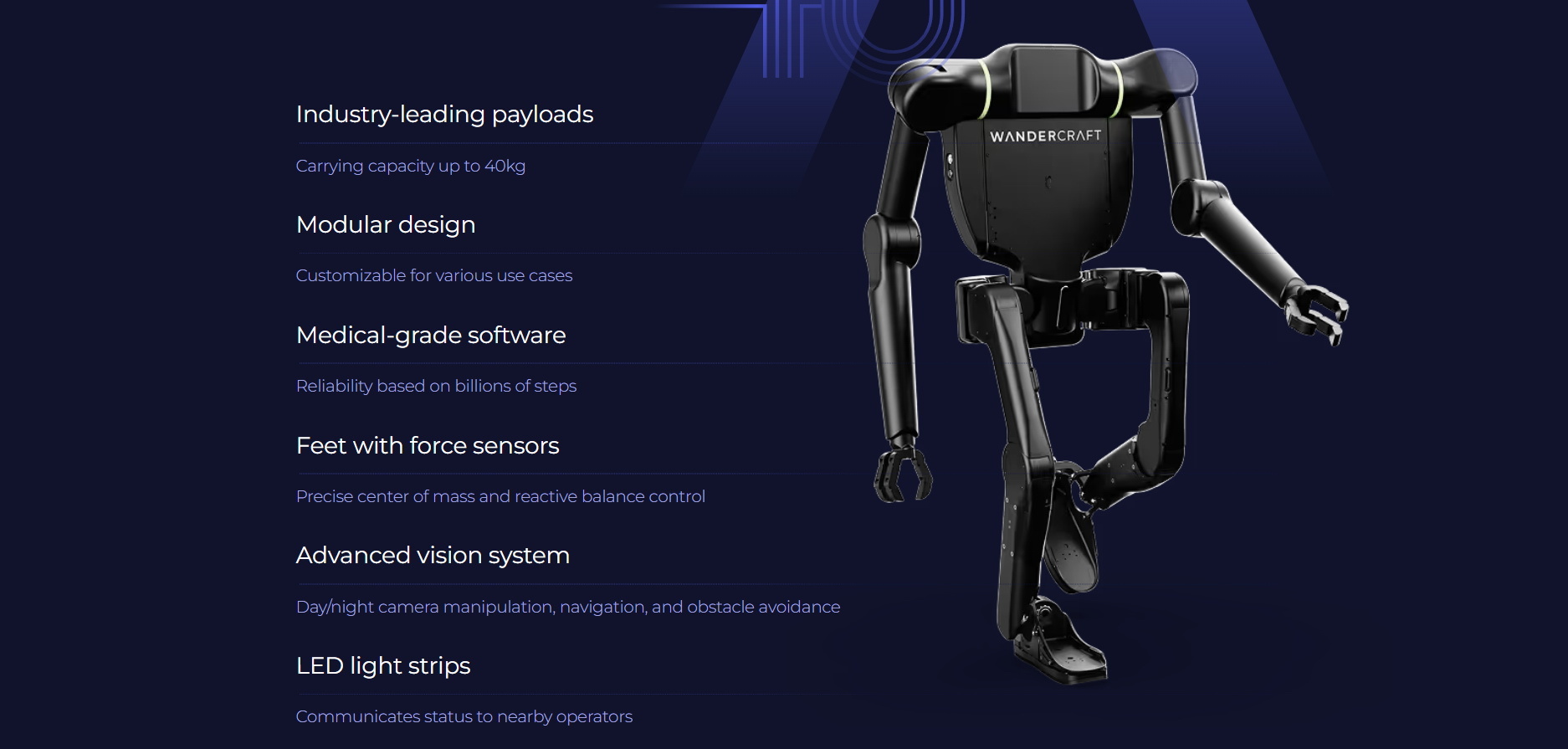
Among the simple tasks the robot can be programmed to do are lifting tires and carrying panels through a factory’s body shop. The robot has large, circular hands, rather than dextrous fingers, so human workers will still be needed to perform important work on the assembly lines. Renault noted that the first task in developing Calvin-40 was to “relieve workers from painful and repetitive tasks.”
“If you imagine the same robot with wheels with 30 kg at the end of the arms, you need a very wide base, so this kind of robots allow us to automate many workstations where it was not possible,” Chavret said while discussing the importance of humanoid robots to carry heavy loads in small areas.
Production improvements have allowed the French manufacturer to slash production of the 5 and Twingo EVs to 10 hours or less, saving money. Through the implementation of humanoid robots like the Calvin-40, as well as other endeavors, Renault is aiming to cut production hours per vehicle by 30 percent.