- Honda will roll out 15 hybrid models worldwide by the end of 2029.
- Two new prototypes appear to preview the next Accord or Civic, and RDX.
- A $9.9 billion EV write-down forced Honda’s full strategic reset.
Honda has overhauled its product strategy and put hybrid technology at the center of the global lineup, a course correction triggered by the costly cancellation of several high-profile EV projects. The automaker pulled the wraps off two prototypes that appear to telegraph the next Accord sedan and Acura RDX SUV, alongside a commitment to launch 15 hybrid models by 2029
The Honda Hybrid Sedan Prototype and the Acura Hybrid SUV Prototype will both reach production within two years. Honda has not named either car or even confirmed a segment, but the proportions tell their own story. The fastback-style sedan looks like the next Accord, though the Civic can’t be completely ruled out, while the SUV is unmistakably the RDX successor.
More: Honda’s $15.9 Billion EV Disaster Just Delayed The Next Accord, Odyssey, And MDX
The sedan wears a five-door fastback profile, sharp surfacing, slim LED lighting, and a small amount of black cladding. The boxy nose recalls the Civic development mule Honda showed last year.
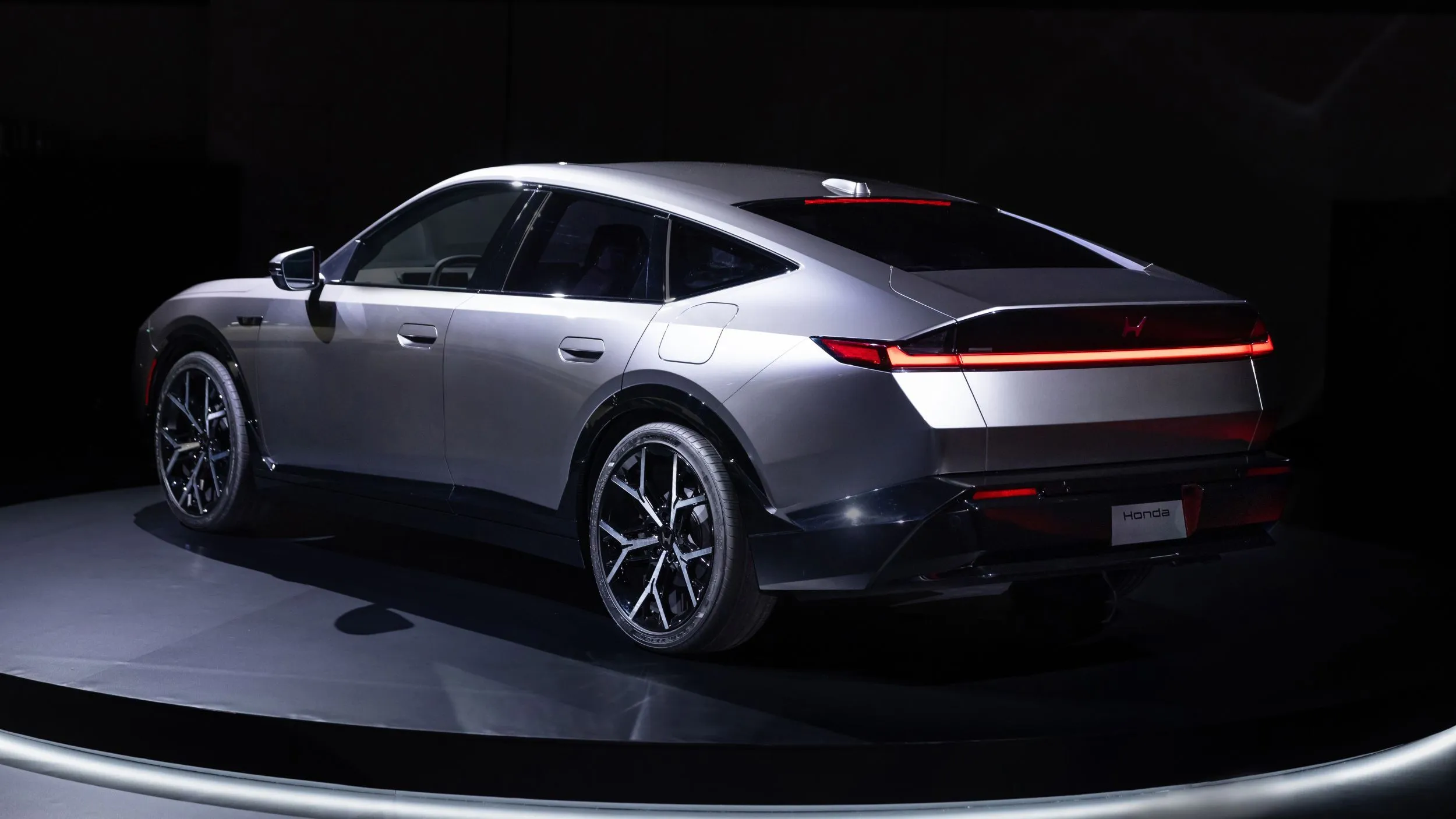



Honda Hybrid Sedan Prototype
On the other hand, the Acura SUV has a more sculpted body with aggressive front bumper intakes, toned shoulders, and V-shaped taillights. Its silhouette matches the official teaser from January 2026, leaving little doubt this is indeed a successor to the discontinued RDX.
More: Acura’s Losing Its RDX For Two Years, And Dealers Know What Happens Next
Both vehicles sit on a next-generation hybrid architecture due in 2027. Honda is targeting a 30 percent reduction in production costs and a fuel-economy improvement of more than 10 percent over 2023 levels. A new electric all-wheel drive unit is part of the package, alongside what Honda promises will be sharper driving dynamics. The next-gen ADAS suite follows in 2028.
Honda said that North America will be one of the “key focus regions” of the hybrid rollout. In 2029, the company will debut large hybrid models in the D-Segment and above, tailored to the needs of the region.


Acura Hybrid SUV Prototype
In order to support the rollout, Honda will “reallocate all excess capacity” at the Ohio plant to production of vehicles with gasoline and hybrid powertrains. Furthermore, all US plants will be converted to support production of hybrids.
Finally, the the joint venture between Honda and LG Energy Solution will switch part of the EV battery production to hybrid batteries while increasing local components by more than four times the current level to fight supply shortage and tariffs.
Other Markets
The Japanese automaker is doubling down on market-specific needs to stabilize its business foundation following a period of strategic realignment. In its home market, the focus shifts toward electrified kei cars, led by the upcoming N-Box EV scheduled for a 2028 debut. The next-gen hybrid and ADAS tech will be introduced in the updated Vezel, while the lineup will expand with Sport Line and Trail Line trim levels.
More: Honda Went To China, Saw The Future, And Reached Back To The 1960s
In India, the play is compact and midsize cars due in 2028, along with continued investment in the motorcycle business to expand local production. China is more complicated. Honda plans to use locally standardized components and roll out new electrified vehicles built on platforms supplied by Chinese partners.
Investing In Hybrids Over EVs
Honda is going through a challenging financial period, reporting its first annual net loss since 1957. The loss totaled ¥423.9 billion ($2.68 billion), largely driven by a massive ¥1.57 trillion ($9.94 billion) write-down following the restructuring and cancellation of EV projects.
Honda is still publicly optimistic about the recovery, targeting a record operating profit above ¥1.4 trillion ($8.86 billion) for the fiscal year ending March 2029.
More: Honda’s $11 Billion Canadian EV Plant Just Got Shelved Because America Wants Hybrids
The investment plan tells you everything you need to know about where Honda thinks the next decade is going. Of the ¥6.2 trillion ($39.25 billion) earmarked through 2029, ¥4.4 trillion ($27.85 billion) goes to gasoline and hybrid powertrains, with another ¥1 trillion ($6.3 billion) for software.
Spending on pure EVs has been trimmed to ¥0.8 trillion ($5.06 billion). Anything beyond that gets decided after 2030, and Honda has made clear it would rather partner with someone else than build its next EV platform alone.